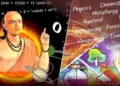
A Young Scholar and an Ancient Knowledge Tradition Recently, I came across an inspiring account of Vrishavardhan Sharma of Bengaluru, a young scholar who has mastered the Bhagavad Gītā and Pāṇini’s Aṣṭādhyāyī, one of the most sophisticated works of Sanskrit grammar. Panini’s 4,000-year-old rules are widely regarded by computer scientists as the world’s first formal, context-free generative grammar — a direct ancestor of modern programming languages and natural language processing (NLP). Vrishvardhan treats that ancient system as living computational logic and applies it in software and hardware. His accomplishment is a striking reminder that India’s ancient knowledge traditions are not merely relics of a distant past. They can still be mastered by the younger generation when there is dedication, appropriate guidance and an institutional environment.
Other examples illustrate different dimensions of the potential of India’s traditional knowledge traditions. Govind Krishnan M., an ISRO scientist, is reported to have undergone Vedic education before pursuing higher studies at the Indian Institute of Space Science and Technology (IIST) and subsequently joining ISRO. Swami Bharati Krishna Tirtha, renowned for his work on Vedic Mathematics, demonstrated the intellectual possibilities of engaging deeply with India’s mathematical and knowledge traditions. Subhash Kak, a distinguished computer scientist whose research has included areas such as quantum information and quantum cryptography, has also extensively studied Indian mathematics, astronomy and scientific traditions. Together, such examples illustrate that traditional Indian learning and modern scientific and technological pursuits need not be viewed as mutually exclusive.
The challenge before us is therefore not merely to preserve these traditions, but to create pathways through which young learners can carry them into new fields of scholarship, scientific inquiry and knowledge creation.
For thousands of years, the knowledge traditions of Bharat have been preserved through the Guru–Śiṣya Paramparā, Gurukulas, Veda Pāṭhaśālās, Ashrams, Mathas, Peethams, temples and private and endowed institutions. They constitute a remarkable living network through which knowledge has been transmitted from one generation to another.
The canvas of Indian Knowledge Systems (IKS) is enormous. It encompasses the four Vedas and their traditional layers—Samhita, Brāhmaṇa, Aranyaka and Upanishad—along with the Itihāsas, Puranas, Upavedas, Āgamas and Darśanas. The six classical Darśanas— Nyāya, Vaiśeṣika, Sāṅkhya, Yoga, Mīmāṃsā and Vedānta—gave rise to profound schools of thought including Advaita, Dvaita and Viśiṣṭādvaita, while Śaiva, Vaiṣṇava, Śākta and other traditions developed rich philosophical and spiritual systems of their own.
The Vanishing Links of a Living Knowledge Tradition:
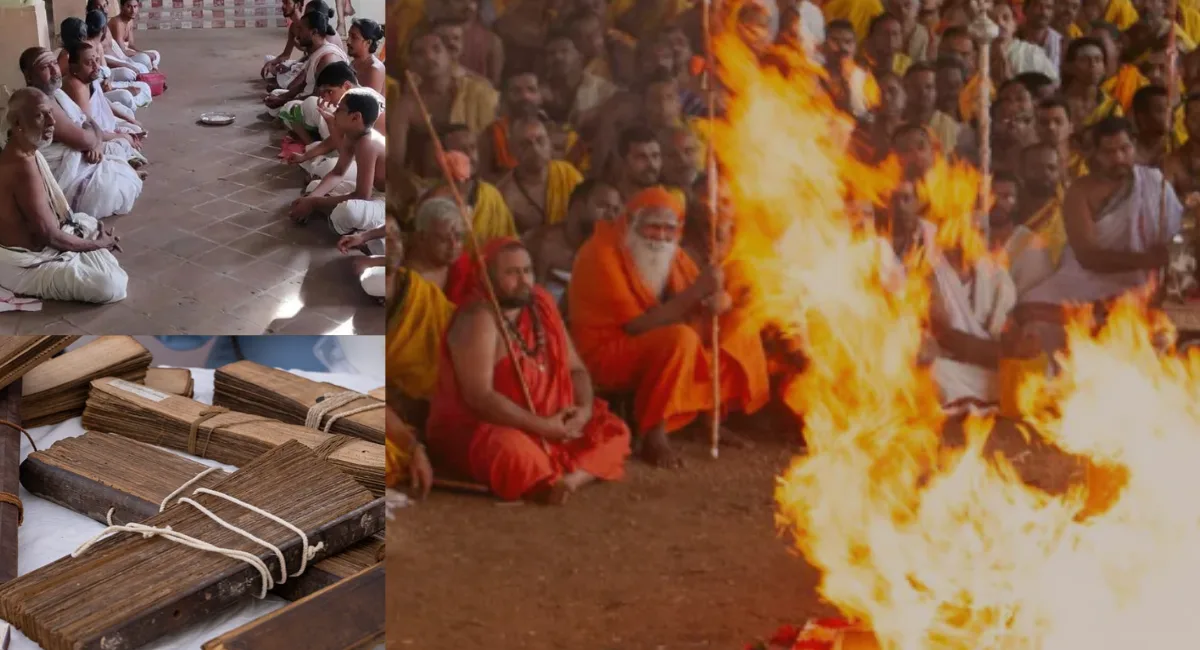
According to Dr. Remella Avadhanulu of Veda Bharathi Trust, the four Vedas are traditionally understood to have had 1,131 śākhās (branches). Today, he notes, only 13 śākhās are traceable—barely about one per cent of the traditional corpus. Of these, only seven are reported to survive as living oral traditions, with their recitation continuing in different parts of the country, while the remaining branches are traceable only through written or manuscript sources. Even these surviving traditions face the danger of disappearing if timely measures are not taken to preserve and transmit them.
This illustrates the enormity of the challenge before us. If the preservation of the Vedas themselves—at the heart of India’s knowledge tradition—has reached such a critical stage, what might be the condition of the vast body of knowledge relating to Vedāṅgas, Upaniṣads, Āgamas, Darśanas, Ayurveda, mathematics, astronomy, linguistics, architecture, agriculture, arts, music and numerous other traditional disciplines? Much of this knowledge may exist only in manuscripts, scattered institutions, oral traditions or in the memory of a diminishing number of scholars and practitioners.
The challenge, therefore, is not merely to preserve manuscripts or digitise texts. A living knowledge tradition requires its texts, practitioners, teachers, students and institutions to survive together. The preservation of India’s knowledge heritage must consequently become a comprehensive national effort—identifying what survives, locating its custodians, documenting its different traditions, supporting transmission to the next generation, and creating pathways for research and contemporary application. The loss of a knowledge tradition, once its living chain of transmission is broken, may be irreversible.
This knowledge encompasses far more than religion and ritual. Together, these traditions constitute an important part of the Ātma—the soul—of Bhārath. The challenge before us today is not simply how to preserve this heritage, but how to make it a living, respected and continuously developing knowledge system for future generations.
The Missing Institutional Architecture
India has a remarkable network of institutions and individuals who continue to preserve and transmit traditional knowledge. These include Gurukulas, Veda Pāṭhaśālās, Sanskrit institutions, Ashrams, Mathas, Peethams, temples, traditional trusts and other educational institutions, as well as thousands of scholars and Pandits.
There are Vedic scholars who have dedicated their lives to oral traditions and recitation; Acharyas who preserve philosophical lineages; Sanskrit scholars; specialists in Āgama traditions; traditional physicians; experts in mathematics, astronomy, architecture, music, arts and crafts; and tribal and indigenous communities possessing valuable traditional knowledge.
Yet these institutions and individuals are not presently connected through a comprehensive national architecture. This is the missing link. The objective should not be to replace the existing institutions, but to connect and strengthen them within the system.
Enumerating India’s Living Knowledge Network
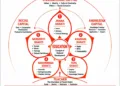
The first step should be a National Enumeration of Indian Knowledge Institutions and Knowledge Holders. A comprehensive national enumeration of India’s living knowledge institutions should be undertaken by the Government of India. Such an exercise should go Economic & Social contribution beyond counting institutions. It should map Mathas, Peethams, Ashrams, temples, Devasthanams, Gurukulas, Veda Pāṭhaśālās, Sanskrit institutions, Āgama schools, traditional Ayurveda centres, and institutions devoted to music, dance, arts, crafts and other knowledge traditions.
The database should record their history and lineage, location, subjects taught, teachers, students, manuscripts and libraries, infrastructure, traditional knowledge holders, institutional governance and sources of financial sustainability. This would create a National Registry and knowledge map of India’s living civilizational institutions.
Economic & Social Contribution:
Many ancient institutions have survived for centuries because they developed mechanisms of institutional self-sustainability, rather than depending primarily on recurring government grants. A national study should examine how these institutions sustained themselves—through endowments, productive assets, community participation, donations, educational activities and other indigenous mechanisms. The objective is not to commercialise sacred institutions, but to understand which institutional models enabled their continuity for centuries and whether their underlying principles can be adapted or replicated elsewhere.
Such an enumeration should also assess their wider economic and social contribution. These institutions are not merely centres of worship or traditional learning; they generate employment, support local commerce, preserve traditional skills and cultural practices, provide education and healthcare, attract pilgrimage and tourism, and undertake extensive charitable and community activities. The economic assessment should therefore measure both their direct institutional activity and the wider ecosystem they support, including hospitality, transport, food, retail, crafts and other services. Reliable data would help establish their actual contribution to India’s social, cultural and knowledge economy, rather than relying on broad or speculative estimates.
The Government could identify institutions with successful and sustainable models and document them as case studies for replication and adaptation The objective would not be to impose a uniform model, but to identify principles that could strengthen other traditional educational, cultural and community institutions across the country.
This mapping should ultimately answer fundamental questions: Who is preserving what? Where is it being taught? Who are the recognised scholars and knowledge holders? Which institutions possess specialised expertise? What resources do they have, and what support do they require? A comprehensive national database combining institutional, academic, social and economic information would provide the evidence required for informed national planning and for building a sustainable, interconnected ecosystem for India’s living knowledge traditions.
Govt of India – IKS Initiative- Partner with Traditional Institutions:
India has taken meaningful steps to bring its traditional knowledge systems into formal education through the National Education Policy (NEP) 2020, which explicitly recognises indigenous knowledge across fields such as mathematics, astronomy, philosophy, Yoga, medicine, agriculture, engineering, linguistics, arts and governance. This vision has been institutionalised through the Ministry of Education’s Indian Knowledge Systems (IKS) Division, set up in 2020. Govt of India’s other two initiatives, Gyan Bharatam and BharatSHRI—address complementary dimensions of India’s knowledge heritage: education and research, manuscript heritage, and epigraphic heritage respectively.
The Government’s IKS initiative necessarily involves Ministries, departments, administrators and academic institutions for policy formulation, funding and implementation. However, Indian Knowledge Systems cannot be developed effectively through an exclusively administrative or bureaucratic framework. Many of these traditions require specialised knowledge, lived experience and an understanding of their textual, oral and philosophical lineages that resides with the Acharyas, Sant, Mahanth, traditional scholars and institutions themselves. Their institutional participation is therefore essential—not merely as consultees, but as partners in designing, guiding and implementing the national IKS framework.
India already possesses institutions that demonstrate the feasibility of this model. Sringeri Sharada Peetham, Kanchi Kamakoti Peetham, Chaturamnaya Peethams – Sringeri, Puri Govardhan Matha, Dwarka Sharada Peetham and Jyotirmath, Sree Siddaganga Math, aralabalu Brihanmatha, Murugha Matha, Tontadarya Matha, Moorusavira Matha, Ramakrishna Math and Mission, Udupi’s Ashta Mathas, Yadugiri Yathiraja Mutt, Chinmaya Mission, Sri Sathya Sai institutions, Mata Amritanandamayi Math, Tirumala Tirupati Devasthanams, BAPS Swaminarayan Sanstha, JSS Mahavidyapeetha, Sri Adichunchanagiri Mahasamsthana Matha ISCKON, Sri Sri Institutions, and other traditional institutions have developed substantial educational ecosystems spanning schools, colleges, universities and professional education, while simultaneously sustaining Sanskrit, Vedic, Vedantic and other traditional forms of learning. TTD, for example, combines schools and colleges with Veda Vijnana Peethams, Sanskrit education, Ayurveda, Yoga, music, dance and traditional sculpture and architecture.
These institutions demonstrate that traditional knowledge and modern education need not exist in separate worlds. They already possess infrastructure, teachers, scholars, administrative experience and educational networks that can become important partners in building a national Indian Knowledge Systems ecosystem. Government policy and funding can provide the enabling framework, while traditional institutions, Acharyas and knowledge holders can contribute the lived knowledge, intellectual traditions and pedagogical experience that cannot be created through an exclusively bureaucratic structure.
These organisations should not be regarded merely as custodians of an ancient heritage. Their existing infrastructure, scholars, traditional lineages and experience in education can provide the foundation for Centres of Excellence, research institutions and, where appropriate, universities dedicated to Indian Knowledge Systems should be developed. A structured partnership between the Government, traditional institutions, Dharmacharyas, scholars, modern universities and research institutions can bridge the gap between policy and practice and transform India’s rich but dispersed knowledge traditions into a connected national academic ecosystem.
Adding Ātma to Ātmanirbhar Bhārath
The time has come to connect India’s manuscripts, inscriptions, institutions, scholars and knowledge holders into one living national knowledge ecosystem. That will be the true beginning of adding Ātma to Ātmanirbhar Bhārath.