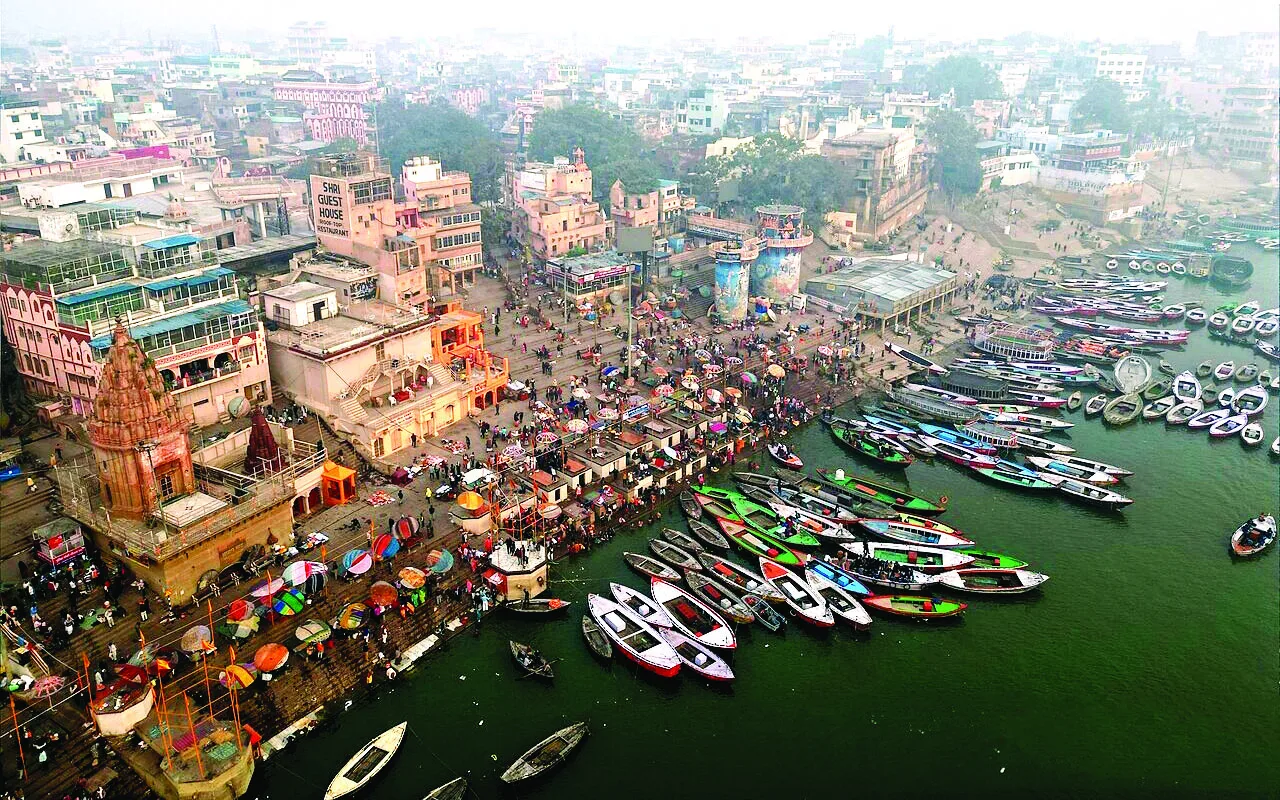
Down the stream of Ma Ganga, Varanasi is an important spiritual city with around 88 famous ghats; facilitating the touch of waters of Ma Ganga to Bhaktas. Amongst them is the Dashashwamedh Ghat, most vibrant and spiritually resonant. Brahma performed Ashwamedh Yagya here to welcome Bhagwan Shiva and Kali Devi. The divine energy has been manifested here. The design of the ghat is not only simple but can be said to be insignificant, yet each step of the ghat is dedicated to the service of the devotees. The present structure of this ghat was constructed and contributed by Peshwa Balaji Bajirao (who was commonly known as Nanasaheb Peshwa), of Maharashtra in the 18th century.
Marathas played an important role in rebuilding mandirs and Ghats of Varanasi. Kashi has been a culturally and religiously significant place for Hindus since ancient times. The entire place was invaded by invaders. When Marathas spread their empire across Bharat, reconstruction and restoration was their natural priority. Apart from Dashashwamedh Ghat, Nanasaheb Peshwa had also constructed Tulsi Ghat and Balaji Ghat of Kashi.
The iconic Vishwanath Mandir is very close to this Ghat. The reconstruction of the destroyed Kashi Vishwanath Mandir was attempted by Malhar Rao Holkar, an officer of the Marathas. Devi Ahilyabai Holkar, daughter in law of Malhar Rao, was finally successful in completing the restoration task of Kashi Vishwanath Mandir. The glory of the Mandir and the place was once again revived by Prime Minister Shri Narendra Modi in 2021. Architecture is the place for restoring collective memories. These ghats of Ma Ganga, especially the Ghats of Kashi, have so much to narrate. Have we sensitised our ears to listen? Education is the best tool to bring about change in the mindset. National Education Policy 2020 aims to revive pride for Bharat in our future citizens. Architectural restorations of these ghats and temples are also the stage to provide experiential learning for Bharat Bodh.