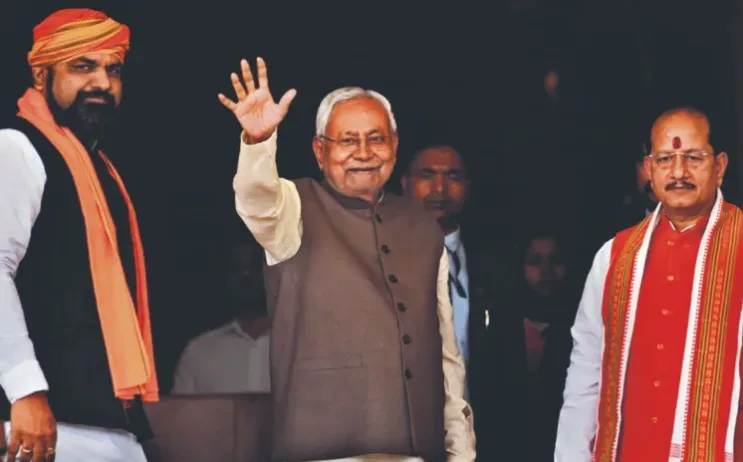
In a significant political development, Bihar Chief Minister Nitish Kumar is all set to begin a new innings at the national level as he prepares to take oath as a member of the Rajya Sabha on April 10 in New Delhi.
According to sources, Kumar is expected to travel from Patna to Delhi on April 9 and remain in the national capital for two to three days. During his visit, he is likely to hold key meetings with senior leaders of the Bharatiya Janata Party, fuelling speculation about the next phase of political developments in Bihar.
With his transition to Parliament, sources suggest that Nitish Kumar may resign from the post of Chief Minister shortly after returning to Patna, likely on or after April 11. His move is expected to trigger the formation of a new government in the state.
While there has been no official confirmation yet, indications point towards the possibility of a new leadership arrangement being finalised by mid-April. The development is being closely watched as it could reshape Bihar’s political landscape ahead of upcoming electoral cycles.
Nitish Kumar was elected unopposed to the Rajya Sabha on March 16, in the biennial elections held for five seats from Bihar. The current terms of the outgoing members are set to end on April 9, after which Kumar will formally assume office.
His entry into the Upper House marks a strategic shift, potentially allowing him to play a more active role in national politics while stepping back from state-level administration.
As part of the transition, Nitish Kumar will be provided Z-Plus security cover once he assumes his role as a Member of Parliament. According to a notification issued by the Bihar Home Department, this decision has been taken in view of his enhanced national responsibilities.
Currently, as Chief Minister, Kumar is protected under a special security arrangement governed by the Bihar Special Security Act, 2000, which is modelled on the Special Protection Group framework used for the Prime Minister.
The anticipated resignation of Nitish Kumar is expected to set off a chain of political developments in Bihar. The ruling alliance, led by the Janata Dal (United) in partnership with the BJP, will need to decide on a successor and ensure a smooth transition of power.
Kumar’s move to the Rajya Sabha could signal a recalibration of roles within the alliance, with a greater focus on national-level strategy while maintaining stability in the state.
As Bihar awaits clarity on the next Chief Minister, all eyes remain on the evolving political negotiations that are likely to shape the state’s governance in the coming weeks.