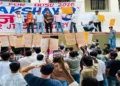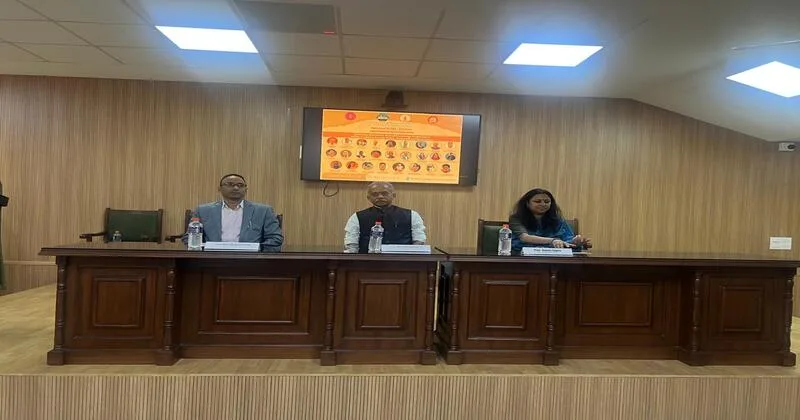
NEW DELHI: The two-day National Seminar titled Exploring Alternative Sites of Knowledge Production in Indian Tradition, Foreign Policy, Statecraft, and Governance was held from March 18 to 19, 2026 at Bharati College , university of Delhi, sponsored by the Indian Council of Social Science and Research, in collaboration with Prajana Pravah. The seminar focused on exploring diverse and often overlooked sites of knowledge production within the Indian traditions, and explore how ideas from our traditional political thought can still be useful in today’s world whether in governance or in international relations.
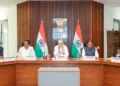
Gracing the inaugural session, Raj Bhushan Choudhary, Minister of State for Jal Shakti, Government of India delivered the Chief Guest Address, stressing the critical importance of water governance, noting the imbalance between India’s large population and limited water resources, and underscoring the idea that “Jal hai to Jeevan hai.” He emphasized traditional practices such as ponds and baolis, highlighting the long-standing cultural and ecological wisdom embedded in Vedic traditions, alongside present governmental initiatives for water conservation.
The inaugural session also witnessed the presence of Prof.Dr.Saloni Gupta, principal Bharati College, University of Delhi as patron of Seminar, Prof. Pawan Sharma from CCS University Meerut as keynote speaker, Dr. Akshat Pushpam as convener of Seminar and Mr. Ajit as teacher-in-charge of department of political science Bharti college.
In his keynote address Prof. Pawan Sharma focused on the relevance of Indian knowledge systems in political thought. He explained the Saptanga Theory of state, outlining its seven elements and linking them to Shukraniti, referring to Asian Drama, and Karl Marx’s acknowledgment of India’s historical economic strength, while emphasizing the importance of studying Bharatiya Gyan Parampara through original sources and maintaining confidence in articulating traditional knowledge within modern frameworks.
The first day also witnessed a special session on “Decolonising Knowledge Tradition.” The session was chaired by Principal Prof. Dr Saloni Gupta, Principal Bharati College, who in her opening remarks underscored the need to revisit and re-engage with indigenous knowledge systems. The keynote address was delivered by J. Nandakumar, National Convenor of Prajna Pravah, he emphasized that colonialism operated as an epistemic project and highlighted the term of psychological colonialism, arguing that decolonisation is a struggle over narratives and collective consciousness, promoting participation rooted in self-awareness and pluralism. He outlined key measures such as fostering intellectual courage, critically questioning inherited Western frameworks, encouraging interdisciplinary approaches, and promoting global indigenous dialogue. Further, Prof. Shantesh Kumar Singh from Jawaharlal Nehru University,highlighted the importance of engaging with indigenous intellectual traditions to build a more grounded and self-aware understanding of knowledge systems, emphasizing the need to critically question inherited frameworks and encourage broader academic engagement.
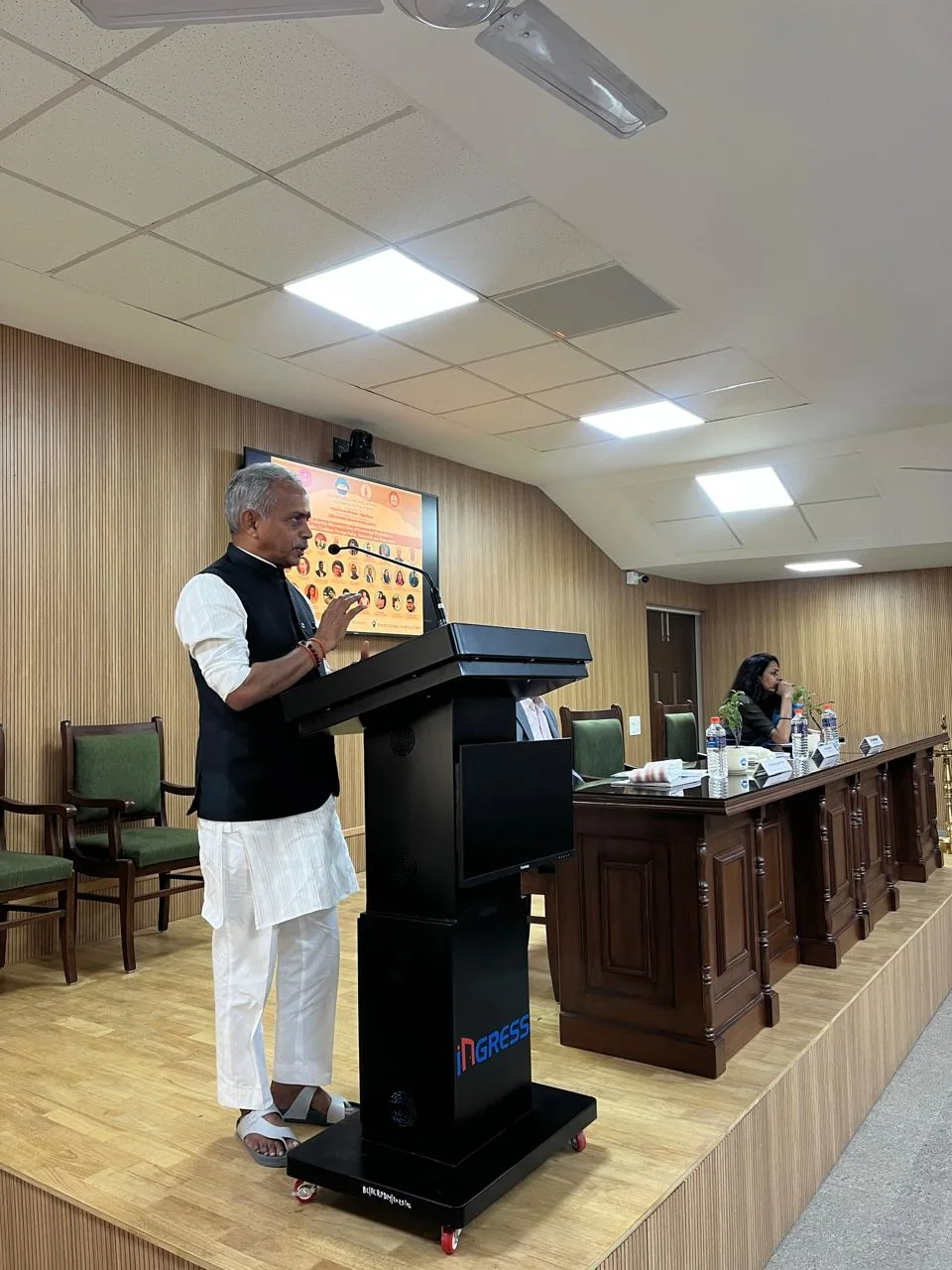
The two-day seminar also witnessed engaging speaker sessions on diverse topics such as the relevance of classical Indian statecraft for contemporary governance and foreign policy, knowledge, power and foreign policy, and the plural sides of IR thinking in India. The sessions were chaired, co-chaired, and honoured by distinguished scholars, researchers, and professors from across the country. Academician like Prof. Rajiv Nayan from Jamia Milia, Prof. Sanjeev HM and Prof. Bipin Tiwari from Delhi University, Prof. Rajeev Singh from central University of Haryana and twenty five others have joined the session in different role in either online or offline mode.
The valedictory session was chaired by Prof. Dr. Saloni Gupta, Principal, Bharati College. The session was graced by the Special Guest, Praful Ketkar, Editor of Organiser, and the Guest of Honour, Prof. Satish Kumar from IGNOU University of Delhi.
The session began with the address by Praful Ketkar, who provided deep insights into India’s cultural unity, philosophical traditions, and socio-political structure. He began by discussing the concept of the Indian New Year, explaining that it is celebrated in different regions under various names such as Ugadi, Gudi Padwa, Baisakhi, etc., and despite these differences, the spirit behind the celebration remains the same, reflecting the cultural unity of India, where diversity in traditions coexists with a shared emotional and cultural identity.
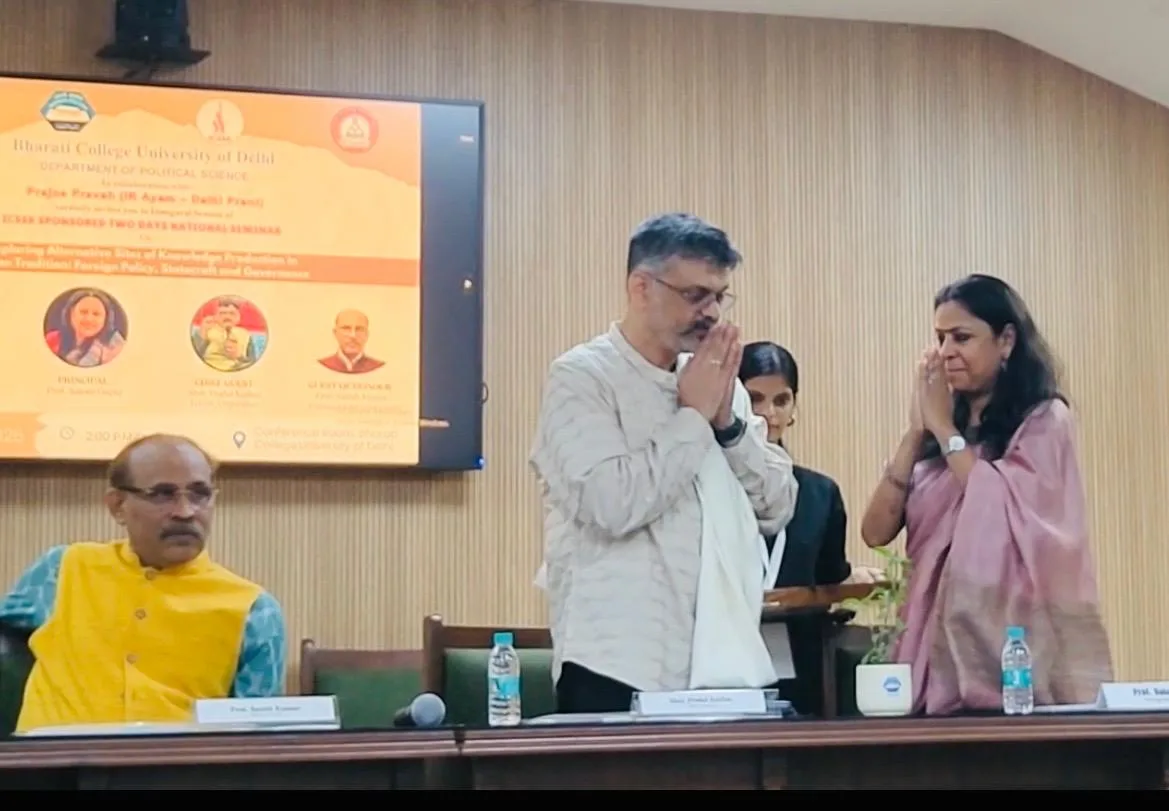
He emphasized that although India has multiple languages, cultures, and traditions, the emotional connection among people binds them together as one nation, and explained that in India, the concept of a nation is older and deeper than the state, where the nation gives meaning and legitimacy to the state. He elaborated on the concept of Vasudhaiva Kutumbakam, promoting universal brotherhood, harmony, and peaceful coexistence beyond boundaries of nation, caste, or religion, and described India as a spiritual democracy rooted in shared spiritual and cultural values.
He further clarified the concept of secularism by stating that the state should not have its own religion and should not impose any religion on its citizens, ensuring freedom of belief and equal respect for all religions. He cited examples of Ashoka and Chhatrapati Shivaji Maharaj to show tolerance and inclusive governance.
He then addressed on how during colonial rule European systems of knowledge were imposed on India creating a sense of inferiority, and explained that Western philosophy is largely based on capitalism and contractual relationships. He raised the question on the nature of the relationship between the state and citizens, whether it is contractual or based on deeper moral and cultural responsibilities, urged students to critically think and reconnect with India’s own philosophical roots, and concluded by stating that while the world is increasingly looking towards India for guidance, many Indians still lack confidence and continue to look up to Western countries like America and Europe.
The session further continued with the address by Prof. Satish Kumar, focusing on economic systems and global political divisions. He explained socialism as a system where the government controls major economic activities to ensure equality and reduce the gap between rich and poor, and capitalism as a system where individuals and private organizations control economic activities, promoting competition, innovation, and profit-making. He highlighted that India follows a mixed economy, combining features of both socialism and capitalism, helping balance economic growth with social welfare.
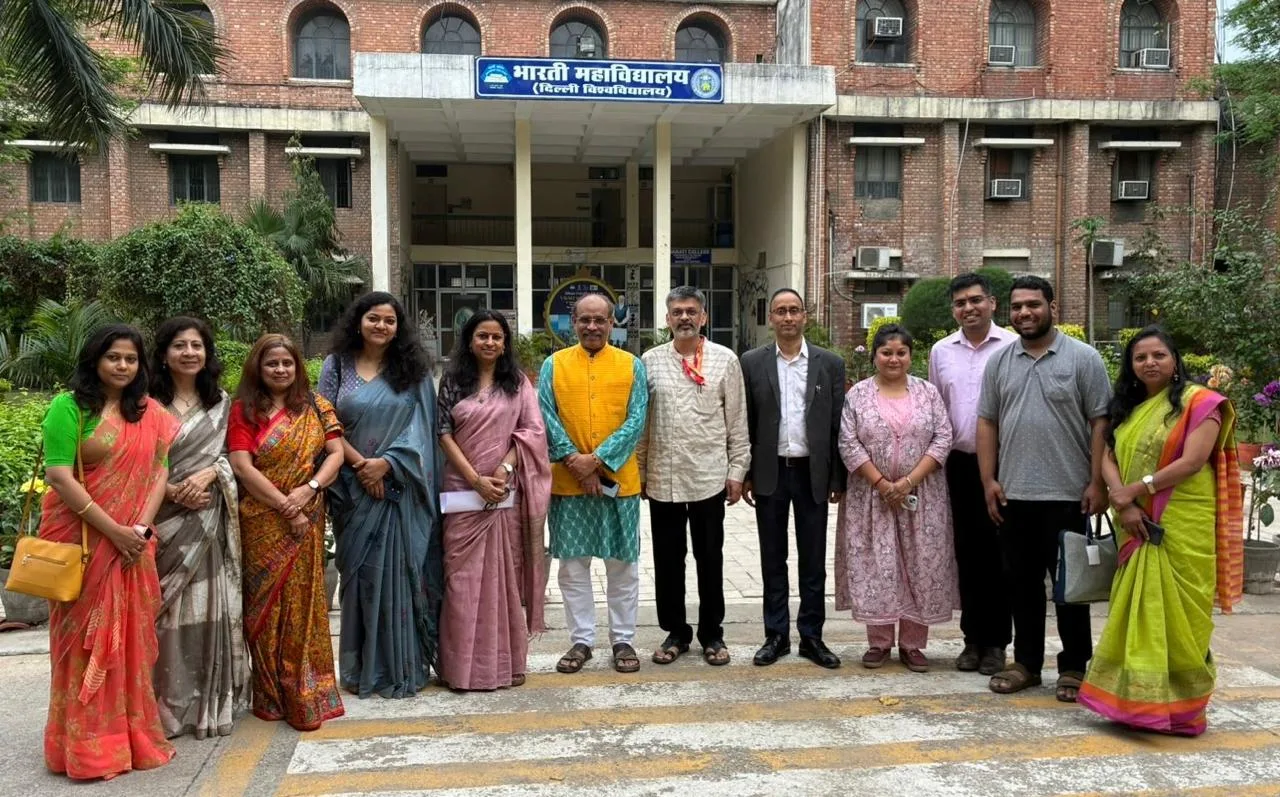
He further explains the division of the world into Global West led by the United States, Global East led by China, and Global South where India plays an important role, Through this he emphasized that India, with its balanced approach and philosophical background, has the potential to lead the world towards peace and cooperation, and highlighted that India is promoting the idea of Vasudhaiva Kutumbakam globally, encouraging unity, cooperation, and mutual respect among nations.
The seminar reflected on how we can explore alternative sites of knowledge production in Indian traditions, with emphasis on foreign policy, statecraft, and governance, highlighting indigenous knowledge systems, Bharatiya Gyan Parampara, and their relevance to contemporary governance and policy. As emphasized by Shri Praful Ketkar, India’s cultural unity, unity in diversity, and Vasudhaiva Kutumbakam reflect a shared emotional and cultural identity and a spiritual democracy rooted in shared cultural values.
The seminar was joined by 107 participants who presented their research paper on the theme from more than twenty states of India in 6 offline and four online technical sessions. This seminar reaffirmed the need to decolonise knowledge systems by critically questioning inherited Western frameworks and encouraging interdisciplinary approaches and global indigenous dialogue. It emphasized the importance of economic systems, mixed economy, global divisions, and the role of India in promoting peace, cooperation, and mutual respect, while encouraging students to critically think and reconnect with India’s own philosophical roots, building a more grounded and self-aware understanding of knowledge systems.