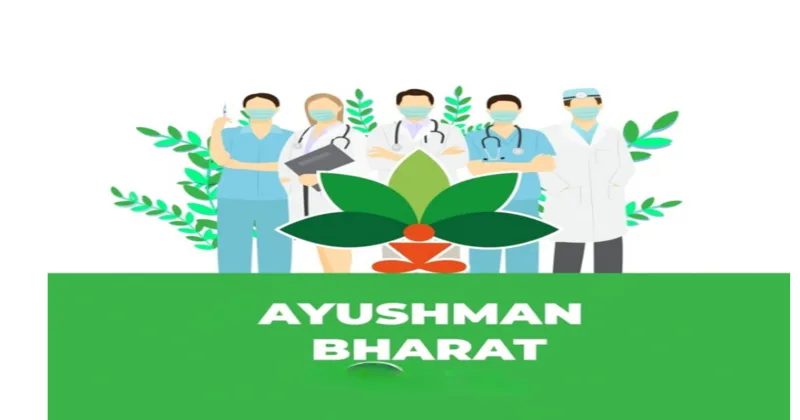
For decades after the Independence of India, the country had the challenges of not only providing healthcare facilities to the people but also managing the ever-growing rate of infections. In the past, the limited medical facilities, the lack of proper distribution of healthcare facilities and high costs of healthcare often did not allow the larger population of the country to seek quality healthcare facilities. India is witnessing a revolution in the providing of healthcare facilities to its people. This revolution is the Ayushman Bharat initiative that aims to achieve the goal of universal healthcare for the people of the country and the vulnerable members of society.
The rationale behind these reforms is not simply to cure the illness but to establish an overarching system of preventive, primary and sophisticated medical care that meets the needs of an expanding population. There is an increased focus in the public health policy domain on the early detection of illness, community-level healthcare and financial security against medical emergencies. In the journey towards the long-term vision of becoming a developed nation by 2047, strengthening the public health system has emerged as one of the pillars of national development in India. A healthy population not only adds to the productivity of the economy but also to the social and developmental potential of the nation. The healthcare reforms are increasingly being perceived as an investment in human capital.
Ayushman Bharat: The backbone of universal health coverage
Ayushman Bharat Pradhan Mantri Jan Arogya Yojana(PM-JAY), launched in September 2018, has since transformed into the largest health assurance scheme in the world. The scheme offers health insurance benefits of up to ₹5 lakh annually to every family, covering secondary and tertiary healthcare services, so that poor families are not burdened with healthcare costs.
The sheer size of the program is a true reflection of its transformational potential. The program aims at providing health benefits to the bottom 40 per cent of the Indian population, with more than 434 million Ayushman cards already being issued to the beneficiaries of the program. The program has enabled the poor of the country to access health services without any financial burden, as it facilitates cashless health services at government and private health facilities. This has provided a safety net for millions of poor families who might be burdened with financial costs in the event of illnesses or surgeries.
The impact of the program is also reflected in monetary terms. For example, the reduced costs of out-of-pocket expenses for health services enabled the citizens of India to save over ₹1.25 lakh crore between 2024 and 2025. Such savings are important for the country, as the cost of healthcare had led the country into poverty for several years. The success of the programme prompted the Union Budget 2026-27 is to increase the allocation for the programme to ₹9,500 crore, which is an important step towards the government’s commitment to the programme. An increase is also important in the context of the government’s recognition of the important role that the health protection schemes have played in the country welfare.
Ayushman Arogya Mandirs: Primary healthcare at the grassroots
While insurance coverage addresses hospitalisation costs, effective healthcare systems also depend on strong primary care networks. Preventive and primary healthcare are essential for reducing disease burden before it escalates into serious medical conditions. Under Ayushman Bharat, Ayushman Arogya Mandirs(AAMs) are playing a crucial role in bringing healthcare closer to communities.
By February 2026, India has established 1,84,235 Ayushman Arogya Mandirs across rural, urban and tribal regions. These centres serve as the first point of contact for citizens seeking medical care, offering services ranging from preventive healthcare and maternal care to disease screening and wellness programmes. By providing basic healthcare services within local communities, these centres reduce the need for patients to travel long distances to access medical facilities.
Their reach in underserved areas is particularly notable. More than 30,000 centres operate in tribal districts, while over 24,000 functions in aspirational districts, ensuring equitable healthcare delivery even in remote regions. Such distribution is important for addressing longstanding disparities in healthcare access between urban and rural populations.
The role of these centres extends beyond treatment. They also focus on preventive healthcare and early detection, which are essential for controlling the rise of non-communicable diseases. Nationwide screening programmes have covered hundreds of millions of peoples for non-communicable diseases like hypertension, diabetes and cancer. By October 2025, screenings included:
- 401.3 million for hypertension
- 398.6 million for diabetes
- 338.3 million for oral cancer
- 158.6 million for breast cancer
These large-scale preventive initiatives are critical for a country where lifestyle diseases are emerging as a major public health challenge. Early screening will help in identifying the risk factors and enables it timely through intervention and reducing long-term healthcare costs with patient outcomes.
Telemedicine and digital connectivity
One of the major changes in the healthcare delivery system of India has been the incorporation of digital technology. The telemedicine services provided at Ayushman Arogya Mandirs have facilitated more than 426 million tele consults in a single year. This has helped patients access the services of doctors without traveling long distances. This has been a major boon to the lives of individuals living in rural areas, who would otherwise be far removed from the services of professional doctors.
This has also been extended to the services of mental health professionals. The Tele MANAS initiative was launched in 2022, which provides 24×7 services across the country in multiple languages. This has already facilitated more than 3.28 million cases, which reflects the awareness of the importance of mental health in the overall health of an individual. This has been provided to help individuals overcome psychological stress, anxiety, etc., which would otherwise not be addressed due to social stigma.
The combination of telemedicine platforms and online consultations is helping to close the gap between specialist medical practitioners and people in remote areas of the country. The digital health infrastructure is slowly but surely becoming an integral part of the Indian healthcare system, helping to make the delivery of services more efficient.
Strengthening the infra through PM-ABHIM
The strength of the healthcare system is also reflected by the quality of the infrastructure that is able to deal with health crises such as pandemics. The recent health crises faced by the world have highlighted the significance of health infrastructure and systems. The government has initiated the Pradhan Mantri Ayushman Bharat Health Infrastructure Mission (PM-ABHIM) initiative in 2021.
The mission aims to develop a robust health infrastructure network across the country. The government has approved a budget of ₹32,928.82 crores for five years and it is dedicated to developing health infrastructure at multiple levels. Developing health infrastructure is important so that healthcare systems can deal with health crises as well.
Some of the key infrastructure schemes include:
- 9,519 new Ayushman Arogya Mandirs
- 5,456 urban health centres
- 2,151 block public health units
- 744 integrated public health laboratories
- 622 critical care hospital blocks
This mission also focuses on real-time disease surveillance systems that connect laboratories across districts and states. There is also a critical need to effectively deal with any potential outbreak in the country in the future. The program is also focusing on the laboratories to strengthen the country’s preparedness for any new health threats that may arise.
Community Health Workers: The silent pillars
Behind the success of Indian public health programmes is the network of community health workers who are instrumental in providing access to health services for the population of the country. Under the National Health Mission, over 1.03 million Accredited Social Health Activists (ASHAs) are working in the country who are connecting the population with health services.
The health workers conduct immunization drives, maternal care and health awareness programmes at the grassroots level. The responsibilities of the health workers include advising families about the services available, encouraging institutional deliveries and promoting preventive health measures. They have been instrumental in ensuring the success of government programmes and improving health parameters.
The role of community health workers is not as visible as some of the other policy interventions, but the fact that they are on the ground in the villages and the neighbourhoods makes them essential to the overall health scenario in the country. Their presence in the community has helped inculcate trust in the overall healthcare system.
Transforming health outcomes
Over the decade the effect of these interventions has led to a positive change in the overall outcomes in the field of public health in the country. There has been considerable progress in the field of maternal and childcare, infectious disease control and immunization programs.
Among the notable achievements are:
- Maternal Mortality Ratio has declined by 83 percent since 1990
- Under-five mortality rate has reduced by 75 percent
- Over 2.2 billion COVID-19 vaccine doses administered nationwide
These achievements prove that a collaborative effort, grassroots implementation and technological advancement are key drivers of success. These achievements also prove that a comprehensive preventive healthcare model, financial protection and infrastructure development are essential in a healthcare system.
A healthier India for the future
Indian healthcare system has transformed from a fragmented system to a more integrated national healthcare system. Insurance, infrastructure, innovation and participation are key drivers in developing a healthcare system capable of providing healthcare services to the vast population of India.
As the country continues to progress towards its development targets, the transformation of public healthcare is no longer being perceived as a welfare measure, but rather as a strategic investment in human capital development, with the expansion of access to healthcare directly contributing to improved quality of life, higher productivity and enhanced social stability.
The success of schemes such as Ayushman Bharat is a clear indication of the potential for the expansion of access to healthcare on an unprecedented scale and as the systems improve, the transformation of the Indian healthcare sector has the potential to act as a benchmark for the impact of large-scale public health programs on national development and the building blocks of a healthier future.