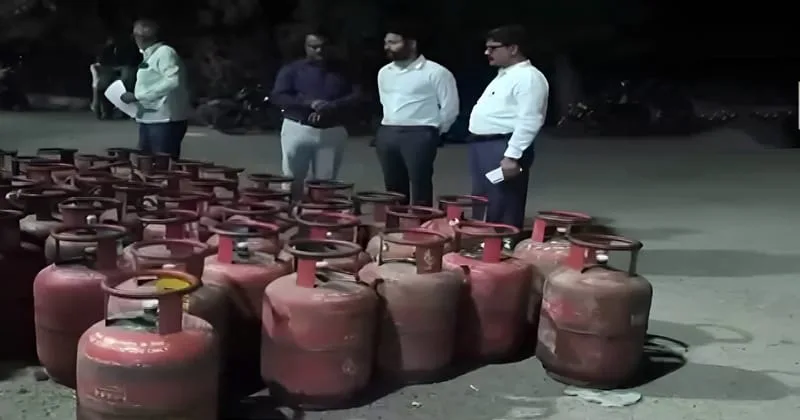
Hapur: A late-night raid by the police in Uttar Pradesh’s Hapur district has triggered a political controversy after authorities recovered a large number of LPG cylinders from the residence of a local Samajwadi Party (SP) leader. According to officials, the operation resulted in the seizure of 55 filled LPG cylinders along with several empty ones from the house of SP leader Abdul Rehman, raising questions about possible illegal storage and black-marketing.
BREAKING: Uttar Pradesh Police recover 55 filled & several empty LPG cylinders from Samajwadi Party leader Abdul Rehman's residence in Hapur during a nighttime raid.
Allegations surface of black-marketing & conspiracy to defame Yogi Adityanath govt. Probe underway. pic.twitter.com/sso6KUYGGE
— Megh Updates 🚨™ (@MeghUpdates) March 12, 2026
Nighttime Raid and Seizure
The raid was conducted by the Uttar Pradesh Police following specific intelligence inputs about suspected illegal storage of domestic LPG cylinders. Police teams reportedly reached the residence of Abdul Rehman during the night and carried out a detailed search of the premises.
During the operation, officers discovered dozens of LPG cylinders stored inside the property. Officials confirmed that 55 cylinders were found filled with gas, while several others were empty. The large quantity immediately raised suspicions because domestic LPG cylinders are strictly regulated and cannot legally be stored in such numbers at a private residence without authorisation.
Suspicion of Black-Marketing
Preliminary reports suggest that investigators are examining the possibility that the cylinders were being stored for black-marketing or illegal distribution. Hoarding domestic cylinders and diverting them into commercial or illegal supply chains is a violation of safety regulations and provisions under the Essential Commodities framework. Illegal storage of LPG cylinders is also considered a serious safety hazard, as keeping large numbers of cylinders in residential areas can pose risks of explosion or fire.
Police have launched a detailed investigation to determine the source of the LPG cylinders and how they were procured. Authorities are examining whether any gas agencies or distributors were involved in supplying the cylinders illegally, and whether they were meant for black-marketing, illegal resale, or diversion into commercial use. Investigators are also looking into the possibility of an organised network operating behind the storage of such a large number of cylinders. As part of the probe, officials are reviewing supply records and distribution data from nearby LPG agencies to trace the origin and movement of the seized cylinders.