
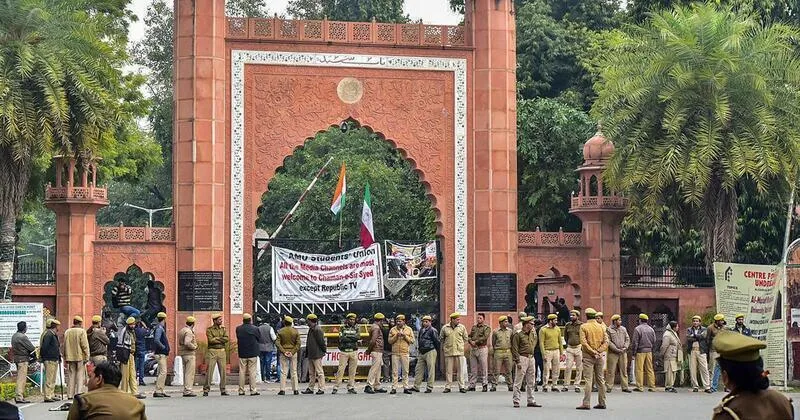
Aligarh: Eight years of reported security-related incidents, campus unrest, and administrative controversies at Aligarh Muslim University (AMU) have drawn periodic public attention to issues concerning oversight, campus governance, and law-and-order responses.
In the latest development on April 9, 2026, the university again came under scrutiny following a joint operation by university security personnel and Uttar Pradesh Police at Sir Ziauddin Hall. During the search, authorities reportedly recovered .32 bore cartridges, 12-bore ammunition, suspected counterfeit currency, multiple mobile phones, and other items from a room allegedly occupied without authorisation by a former non-resident student. Police have linked the recovery to a recent firing incident in Civil Lines, and one individual has been detained for questioning as the investigation continues.
This incident has renewed attention on a range of reported cases from 2018 to 2026, which have been broadly grouped in public discourse into concerns related to security, political activity, and communal tensions on campus.
Security and alleged extremist link cases (2018–2026)
Several incidents over the years have involved allegations of links to extremist organisations, including cases investigated by agencies such as the National Investigation Agency (NIA) and the Uttar Pradesh Anti-Terrorism Squad. These investigations have, at times, examined suspected radicalisation activities, online propaganda, and possible recruitment attempts.
Between 2018 and 2024, some students were also booked in connection with social media posts and online activity alleged to be anti-national or supportive of extremist narratives, including expressions interpreted as sympathetic toward foreign states or groups.
During 2018–2023, multiple protests on campus, including those related to the Citizenship Amendment Act and international geopolitical developments, resulted in FIRs in some cases for alleged unlawful assembly, public disorder, or promotion of enmity. Separately, incidents involving alleged slogan shouting and controversial gatherings during 2018–2019 also led to sedition-related charges in certain instances.
Reports of communal and cultural tensions (2020–2026)
In parallel, there have been recurring allegations and complaints relating to religious and cultural tensions on campus. These include claims raised by some Hindu students and staff regarding discrimination, harassment, or unequal access to opportunities, which have in certain cases been subject to institutional review.
Between 2024 and 2025, disputes also emerged over permission for cultural or religious events, including allegations surrounding restrictions on celebrations such as Holi, which some groups viewed as unequal treatment in cultural accommodation.
Other reported incidents include occasional campus clashes, verbal altercations, and allegations of offensive remarks made on social media or within academic settings. These cases have, in several instances, led to disciplinary action or police complaints.
There have also been complaints about posters or slogans perceived as religiously provocative, which have contributed to tensions and prompted administrative responses aimed at maintaining campus order.
Taken together, these incidents reflect a broader pattern of periodic unrest, competing narratives, and administrative challenges at the institution. They also highlight ongoing debates around freedom of expression, campus neutrality, and the management of diversity within a large and politically active university environment.