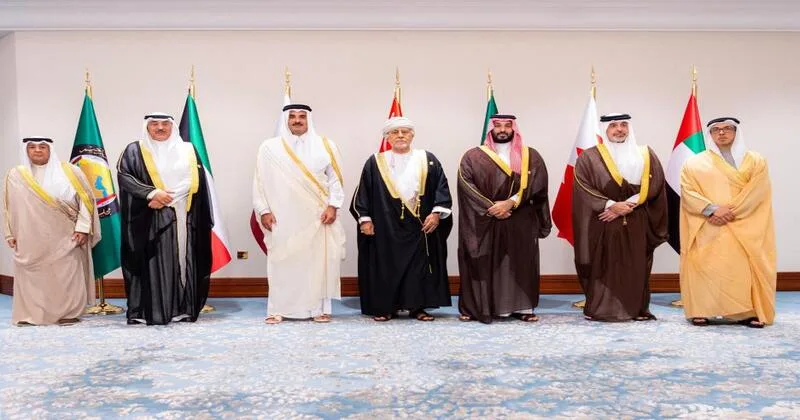
Abu Dhabi: Seven countries, including members of the Gulf Cooperation Council (GCC), have jointly warned Iran over what they described as indiscriminate and brutal missile and drone attacks targeting Arab nations. In a strongly worded joint statement, the United States, Jordan, Kuwait, Qatar, Saudi Arabia, the United Arab Emirates and Bahrain condemned Tehran’s recent strikes on civilian facilities in the Gulf region, asserting their right to self-defence.
The declaration followed a Gulf ministerial meeting held on Saturday evening. The countries said Iran’s actions threaten regional stability and described the targeting of civilians and states not directly involved in hostilities as “reckless behavior.” They emphasised that any attack on their sovereignty, infrastructure or people would not go unanswered. According to the statement released early Sunday, Iranian strikes damaged civilian infrastructure and placed non-combatants at serious risk. The signatories termed the attacks “unjustified” and an assault on sovereign territories. Reaffirming their unity, the seven nations pledged to safeguard the citizens and territorial integrity of the six Gulf states and stressed their collective commitment to maintaining security across the region. The joint statement also underlined the inherent right of self-defence under international law, warning that continued aggression would further destabilise West Asia.
UAE condemns drone strike
In the United Arab Emirates, the Ministry of Defence reported that Iranian drone strikes targeted a warehouse at the Al Salam naval base in Abu Dhabi during the ongoing Iran-Israel conflict. Two containers caught fire in Sunday’s attack, but emergency teams quickly extinguished the blaze. Authorities confirmed there were no casualties in the incident. The UAE strongly condemned the strike, calling it a violation of national sovereignty and international law. Officials reiterated that the country’s security and stability remain a top priority and vowed to take all necessary measures to protect borders and residents. Over the past two days, three foreign nationals, from Pakistan, Nepal and Bangladesh,were killed in Iranian-linked attacks, and at least 58 others were injured. The UAE’s Air Defence Force said it intercepted hundreds of drones and missiles, though some managed to hit civilian installations. Authorities have urged the public not to spread rumours and to rely solely on official sources for accurate information as the volatile situation continues to unfold.
Regional escalation deepens
The warning comes amid rapidly escalating tensions across West Asia. Israeli military operations against Iran have intensified in recent days, while Iran and Hezbollah have reportedly stepped up retaliatory strikes against Israel. The conflict has widened fears of a broader regional confrontation.
Iran’s leadership has adopted a defiant tone following the reported assassination of Supreme Leader Ayatollah Ali Khamenei. Iranian President Masoud Peshawar and Foreign Minister Abbas Araghchi declared that they would continue on Khamenei’s path. Peshawar vowed that Iran’s armed forces would intensify operations and target enemy military bases, stating that Khamenei’s “blood will not be in vain.”
Meanwhile, Iran’s Revolutionary Guard claimed it had targeted the USS Abraham Lincoln, a United States warship. Washington dismissed the claim, asserting that Iranian missiles did not reach the vessel. However, US officials confirmed that three American soldiers were killed during strikes linked to the confrontation with Iran.