Sanskrit in Termez: Ancient monasteries preserving devotion
June 25, 2026
  • Read Ecopy
  • Circulation
  • Advertise
  • Careers
  • About Us
  • Contact Us
Android AppiPhone AppArattai
Organiser
  • ‌
  • Bharat
    • Assam
    • Bihar
    • Chhattisgarh
    • Jharkhand
    • Maharashtra
    • View All States
  • World
    • Asia
    • Europe
    • North America
    • South America
    • Africa
    • Australia
  • Editorial
  • International
  • Opinion
  • RSS @ 100
  • More
    • Op Sindoor
    • Analysis
    • Sports
    • Defence
    • Politics
    • Business
    • Economy
    • Culture
    • Special Report
    • Sci & Tech
    • Entertainment
    • G20
    • Azadi Ka Amrit Mahotsav
    • Vocal4Local
    • Web Stories
    • Education
    • Employment
    • Books
    • Interviews
    • Travel
    • Law
    • Health
    • Obituary
  • Subscribe
    • Subscribe Print Edition
    • Subscribe Ecopy
    • Read Ecopy
  • ‌
  • Bharat
    • Assam
    • Bihar
    • Chhattisgarh
    • Jharkhand
    • Maharashtra
    • View All States
  • World
    • Asia
    • Europe
    • North America
    • South America
    • Africa
    • Australia
  • Editorial
  • International
  • Opinion
  • RSS @ 100
  • More
    • Op Sindoor
    • Analysis
    • Sports
    • Defence
    • Politics
    • Business
    • Economy
    • Culture
    • Special Report
    • Sci & Tech
    • Entertainment
    • G20
    • Azadi Ka Amrit Mahotsav
    • Vocal4Local
    • Web Stories
    • Education
    • Employment
    • Books
    • Interviews
    • Travel
    • Law
    • Health
    • Obituary
  • Subscribe
    • Subscribe Print Edition
    • Subscribe Ecopy
    • Read Ecopy
Organiser
  • Home
  • Bharat
  • World
  • Operation Sindoor
  • Editorial
  • Analysis
  • Opinion
  • Culture
  • Defence
  • International Edition
  • RSS @ 100
  • Magazine
  • Read Ecopy
Home World Asia Central Asia

Sanskrit Beyond India: How ancient Buddhist monasteries in Termez preserved a transregional language of devotion

Nearly two thousand years ago, Sanskrit journeyed far beyond the Indian subcontinent, thriving in the Buddhist monasteries of present-day Uzbekistan. Inscriptions at Termez attest to its role as a vibrant language of devotion, scholarship, and cross-regional exchange along the Silk Route

WEBDESKWEBDESK
Feb 28, 2026, 01:40 pm IST
in Central Asia, World, Asia, Culture, International Edition
Follow on Google News
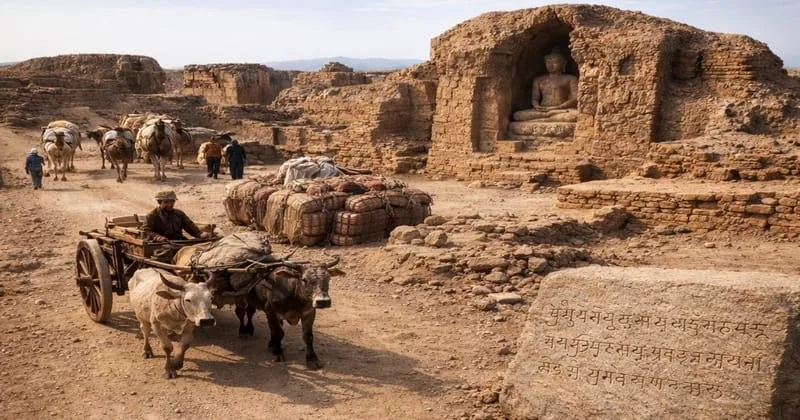
Representative image

Representative image

FacebookTwitterWhatsAppTelegramEmail

Nearly two millennia ago, Sanskrit, the classical language of India, flourished far beyond the subcontinent, reaching the lands of present-day Uzbekistan. Archaeological discoveries in the Termez region reveal that Sanskrit was not a distant curiosity but a living language of devotion, scholarship, and monastic life deep in Central Asia.

Samskrit in Uzbekistan!
🔥🔥🔥🔥🔥🔥🔥🔥

This may be shocking but absolutely true!

Long before modern borders, before nation-states, before even the idea of “South Asia” and “Central Asia” as separate civilisations — Samskrit was already travelling across the Silk Route.

In… pic.twitter.com/3434IiDhXj

— Jijith Nadumuri Ravi (@Jijith_NR) February 25, 2026

At the ancient Buddhist monastic complexes of Kara-Tepe and Fayaz-Tepe, archaeologists have uncovered inscriptions written in Indian scripts, containing devotional and dedicatory formulas in Sanskrit. These inscriptions were not casual graffiti by passing traders; they were integral components of functioning monasteries, reflecting a sophisticated religious and intellectual ecosystem. Manuscript fragments, stone carvings, and dedicatory formulas testify that Sanskrit served as both a sacred and scholarly language, facilitating the transmission of Buddhist thought in its classical Indian form.

Termez was a vital junction on the Silk Route, connecting India, Bactria, Persia, and China. Along this corridor, monks, merchants, and pilgrims carried not only goods but also texts, rituals, philosophies, and cosmologies. Sanskrit inscriptions in Central Asia reveal that the movement of ideas was as dynamic and structured as the trade of silk, spices, and precious stones. Monasteries along the route were centres of learning, where Sanskrit functioned as the medium for ritual, scholarship, and spiritual practice.

Also Read: Delhi Car Blast Probe: NIA arrests two J&K residents linked to Ansar Ghazwat-ul-Hind for supplying weapons

The presence of Sanskrit in Termez challenges conventional notions of geography and cultural boundaries. Central Asia was not a periphery of Indian civilisation but an active frontier, a region where Indian intellectual traditions were cultivated, translated, and transmitted across vast distances. The Silk Route was not merely a trade network; it was a knowledge highway, connecting diverse regions through shared civilisational spaces.

Sanskrit in Termez highlights a world in which intellectual and spiritual exchange was already transregional and globalised, nearly two thousand years ago. The Gangetic plains of India, the Oxus corridor, and the monasteries of Central Asia were linked by a living network of language, thought, and devotion. Stone inscriptions, manuscript fragments, and dedicatory formulas do more than preserve history; they record a cosmopolitan intellectual world where Sanskrit travelled across mountains, rivers, and deserts, carrying the ideas, rituals, and texts of Indian civilisation far beyond its birthplace.

Sanskrit’s journey along the Silk Route stands as a testament to the enduring reach of Indian scholarship and spiritual life, demonstrating that the transmission of knowledge has always transcended borders, long before the modern era of globalisation.

 

Topics: Central AsiaSilk RouteAncient MonasteriesHistorical LanguagesBuddhismSanskritindian civilisation
ShareTweetSendShareSend
✮ Subscribe Organiser YouTube Channel. ✮
✮ Join Organiser's WhatsApp channel for Nationalist views beyond the news. ✮
Previous News

Congress’ Ideological Shift Claim Falls Flat as Jamaat-e-Islami Book Calls Democracy, Secularism ‘Superstitions’

Next News

India’s SIM-Binding Mandate: How the DoT is forcing messaging apps to link services strictly to active SIM cards

Related News

India’s history is not merely a tale of foreign domination but also a remarkable story of resilience, resistance & civilisational continuity

Indian History: Not just foreign rule, but a timeless story of resistance, self-respect and civilisational resilience

Representative Image

Europe’s Supremacy: A manufactured narrative imposed via colonial power is counterd by India’s civilizational memory

(Left) Russian President Vladimir Putin (Right) Prime Minister Narendra Modi (Image Credit: ANI)

Russia Day 2026: The ancient civilisational bond between India and Moscow

India–Myanmar Civilisational Connect: Significance of President U Min Aung Hlaing’s visit to India

Sacred relics of Buddha’s disciples return to India from Mongolia; Historic 10-day expo echoed civilisational ties

Sacred relics of Buddha's chief disciples reach Mongolia from Sanchi

Sacred Relics of Buddha’s chief disciples reach Mongolia from Sanchi; Reflect India’s spiritual & civilisational legacy

Load More

Latest News

Andhra Pradesh Chief Minister N. Chandrababu Naidu inaugurates the Jonnagiri Gold Mining Project in Kurnool district

Andhra Pradesh: CM Chandrababu Naidu lunches first major gold mining project in Kurnool district

AI-generated image for representation

Tamil Nadu: School teacher faces action over alleged humiliation of menstruating student

Cochin Shipyard (File Photo)

Keralam: ‘I Love Pakistan’ inscription found inside vessel at Cochin Shipyard; Central agencies launch probe

BJP national spokesperson Pradeep Bhandari

Karnataka: BJP accuses Kharge family of illegally acquiring government land worth over Rs 100 crore

Elomi Global Worship Centre in Omalloor, Pathanamthitta district ; Pastor Binu Vazhakkuttom (Left to Right)

Keralam: Child abuse allegations at Pentecostal worship centre in Pathanamthitta; locals demand Pastor Binu’s arrest

Modi Govt’s Tourism Revolution: 183 projects, Rs 9,225 crore investment & rise of India’s cultural & spiritual circuits

Padma Awards 2026: Tamil Nadu’s distinguished achievers receive national honours

India’s history is not merely a tale of foreign domination but also a remarkable story of resilience, resistance & civilisational continuity

Indian History: Not just foreign rule, but a timeless story of resistance, self-respect and civilisational resilience

From $10 Billion to $190 Billion: Indian Bioeconomy Touches New Heights in 12 Years

From $10 Billion to $190 Billion: India’s Bioeconomy leads a 12-Year science revolution

Nagpur | Acceptance of Bharatiya civilisational values is steadily increasing worldwide: Shanta Kumari

Load More
  • Privacy
  • Terms
  • Cookie Policy
  • Refund and Cancellation
  • Delivery and Shipping

© Bharat Prakashan (Delhi) Limited.
Tech-enabled by Ananthapuri Technologies

  • Home
  • Search Organiser
  • Bharat
    • Assam
    • Bihar
    • Chhattisgarh
    • Jharkhand
    • Maharashtra
    • View All States
  • World
    • Asia
    • Africa
    • North America
    • South America
    • Europe
    • Australia
  • Editorial
  • Operation Sindoor
  • Opinion
  • Analysis
  • Defence
  • Culture
  • Sports
  • Business
  • RSS @ 100
  • Entertainment
  • More ..
    • Sci & Tech
    • Vocal4Local
    • Special Report
    • Education
    • Employment
    • Books
    • Interviews
    • Travel
    • Health
    • Politics
    • Law
    • Economy
    • Obituary
  • Subscribe Magazine
  • Read Ecopy
  • Advertise
  • Circulation
  • Careers
  • About Us
  • Contact Us
  • Policies & Terms
    • Privacy Policy
    • Cookie Policy
    • Refund and Cancellation
    • Terms of Use

© Bharat Prakashan (Delhi) Limited.
Tech-enabled by Ananthapuri Technologies