India’s energy success silences opposition; Foreign policy shines
June 23, 2026
  • Read Ecopy
  • Circulation
  • Advertise
  • Careers
  • About Us
  • Contact Us
Android AppiPhone AppArattai
Organiser
  • ‌
  • Bharat
    • Assam
    • Bihar
    • Chhattisgarh
    • Jharkhand
    • Maharashtra
    • View All States
  • World
    • Asia
    • Europe
    • North America
    • South America
    • Africa
    • Australia
  • Editorial
  • International
  • Opinion
  • RSS @ 100
  • More
    • Op Sindoor
    • Analysis
    • Sports
    • Defence
    • Politics
    • Business
    • Economy
    • Culture
    • Special Report
    • Sci & Tech
    • Entertainment
    • G20
    • Azadi Ka Amrit Mahotsav
    • Vocal4Local
    • Web Stories
    • Education
    • Employment
    • Books
    • Interviews
    • Travel
    • Law
    • Health
    • Obituary
  • Subscribe
    • Subscribe Print Edition
    • Subscribe Ecopy
    • Read Ecopy
  • ‌
  • Bharat
    • Assam
    • Bihar
    • Chhattisgarh
    • Jharkhand
    • Maharashtra
    • View All States
  • World
    • Asia
    • Europe
    • North America
    • South America
    • Africa
    • Australia
  • Editorial
  • International
  • Opinion
  • RSS @ 100
  • More
    • Op Sindoor
    • Analysis
    • Sports
    • Defence
    • Politics
    • Business
    • Economy
    • Culture
    • Special Report
    • Sci & Tech
    • Entertainment
    • G20
    • Azadi Ka Amrit Mahotsav
    • Vocal4Local
    • Web Stories
    • Education
    • Employment
    • Books
    • Interviews
    • Travel
    • Law
    • Health
    • Obituary
  • Subscribe
    • Subscribe Print Edition
    • Subscribe Ecopy
    • Read Ecopy
Organiser
  • Home
  • Bharat
  • World
  • Operation Sindoor
  • Editorial
  • Analysis
  • Opinion
  • Culture
  • Defence
  • International Edition
  • RSS @ 100
  • Magazine
  • Read Ecopy
Home Bharat

Opposition receives a resounding rebuff in the energy sector; India’s foreign policy proves successful

Amid global energy disruptions triggered by tensions in West Asia and the Strait of Hormuz crisis, India has managed to maintain stability in fuel supply and prices. The situation highlights the strength of its foreign policy and diversified energy strategy, countering long-standing opposition criticism

Mayank ChaturvediMayank Chaturvedi
Mar 23, 2026, 08:00 pm IST
in Bharat, World, West Asia, Asia
Follow on Google News
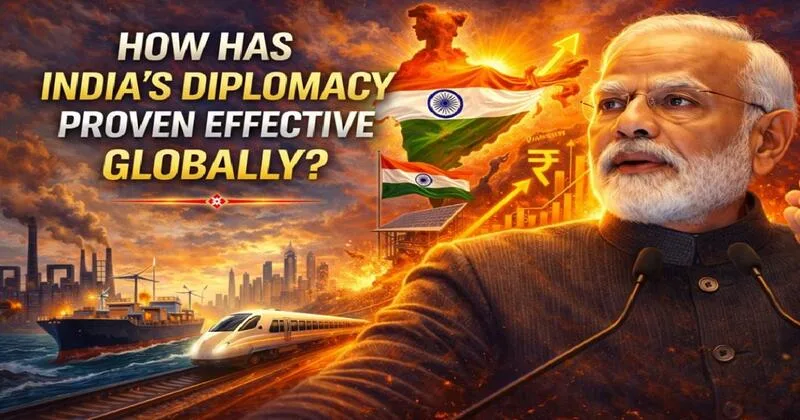
Prime Minister Narendra Modi

Prime Minister Narendra Modi

FacebookTwitterWhatsAppTelegramEmail

Rising tensions in West Asia, the crisis in the Strait of Hormuz, and disruptions to global energy supplies have posed a grave challenge to the world. Even many developed nations appear helpless in the face of this crisis. In such trying times, India’s ability to remain stable and balanced is not a matter of coincidence; rather, it stands as a testament to a well-planned foreign policy and a robust energy strategy. The very issue over which the opposition has long questioned the government has today emerged as India’s greatest strength.
In essence, this situation automatically refutes the allegations levelled by the Opposition, particularly Rahul Gandhi and Congress President Mallikarjun Kharge, who have long sought to put the Modi-led Central Government in the dock regarding the country’s energy and foreign policies.

A glance at the global landscape makes it evident that the closure of the Strait of Hormuz has had repercussions across the entire world. As we all know, approximately twenty per cent of the global oil supply passes through this very route. The moment this route was blocked, Brent crude prices briefly surged to around $120 per barrel. Long queues for fuel formed in several European nations, while significant spikes in petrol prices were recorded across the United States, Canada, and numerous Asian countries. International energy agencies expressed apprehensions regarding a severe shortfall in supply. In stark contrast, the situation in India remained completely under control. Petrol prices remained stable, and the supply of cooking gas continued without any disruption.

Against this entire backdrop, it is only natural that questions arise regarding the role of the opposition. Why is the opposition, which typically criticises the government on every conceivable issue, hesitant to acknowledge this success? Is this merely a matter of political expediency, or does it reflect a tendency to deny reality? While constructive criticism is essential in a democracy, turning a blind eye to facts and levelling baseless allegations can hardly be considered conducive to democratic values.

The opposition has consistently asserted that India’s foreign policy lacks clarity and that the Modi government is solely preoccupied with image-building. The current crisis has exposed these allegations to the harsh light of reality. At a time when even the world’s developed nations appeared helpless in the face of energy supply challenges, India successfully ensured a stable supply mechanism for its citizens. The question naturally arises: would this have been possible had the underlying policy been weak? Evidently, the opposition appears to have no concrete answer to this question.

Also Read: From Import Dependence to Chip Ambition: How Bharat is building a domestic semiconductor ecosystem

A review of the events over the past week clearly highlights the extent of India’s preparedness. A vessel carrying LPG from Texas, USA, arrived at the Mangalore port, while another ship transporting crude oil from Russia reached India. The arrival of five vessels, carrying gas and crude oil, within a span of just seven days serves as a clear indication that the country had already successfully diversified its energy sources. On March 18, a tanker named ‘Jag Ladki’ arrived at Mundra Port, carrying approximately 80,886 metric tons of crude oil. Prior to this, ships named ‘Shivalik’ and ‘Nanda Devi’ arrived on March 16 and 17, carrying about 92,000 metric tons of LPG.

It was observed that the situation became particularly challenging when ships were stranded in the Persian Gulf, making their passage through the Strait of Hormuz extremely difficult. This was the moment when India’s foreign policy and diplomacy faced their true test. Iran granted special permission for Indian vessels to depart its waters and, through its navy, provided a safe passage. Naturally, this incident underscores the significance of trust and balance in international relations. It also becomes evident that India has, over the years, maintained balanced relationships with all major nations- a strategy that has yielded dividends during times of crisis.

In this context, it is also essential to understand that India has diversified its sources of energy imports. The number of countries from which India sources its energy, previously standing at approximately twenty-six, has now risen to around forty. The expansion of energy ties with the United States, Russia, African nations, Latin America, and the Gulf countries constitutes an integral part of this policy. This diversification has reduced dependence on any single region and introduced greater resilience into the supply chain.

Consequently, India’s energy supply remained unaffected, despite the crisis unfolding in a specific region.
Understanding the domestic impact of these developments is even more crucial. In India, over 330 million households rely on cooking gas. Throughout the current crisis, LPG supplies have continued to reach these households without any interruption. The continued stability in domestic petrol prices serves as a testament to India’s success in shielding its citizens from the adverse effects of the global crisis.

The engagement at the Prime Ministerial level with Iran and other heads of state, coupled with the Ministry of External Affairs maintaining constant diplomatic contact, demonstrates that this dialogue has yielded tangible results for Bharat. The safe transit of Indian vessels and the uninterrupted flow of energy supplies stand as clear evidence of this success. On the international stage, this has conveyed a clear message: India firmly believes in resolving issues through dialogue.

Furthermore, India’s standing on the global stage has been significantly bolstered during this crisis. Several nations have now begun to view India as a potential mediator. This situation demonstrates that contemporary India is a leading nation in playing an active role in global politics. It would be accurate to state here that the current energy crisis has vindicated the effectiveness of India’s foreign policy and energy strategy. The allegations levelled by the opposition simply do not hold up in the face of this reality. Bharat has demonstrated that if a policy is clear and the leadership is resolute, even a global crisis can be transformed into an opportunity.

Consequently, Bharat today stands before the world as a self-confident nation, one capable of maintaining balanced relations with the global community while simultaneously safeguarding its own interests. This success, one might argue, is a testament to that broad-based vision wherein India has adopted the policy of “with everyone, against no one.” It is this very policy that is today establishing it as a credible and balanced power on the global stage.

 

Topics: Global oil supplyEnergy diversificationModi governmentIndia Foreign Policyindia energy securityWest Asia TensionsLPG supply India
ShareTweetSendShareSend
✮ Subscribe Organiser YouTube Channel. ✮
✮ Join Organiser's WhatsApp channel for Nationalist views beyond the news. ✮
Previous News

ABPS 2026: A holistic perspective for the entire Bharat

Next News

PM Modi on West Asia crisis: Assures energy security, protection of farmers interest & reiterates for peace & diplomacy

Related News

Strategic crude purchases from multiple suppliers strengthen India's resilience amid global market volatility

Russia remains India’s top oil supplier as June crude imports hit record high; Venezuela emerges as key source

The Modi era is presented as a transformative phase in Indian politics, governance, and national identity, reflecting the aspirations of a rapidly evolving India

Modi Yug: How twelve years of governance reshaped India’s aspirations, identity & development trajectory

12 years of Modi Government: A new era of nation building

A large crowd of Bangladeshis residing in West Bengal gathers at the Hakimpur border crossing in the Basirhat subdivision of North 24 Parganas district to cross over to Bangladesh

Unnatural Demographic Change: Securing Bharat against the silent invasion

A representative image

Ayushman Bharat Crosses 90 Cr ABHA Accounts: How Modi govt is building the world’s largest digital health ecosystem

India-Middle East-Europe Corridor is emerging as a key connectivity project linking India, the Gulf and Europe, with implications that extend far beyond commerce

How India-Middle East-Europe Corridor is reshaping Eurasian trade beyond China’s Belt and Road vision

Load More

Latest News

Quetta court awards life imprisonment to Dr Mahrang

Balochistan: Quetta court awards life imprisonment to Dr Mahrang; BYC calls it Pakistan’s hatred towards Baloch masses

(Left) Site of fire at the coaching centre in Lucknow (Right) Trishank Krishna and Virdendra Shukla arrested

Lucknow Coaching Centre Fire: 4 officials suspended, building owners arrested; Regulatory lapses exposed

UAE President Sheikh Mohamed bin Zayed Al Nahyan and Prime Minister Narendra Modi(File Photo)

UAE to buy BrahMos & Akashteer: Big win for India’s defence ecosystem to seal regional security amid West Asia crisis

West Bengal’s First Budget Under New Government Focuses on Jobs, Welfare and Balanced Growth

West Bengal Budget 2026: Employment, social security and regional development take centre stage

Families besiege Quetta’s Huda Jail over alleged secret trial of Dr Mahrang Baloch

Pakistan’s ‘Faceless Trial’: Families besiege Quetta’s Huda jail over alleged secret trial of Dr Mahrang Baloch

Qatar Gas Hub Blaze Leaves 13 Dead, Indians Among Victims

Qatar Gas Plant Explosion: 13 dead, 66 injured; Indians among victims, embassy activates helpline number

Lucknow, Jun 22 (ANI): Firefighters conducting rescue and relief operations at a coaching centre in Aliganj area where a fire broke out, in Lucknow on Monday. Uttar Pradesh Deputy Chief Minister Brajesh Pathak also present. (ANI Photo)

Lucknow Coaching Centre Fire: Death toll rises to 15; CM Yogi meets victims’ families, orders high-level probe

Book Review | Swayamsevak: Insightful accounts to decipher RSS

Another Vande Mataram moment for Bengal

“Mamata Banerjee has been in denial mode on crime against women from 2012 itself”: Sukhendu Sekhar Roy, former TMC MP

Load More
  • Privacy
  • Terms
  • Cookie Policy
  • Refund and Cancellation
  • Delivery and Shipping

© Bharat Prakashan (Delhi) Limited.
Tech-enabled by Ananthapuri Technologies

  • Home
  • Search Organiser
  • Bharat
    • Assam
    • Bihar
    • Chhattisgarh
    • Jharkhand
    • Maharashtra
    • View All States
  • World
    • Asia
    • Africa
    • North America
    • South America
    • Europe
    • Australia
  • Editorial
  • Operation Sindoor
  • Opinion
  • Analysis
  • Defence
  • Culture
  • Sports
  • Business
  • RSS @ 100
  • Entertainment
  • More ..
    • Sci & Tech
    • Vocal4Local
    • Special Report
    • Education
    • Employment
    • Books
    • Interviews
    • Travel
    • Health
    • Politics
    • Law
    • Economy
    • Obituary
  • Subscribe Magazine
  • Read Ecopy
  • Advertise
  • Circulation
  • Careers
  • About Us
  • Contact Us
  • Policies & Terms
    • Privacy Policy
    • Cookie Policy
    • Refund and Cancellation
    • Terms of Use

© Bharat Prakashan (Delhi) Limited.
Tech-enabled by Ananthapuri Technologies