New Delhi: India’s heavy dependence on imported energy has once again come into focus amid the ongoing conflict involving Iran in West Asia. The country imports nearly 90 per cent of its crude oil, 60 per cent of its liquefied petroleum gas (LPG), and around 50 per cent of its liquefied natural gas (LNG). The geopolitical tensions in the region have underscored how vulnerable global energy supply chains can become during conflicts. However, despite this dependence, India has strengthened its energy security over the years through strategic planning, diversification of supply routes, and the development of underground storage facilities for critical fuel reserves.
While some neighbouring countries, such as Pakistan, have reportedly taken emergency steps and adopted restrictive measures in response to the situation, India’s preparations have so far helped it avoid severe disruptions. Strategic petroleum reserves, diversified import sources, and expanding domestic production have collectively enabled the country to maintain relative stability in its fuel supplies.
Strategic reserves provide a cushion
According to Petroleum and Natural Gas Minister Hardeep Singh Puri, India currently maintains crude oil reserves sufficient for about 25 days of consumption. In addition to this, the country has stocks of petrol and diesel that can last another 25 days, while LPG supplies are estimated to be adequate for 25 to 30 days. Liquefied natural gas (LNG), which is largely used by industries and power plants, is available for around 10 days.
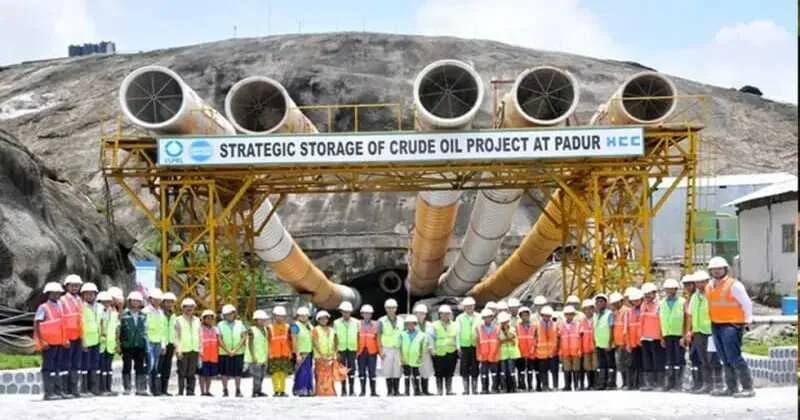
A key component of India’s energy security strategy is its network of underground strategic petroleum reserves. These facilities are located at three major sites: Visakhapatnam in Andhra Pradesh, Mangaluru in Karnataka, and Padur in Tamil Nadu. Built and managed by Indian Strategic Petroleum Reserves Limited, these underground caverns are designed to store massive quantities of crude oil that can be used during supply disruptions or geopolitical crises.
The oldest of these facilities is located in Visakhapatnam, developed roughly a decade ago. Collectively, the caverns can store approximately 5.33 lakh metric tonnes of crude oil, equivalent to nearly 40 million barrels, which can meet about 10 days of India’s national demand.
Underground storage provides several strategic advantages. Since the caverns are located deep below the surface, they are better protected from external threats such as drone strikes, missile attacks, or natural disasters. The underground environment also reduces operational costs compared to conventional storage tanks and significantly lowers the risk of fire accidents or oil spills. So far, the government has not had to tap into these emergency reserves. However, if the situation in global energy markets worsens, these stockpiles could provide crucial breathing space for India to secure alternative supplies from other international sources.
Diversification of oil imports
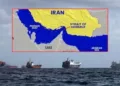
Alongside strategic reserves, India has also accelerated efforts to diversify its crude oil import sources. The government recently stated that India is now importing crude oil from around 40 countries across Europe, Latin America, and West Africa. This diversification strategy has helped reduce the country’s dependence on routes that pass through the sensitive Strait of Hormuz, a key global energy chokepoint located in West Asia. At present, nearly 70 per cent of India’s crude oil imports arrive through routes that bypass the Strait of Hormuz, a significant increase from the earlier 50–55 per cent. This shift has become particularly important during periods of geopolitical tensions in the Gulf region.
In a positive development, Iran has also allowed Indian-flagged tankers to pass safely through the Strait of Hormuz despite the conflict. Recently, a Liberian-flagged oil tanker captained by an Indian officer successfully navigated the strait and arrived in Mumbai, signalling that shipping routes remain operational for now.
India’s broader strategy is to procure high-quality crude oil at competitive prices from multiple suppliers, even amid global political pressures and sanctions regimes. According to a report by Bloomberg, India has already purchased about 30 million barrels of Russian crude oil that were being transported by tankers in the South Asian region. Shipping analytics firm Kpler also reported that India imported around 3.4 million barrels of crude oil from Angola during the first ten days of March. Additionally, the country purchased approximately 1.9 million barrels from the Republic of Congo. These acquisitions suggest that India currently has around 10 million barrels of crude oil readily available through ongoing shipments and secured supply lines.
Strengthening LPG supply
Apart from crude oil, India has also taken steps to strengthen the availability of LPG, which remains a widely used cooking fuel in households and commercial establishments. India is the second-largest importer of LPG in the world, with annual consumption estimated at 31.3 million tonnes.
Although the ongoing tensions in West Asia have led to some price fluctuations and supply pressures, the government has moved quickly to stabilise domestic availability. Earlier this week, emergency powers under the Essential Commodities Act were invoked to regulate supply and increase production.
Following these measures, domestic LPG production has increased by around 30 per cent. India’s underground LPG storage infrastructure is also expected to play a crucial role in managing supply pressures. Last year, the country commissioned its largest underground LPG storage facility in Mangaluru, located nearly 500 metres below ground level. This cavern has a storage capacity of 80,000 tonnes of LPG. Another underground LPG storage facility operates in Visakhapatnam, with a capacity of 60,000 tonnes. Together, these facilities enhance India’s ability to store and distribute LPG efficiently during periods of supply uncertainty.
To further strengthen availability, the government has confirmed that two additional LPG cargo shipments from new sources are already on their way to India. Prior to the current conflict, a significant portion of India’s LPG imports came from Qatar and Saudi Arabia, but the government is now exploring alternative suppliers to ensure uninterrupted energy supplies.
Despite global uncertainties, India’s combination of strategic reserves, diversified imports, and increased domestic production has helped the country maintain stability in its energy sector for the time being.