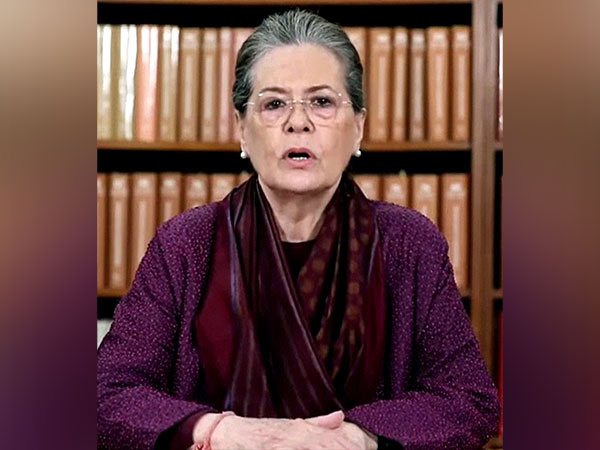
The Bharatiya Janata Party (BJP) on Monday (Dec 22) launched a strong counterattack against Congress leader Sonia Gandhi over her criticism of the recently passed Viksit Bharat Guarantee for Rozgar and Ajeevika Mission (Gramin), or G RAM G, dismissing her remarks as a “flight of political fancy” and accusing her of distorting facts for political mileage.
The G RAM G law, cleared by Parliament last week amid noisy protests from the Congress-led opposition, seeks to replace the nearly two-decade-old Mahatma Gandhi National Rural Employment Guarantee Act (MGNREGA), which was enacted by the United Progressive Alliance (UPA) government in 2005.
In a video message released on Saturday (Dec 20), Sonia Gandhi accused the Modi government of “bulldozing” MGNREGA and pushing the new legislation through Parliament without adequate discussion. Describing G RAM G as a “black law,” she alleged that it diluted the guarantee of employment for rural households and would adversely impact farmers and labourers across the country.
Gandhi also claimed that the new framework weakens the rights-based nature of rural employment by altering the funding structure and increasing the states’ share of financial responsibility to 40 per cent. She said the Congress would oppose the law nationwide and mobilise party workers against what she termed an assault on rural livelihoods.
The opposition has consistently argued that replacing MGNREGA with G RAM G undermines the core promise of assured employment and shifts the financial burden onto states already under fiscal strain.
BJP Hits Back, Accuses Gandhi of Mischaracterisation
Responding to Sonia Gandhi’s remarks, BJP IT cell head Amit Malviya took to social media to reject her claims, stating that her criticism reflected a poor understanding of the legislation.
“Her statements read less like a serious engagement with the law or data and more like a flight of political fancy,” Malviya said, alleging that Gandhi’s arguments were rooted in “mischaracterisations and outright falsehoods.”
Malviya categorically denied the allegation that the new law removes the employment guarantee, asserting that the core commitment to rural employment remains intact under G RAM G.
Addressing one of the central criticisms, Malviya explained that the shift under G RAM G is primarily in the budgeting mechanism, from an open-ended, demand-driven model under MGNREGA to a norm-based allocation framework.
He argued that this change brings predictability, efficiency and fiscal discipline without compromising workers’ entitlements. According to him, the guaranteed number of workdays has, in fact, been increased from 100 days under MGNREGA to 125 days under the new scheme.
“This is not a rollback of rights but an expansion, aligned with present-day rural needs,” Malviya said.
While defending G RAM G, the BJP leader acknowledged that MGNREGA had played an important role in addressing rural distress during its early years. However, he contended that the scheme no longer reflected the realities of rural India.
Citing official data, Malviya said rural poverty levels had declined significantly, household incomes had improved, and access to formal credit had expanded over the years. As a result, he argued, dependence on public works programmes as the primary source of livelihood had reduced.
Rejecting Congress’s claim that the Centre was unfairly transferring financial responsibility to states, Malviya maintained that states had always borne a substantial portion of MGNREGA-related costs. These included material expenses and unemployment allowances, which were often overlooked in political debates.
The revised funding model under G RAM G, he said, merely formalises this arrangement and positions states as equal partners in implementation rather than passive recipients of central funds.
On concerns raised by Sonia Gandhi regarding restrictions on workdays, Malviya clarified that the provisions were designed to remain flexible. He said the intent was to prevent disruption of agricultural activity during peak seasons while still expanding the overall annual employment guarantee.
He also dismissed allegations that the new framework weakens Panchayati Raj institutions, stating that the reforms were aimed at improving transparency and efficiency rather than centralising power.
Malviya further highlighted what he described as long-standing shortcomings of MGNREGA, including misappropriation of funds, fake job cards, and weak monitoring mechanisms. He claimed that the Modi government had addressed these issues through reforms such as Aadhaar-linked payments, digital attendance systems and geo-tagging of assets.
According to him, these measures have strengthened accountability and improved delivery of benefits at the grassroots level.