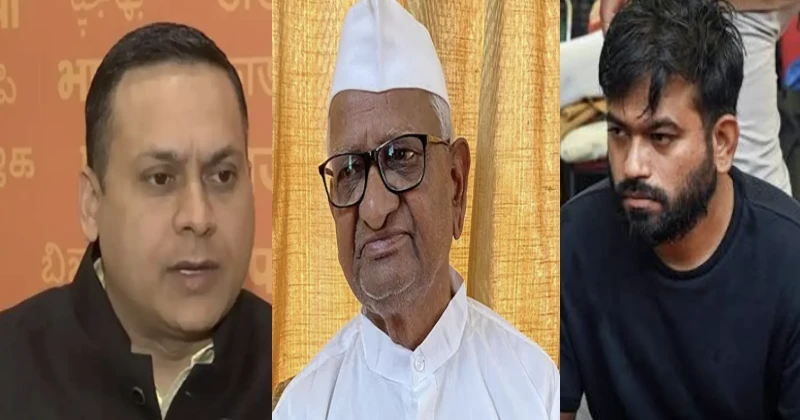
New Delhi: A fresh controversy has erupted after Cockroach Janta Party (CJP) founder Abhijeet Dipke took a swipe at veteran social activist Anna Hazare, referring to him as a “buddha” and questioning the role of senior citizens in socio-political movements. Dipke reportedly said people in their 60s and 70s should retire and make way for the younger generation, drawing backlash over his remarks.
The comments have sparked a debate over generational leadership, respect for senior public figures and the role of veterans in shaping social movements. Hazare, who became a prominent face of India’s anti-corruption movement, has been a significant figure in public life for decades.
Reacting to Dipke’s comments, BJP leader Amit Malviya said, “We don’t need to take any inspiration from Buddhas like Anna Hazare!” He questioned the manner in which the young activist had spoken about Hazare and said the episode reflected more than mere political disagreement.
“This isn’t just rudeness, but a complete display of the absence of values,” Malviya said.
The BJP leader’s remarks came after Dipke, during a media interaction, questioned whether people in their 50s, 60s and 70s should continue to have a role in political and social movements. Dipke suggested that members of older generations should voluntarily retire from such activities and move to an ashram, arguing that decisions concerning the future of students and young people should be left to the younger generation.
“अन्ना हज़ारे जैसे बुद्धों से हमें कोई इंस्पिरेशन लेने की ज़रूरत नहीं!”
यह सिर्फ़ बदतमीज़ी नहीं, बल्कि संस्कारों के पूर्ण अभाव का परिचय है.
जो व्यक्ति अपने से कहीं अधिक उम्र के लोगों के लिए ऐसी भाषा इस्तेमाल करता है, उसे पहले यह सोचना चाहिए कि उसके अपने पिता की उम्र क्या है.… pic.twitter.com/L4kpZ0klno
— Amit Malviya (@amitmalviya) August 7, 2026
The comments drew particular attention because of Hazare’s earlier association with the youth-led CJP movement. Hazare had publicly expressed support for the participation of young people in public life, even while reportedly raising questions about the appropriateness of the party’s name.
Dipke himself had participated in the Anna Hazare-led anti-corruption movement as a school student and was associated with the campaign’s iconic “Main Anna Hazare” imagery. It was against this backdrop that Malviya questioned whether the language used against Hazare would be considered acceptable if directed at someone within the speaker’s own family.
“The person who uses such language for people much older than themselves should first consider what their own father’s age is. Would the same vocabulary be acceptable for them?” Malviya asked.
His criticism focused on the distinction between challenging an individual’s political views and dismissing their contribution on the basis of age. While young activists are free to question the methods, relevance or political influence of older public figures, Malviya argued that disagreement does not justify abandoning civility.
“Political disagreement has its place, but decency and decorum also mean something, “he said. Malviya further stated the importance of maintaining standards of public discourse, concluding, “When language degrades, logic abandons it too.”
The controversy therefore goes beyond the disagreement between a young political activist and a veteran social campaigner. At its centre is a larger question about whether generational change in public life must necessarily come with contempt for those who came before.