AI-driven technique analyses heart cells' inner electrical signals from outside: Study
June 4, 2026
  • Read Ecopy
  • Circulation
  • Advertise
  • Careers
  • About Us
  • Contact Us
Android AppiPhone AppArattai
Organiser
  • ‌
  • Bharat
    • Assam
    • Bihar
    • Chhattisgarh
    • Jharkhand
    • Maharashtra
    • View All States
  • World
    • Asia
    • Europe
    • North America
    • South America
    • Africa
    • Australia
  • Editorial
  • International
  • Opinion
  • RSS @ 100
  • More
    • Op Sindoor
    • Analysis
    • Sports
    • Defence
    • Politics
    • Business
    • Economy
    • Culture
    • Special Report
    • Sci & Tech
    • Entertainment
    • G20
    • Azadi Ka Amrit Mahotsav
    • Vocal4Local
    • Web Stories
    • Education
    • Employment
    • Books
    • Interviews
    • Travel
    • Law
    • Health
    • Obituary
  • Subscribe
    • Subscribe Print Edition
    • Subscribe Ecopy
    • Read Ecopy
  • ‌
  • Bharat
    • Assam
    • Bihar
    • Chhattisgarh
    • Jharkhand
    • Maharashtra
    • View All States
  • World
    • Asia
    • Europe
    • North America
    • South America
    • Africa
    • Australia
  • Editorial
  • International
  • Opinion
  • RSS @ 100
  • More
    • Op Sindoor
    • Analysis
    • Sports
    • Defence
    • Politics
    • Business
    • Economy
    • Culture
    • Special Report
    • Sci & Tech
    • Entertainment
    • G20
    • Azadi Ka Amrit Mahotsav
    • Vocal4Local
    • Web Stories
    • Education
    • Employment
    • Books
    • Interviews
    • Travel
    • Law
    • Health
    • Obituary
  • Subscribe
    • Subscribe Print Edition
    • Subscribe Ecopy
    • Read Ecopy
Organiser
  • Home
  • Bharat
  • World
  • Operation Sindoor
  • Editorial
  • Analysis
  • Opinion
  • Culture
  • Defence
  • International Edition
  • RSS @ 100
  • Magazine
  • Read Ecopy
Home International Edition America USA

AI-driven technique analyses heart cells’ inner electrical signals from outside: Study

In a groundbreaking development, researchers have unveiled an innovative AI-driven technique that can analyse the intricate inner electrical signals of heart cells without invasive procedures

WEBDESKWEBDESK
Jan 18, 2025, 11:00 pm IST
in USA, Health
Follow on Google News
Representative Image

Representative Image

FacebookTwitterWhatsAppTelegramEmail

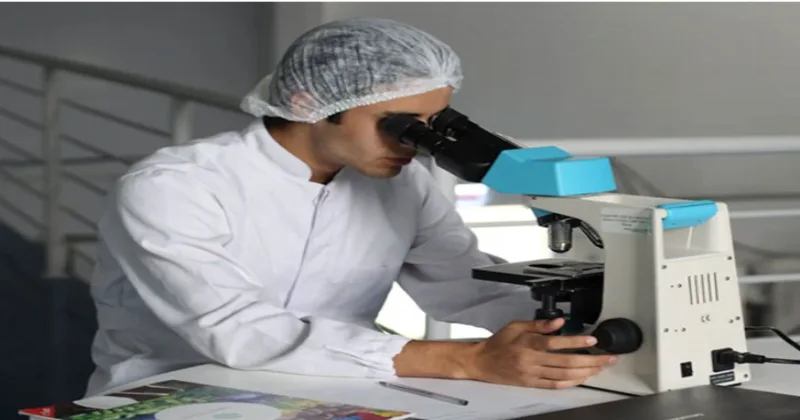
California: A team of researchers led by the University of California, San Diego, and Stanford University has discovered a noninvasive approach for monitoring electrical activity inside cardiac muscle cells from the outside, without physically penetrating the cells.

The method is based on capturing electrical signals from outside the cells and using AI to reconstruct the signals within the cells with high precision.The electrical signals inside heart muscle cells provide insights into how the heart functions, how its cells communicate and how they respond to drugs. However capturing these signals typically involves puncturing the cells with tiny electrodes, which can damage them and make large-scale testing complicated.

Now, researchers have found a way to peer inside the cells without actually going in. The key lies in extracting the relationship between the signals inside the cells (intracellular signals) and those recorded on their surface (extracellular signals). “We discovered that extracellular signals hold the information we need to unlock the intracellular features that we’re interested in,” said Zeinab Jahed, a professor in the Aiiso Yufeng Li Family Department of Chemical and NanoEngineering at UC San Diego, who is one of the study’s senior authors. Keivan Rahmani, a nanoengineering Ph.D. student in Jahed’s lab, is the first author of the study.

While extracellular signals can be captured with less invasive methods, they do not provide much detail about the cell’s electrical activity. “It is like listening to a conversation through a wall-you can detect that communication is happening, but you miss the specific details,” explained Jahed. “In contrast, intracellular signals offer the details, making you feel like you are sitting inside the room hearing every word clearly, but they can only be captured by invasive and more technically challenging methods.” Using AI, Jahed, Rahmani and colleagues developed a method to correlate extracellular signals with specific intracellular signals.

To develop the new method, the team first engineered an array of nanoscale, needle-shaped electrodes. These electrodes, each up to 200 times smaller than a single heart muscle cell, are made of silica-coated with platinum. Heart muscle cells, derived from stem cells, were grown and then placed on the electrode array.

The researchers collected a massive dataset–thousands of pairs of electrical signals–each pair linking an extracellular recording with its corresponding intracellular signal. The data included how the cells responded when exposed to various drugs. This offered a rich library of data on how heart muscle cells behave under different conditions.

When analyzing these pairs, researchers identified patterns between the extracellular and intracellular signals. They then trained a deep learning model to predict what the intracellular signals looked like based solely on the extracellular recordings. In tests, their model created accurate and complete reconstructions of the intracellular signals.

This work has important applications in drug screening, said Jahed. Every new pharmaceutical must undergo rigorous testing to ensure it does not adversely affect the heart–a process known as cardiotoxicity testing. Part of this process involves collecting detailed intracellular data from heart cells. Subtle changes in these electrical signals can provide clues about a drug’s effects on the heart, which can help drug developers assess the safety of new medications. “Currently, this is a lengthy and costly process. It typically starts with tests on animal models, which don’t always predict human outcomes,” said Jahed.

By using the new AI-driven approach in this study, researchers can screen drugs directly on human heart cells. This can offer a more accurate picture of how a drug will behave in the human body and potentially bypass the need for early-stage animal testing.

“This could dramatically reduce the time and cost of drug development,” said Jahed. “And because the cells used in these tests are derived from human stem cells, it also opens the door to personalized medicine. Drugs could be screened on patient-specific cells to predict how an individual might respond to these treatments.”
While the current study focused on heart muscle cells, the researchers are already working to expand their method to other types of cells, including neurons. Their goal is to apply this technology to better understand a wide array of cellular activities in different tissues. (With inputs from ANI)
 

Topics: Artificial IntelliegnceUniversity of Californiaai
ShareTweetSendShareSend
✮ Subscribe Organiser YouTube Channel. ✮
✮ Join Organiser's WhatsApp channel for Nationalist views beyond the news. ✮
Previous News

Jaishankar on India-China ties: ‘Working to disentangle relations from Post-2020 border complications’

Next News

36th Holocaust Day: Kashmiri Pandits – A saga of broken promises

Related News

CM Mohan Charan Majhi along with Union IT Minister Ashwini Vaishnaw during the ground-breaking ceremony of the Heterogeneous Integration Packaging Solutions (3DGS) project at Info Valley.

Odisha hosts groundbreaking India’s 1st advanced 3D semiconductor packaging unit; Major boost to AI, 5G & Defence Tech

Representative Image (Image generated from AI)

IIT Madras brings affordable EdTech solutions to rural classrooms under EduReach initiative

Representative Image

India’s AI Education Revolution: How policy, research and skilling are building the future workforce

India Finland increase cooperation

“India-Finland strategic partnership will accelerate cooperation from AI to 6G,” says PM Modi

Bharat GPT

India unveils Bharatiya GPT at AI Summit, blending ancient wisdom with artificial intelligence

Prime Minister Narendra Modi (centre) joins hands with Google CEO Sundar Pichai, OpenAI CEO Sam Altman and others during the India AI Impact Summit 2026, in New Delhi. | Photo: YouTube/@NarendraModi

AI Impact Summit: PM Modi presents human-centric ‘MANAV Vision’ for AI

Load More

Latest News

A representative image generated using AI

BHAVYA Scheme to transform India’s Manufacturing Landscape: DPIIT secretary calls for investment-ready industrial parks

Keralam: Madrasa Ustad Shemeer Asari sends Obscene video to Girls in WhatsApp Group, asks if they can do the same

Keralam: Madrasa Ustad Shemeer Asari sends Obscene video to Girls in WhatsApp Group, asks if they can do the same

Board outside the office of Karnataka Lokayukta

Karnataka government accused of shielding tainted officials as Lokayukta probes remain stalled

Ritabrata Banerjee Claims LoP Post as Revolt Rocks Mamata Banerjee's Party

TMC vs TMC in Bengal: Expelled leader Ritabrata Banerjee stakes claim to LoP post, deepening crisis in Mamata’s party

DRDO, IAF successfully flight-test indigenous RudraM-II air-to-surface missile

DRDO, IAF conduct successful RudraM-II Missile trials under extreme conditions, boosting India’s defence self-reliance

India receive the fourth squadron of the Russian-made S-400 air defence system

India receives fourth S-400 missile squadron from Russia, bolstering air defence

Union Minister Shivraj Singh Chouhan

Union Minister Shivraj Singh Chouhan pushes farmer-first reforms at national kharif campaign 2026 meet

Firhad Hakim Seeks Resignation as Kolkata Mayor Amid Growing Crisis in Mamata Banerjee's TMC

Another Shock for TMC? Mamata Banerjee’s trusted lieutenant Firhad Hakim seeks to quit as Mayor amid crisis

TCS Nashik Case: Former AIMIM MP Imtiaz Jaleel Mentioned in 1,500-Page Chargesheet; Admits Meeting Nida Khan’s Family

TCS Corporate Jihad Case: Imtiaz Jaleel met Nida Khan’s family while she was absconding, says 1,500-page chargesheet

PM Modi to Overtake Nehru as India's Longest-Serving Elected Prime Minister on June 10

PM Modi set to surpass Nehru’s record, become India’s longest-serving elected Prime Minister

Load More
  • Privacy
  • Terms
  • Cookie Policy
  • Refund and Cancellation
  • Delivery and Shipping

© Bharat Prakashan (Delhi) Limited.
Tech-enabled by Ananthapuri Technologies

  • Home
  • Search Organiser
  • Bharat
    • Assam
    • Bihar
    • Chhattisgarh
    • Jharkhand
    • Maharashtra
    • View All States
  • World
    • Asia
    • Africa
    • North America
    • South America
    • Europe
    • Australia
  • Editorial
  • Operation Sindoor
  • Opinion
  • Analysis
  • Defence
  • Culture
  • Sports
  • Business
  • RSS @ 100
  • Entertainment
  • More ..
    • Sci & Tech
    • Vocal4Local
    • Special Report
    • Education
    • Employment
    • Books
    • Interviews
    • Travel
    • Health
    • Politics
    • Law
    • Economy
    • Obituary
  • Subscribe Magazine
  • Read Ecopy
  • Advertise
  • Circulation
  • Careers
  • About Us
  • Contact Us
  • Policies & Terms
    • Privacy Policy
    • Cookie Policy
    • Refund and Cancellation
    • Terms of Use

© Bharat Prakashan (Delhi) Limited.
Tech-enabled by Ananthapuri Technologies