A group of 124 former civil servants, diplomats and other officials has defended India’s electoral system, stating that allegations of election rigging must be supported by evidence. The signatories said repeated use of the word “rigged” without evidence undermines democratic trust and maintained that citizens have the right to question the electoral process, while the burden of proof rests with those making the allegations.
In their statement, the signatories said, “We have conducted or studied India’s elections all through our lives. We prepared the rolls, trained polling parties, sealed strong rooms and supervised counts. We belong to no party. We write because one word, ‘rigged’, is now thrown at our elections without evidence, and every repetition wounds democratic trust that belongs to all of us.”
Recalling their experience of election administration, they said they had witnessed booth capturing, intimidation by local strongmen, ballot boxes being stuffed or stolen, and voters being turned away. They noted that Parliament criminalised booth capturing in 1989.
“We know what a rigged election looks like. We served in those days you know only from films: the katta at the booth, the bahubali’s men, ballot boxes stuffed or stolen, voters turned away. Booth capturing was so common that Parliament made it a crime in 1989. When violence speaks, democracy falls silent,” the statement said.
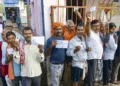
The signatories cited the 2025 Bihar Assembly election, claiming that the state, once associated with booth capturing, conducted the election without a single re-poll for the first time in its history. They also stated that voter turnout was the highest since 1951 and that women voted in record numbers.
“This did not happen because officials became saints. It happened because the system that ECI created trusts no one blindly,” they said, referring to safeguards such as candidates’ polling agents monitoring booths, signed records of votes counted, sealed electronic voting machines and security arrangements for strong rooms.
The statement said paper slips were matched with machine counts, a safeguard upheld by the Supreme Court in 2024.
The signatories argued that rigging would require the silence of tens of thousands of officials serving under governments of different political affiliations, as well as agents representing losing parties. “No such conspiracy has ever been proved,” they said.
On the Election Commission’s composition, the signatories said the institution was made a multi-member body to prevent any single individual from exercising unchecked authority. They referred to the Supreme Court’s 1995 ruling upholding the design.
“The same logic governs the top. The Election Commission was made a multi member body, a design the Supreme Court upheld in 1995, so that no one person holds such power. Three Commissioners weigh every question from different angles and that’s not something unforeseen,” the statement said.
Describing the Special Intensive Revision (SIR) of electoral rolls as a process to remove ineligible voters, the signatories said the exercise could cause some inconvenience but was part of efforts to improve the electoral system.
“Ordering a Special Intensive Revision is a cleaning up operation, it sanitises voters lists and weeds out ineligible voters. It brings some discomfort in the process, which is part of every major initiative to improve the health of Indian democracy,” they said.
The statement also cited electoral outcomes under the same Election Commission, noting that the party ruling at the Centre lost Himachal Pradesh, Karnataka, Telangana, Jharkhand and Jammu and Kashmir, and lost its parliamentary majority in the 2024 general election.
“Institutions cannot be judged on the touchstone of political affiliation. Under this same Commission, the party ruling at the Centre lost Himachal Pradesh, Karnataka, Telangana, Jharkhand and Jammu & Kashmir, and in 2024 lost its own majority. The winners raised no complaint. A system cannot be honest when you win and rigged when you lose,” the signatories said.
Emphasising the legal procedures available to challenge electoral processes, they said citizens could file objections to electoral rolls through signed declarations and approach High Courts through election petitions.
“Questioning is every citizen’s right. Proving is the accuser’s duty. The law provides the means: objections to the roll on a signed declaration, where falsehood is a punishable offence, and election petitions before the High Courts. A charge made at press conferences but never placed on oath can be neither tested nor answered. Suspicion, however loud, is not proof,” the statement said.
Defending the SIR in Bihar, the signatories said the state’s electoral rolls had not undergone intensive revision since 2003. According to the statement, officials identified approximately 22 lakh deceased electors, seven lakh duplicate entries and lakhs of people who had permanently moved away.
“This matters most for the SIR. Bihar’s rolls had not been intensively revised since 2003. Officers found about 22 lakh dead electors, 7 lakh duplicate entries and lakhs more who had moved away for good. Every such name is an invitation to impersonation. An uncleaned roll does not protect the voter. It protects the fraudster,” they said.
The signatories rejected the contention that the SIR was intended to exclude voters, stating that the draft electoral roll was provisional and that omission from it did not automatically mean deletion. They said voters were entitled to notice and a hearing before their names were removed and that two levels of appeal were available.
“Nor is the SIR a weapon of exclusion. The draft roll is provisional, and absence from it is not deletion. No name is removed without notice and a hearing. Two levels of appeal follow. Every party may post agents beside every Booth Level Officer. While the dead and the duplicated were removed, about 21.5 lakh new voters were added,” the statement said.
The statement further referred to the Supreme Court’s oversight of the revision. It said the Court declined to halt the SIR but directed the publication of the names of all 65 lakh people omitted from the draft roll, along with reasons for their exclusion. It also referred to online claims, acceptance of Aadhaar as proof of identity, the possibility of striking down the exercise if illegality was found and the provision of free legal aid for appeals.
“On 27 May 2026, the Court upheld the Commission’s authority under Article 324 of the Constitution and the Representation of the People Act and added safeguards for wrongly deleted voters,” the signatories said.
“Errors must be corrected, but the legitimacy of the SIR is settled. Respecting the Court’s verdict, even when it disappoints us, is the price of a constitutional democracy,” they added.
The signatories urged citizens to verify their names on electoral rolls and help their parents, neighbours and migrant workers check their entries. They also called for assistance to those whose names were missing so that they could file claims for inclusion.
“So check your name on the roll. Help your parents, neighbours and migrant workers check theirs. If someone is missing, help them file a claim,” the statement said.
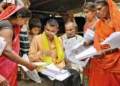
Drawing attention to the work of Booth Level Officers, the signatories said many were teachers and anganwadi workers who visited households to verify electoral details. They argued that sweeping allegations of electoral fraud unfairly discredited their work.
“Remember the Booth Level Officers, often teachers and anganwadi workers, who walk from door to door. Every sweeping allegation calls their honest work a fraud. That’s unfair and unjust. Question everything, but when someone says ‘rigged’, ask for proof they will swear to,” they said.
Concluding the statement, the signatories questioned whether allegations of rigging were directed at the electoral system itself or at the outcome of an election.
“If the system you call rigged is the same one that handed you your victories, ask yourself whether it is the system you doubt, or only the result,” they said.
The statement further argued that democratic institutions were weakened by political narratives that sought to mobilise sections of citizens without sufficient evidence that their votes had not been counted or did not matter.
“Democracies are worn away by those who create loud political narratives to incite volatile sections of citizens without sufficient proven evidence that their vote was never counted, or their vote doesn’t matter. That’s clearly an attempt to find relevance after being discarded by people through electoral system,” the statement said.
The signatories include former Foreign Secretary Kanwal Sibal, former ambassadors Bhaswati Mukherjee and Ashok Sajjanhar, former Chief Secretary of Andhra Pradesh Iyer Krishna Rao, former Chief Secretary of Telangana Shailendra Kumar, former Chief Secretary of Bihar Ashok Kumar Sinha, former Chief Secretary of Punjab Sarvesh Kaushal, former Chief Secretary of Kerala Palatt Mohandas, and former Additional Chief Secretary of Karnataka M. Madan Gopal, among others. The attached list contains 124 names of former officials from the IAS, IFS, IPS, IRS, Indian Forest Service and other services.