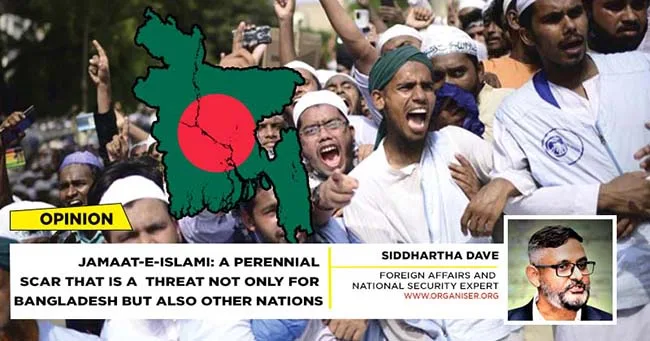
Jamaat-E-Islami: A perennial scar that is a threat not only for Bangladesh but also other nations
June 16, 2026
  • Read Ecopy
  • Circulation
  • Advertise
  • Careers
  • About Us
  • Contact Us
Android AppiPhone AppArattai
Organiser
  • ‌
  • Bharat
    • Assam
    • Bihar
    • Chhattisgarh
    • Jharkhand
    • Maharashtra
    • View All States
  • World
    • Asia
    • Europe
    • North America
    • South America
    • Africa
    • Australia
  • Editorial
  • International
  • Opinion
  • RSS @ 100
  • More
    • Op Sindoor
    • Analysis
    • Sports
    • Defence
    • Politics
    • Business
    • Economy
    • Culture
    • Special Report
    • Sci & Tech
    • Entertainment
    • G20
    • Azadi Ka Amrit Mahotsav
    • Vocal4Local
    • Web Stories
    • Education
    • Employment
    • Books
    • Interviews
    • Travel
    • Law
    • Health
    • Obituary
  • Subscribe
    • Subscribe Print Edition
    • Subscribe Ecopy
    • Read Ecopy
  • ‌
  • Bharat
    • Assam
    • Bihar
    • Chhattisgarh
    • Jharkhand
    • Maharashtra
    • View All States
  • World
    • Asia
    • Europe
    • North America
    • South America
    • Africa
    • Australia
  • Editorial
  • International
  • Opinion
  • RSS @ 100
  • More
    • Op Sindoor
    • Analysis
    • Sports
    • Defence
    • Politics
    • Business
    • Economy
    • Culture
    • Special Report
    • Sci & Tech
    • Entertainment
    • G20
    • Azadi Ka Amrit Mahotsav
    • Vocal4Local
    • Web Stories
    • Education
    • Employment
    • Books
    • Interviews
    • Travel
    • Law
    • Health
    • Obituary
  • Subscribe
    • Subscribe Print Edition
    • Subscribe Ecopy
    • Read Ecopy
Organiser
  • Home
  • Bharat
  • World
  • Operation Sindoor
  • Editorial
  • Analysis
  • Opinion
  • Culture
  • Defence
  • International Edition
  • RSS @ 100
  • Magazine
  • Read Ecopy
Home Bharat

Jamaat-E-Islami: A perennial scar that is a threat not only for Bangladesh but also other nations

As Bangladesh continues to grapple with its past, it needs to recall 1971 when it was fighting for its independence from Pakistan. Then Jamaat-e-Islami betrayed the people by siding with the autocratic Pak Army and suppressing the legitimate liberation movement in a brutal way. It has left a long lasting scar on Bangladesh

Siddhartha DaveSiddhartha Dave
Sep 11, 2024, 07:00 pm IST
in Bharat, Opinion
Follow on Google News
FacebookTwitterWhatsAppTelegramEmail

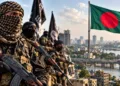
Jamaat-e-Islami’s role in the 1971 Bangladesh Liberation War remains one of the most controversial and painful episodes in the nation’s history. As Bangladesh fought for its independence from Pakistan, Jamaat-e-Islami sided with the Pakistani military, suppressed the liberation movement and participated in a series of atrocities that have left a lasting scar on Bangladesh. This article explores the war crimes committed by Jamaat-e-Islami during the conflict, drawing from tribunal reports and post-liberation committee findings.

Contours of the Liberation War

In 1971, East Pakistan (now Bangladesh) sought independence from West Pakistan due to long-standing economic, political and systemic cultural discrimination. The struggle culminated in a brutal conflict, with the Pakistani military launching Operation Searchlight on March 25, 1971, aimed at suppressing the independence movement. What followed was a nine-month war marked by widespread atrocities including mass killings, rapes and the displacement of millions.

During this period, Jamaat-e-Islami emerged as a staunch opponent of Bangladesh’s independence. The party aligned itself with the Pakistani military, motivated by its ideological commitment to preserving the unity of an Islamic Pakistan. Jamaat leaders viewed the independence movement as a threat to Islamic unity, concept of Ummah and actively collaborated with the Pakistani military to suppress it.

Jamaat-e-Islami played a crucial role in the formation of paramilitary forces that assisted the Pakistani military in carrying out atrocities against the Bengali population. The two most notorious of these groups were the Razakars and Al-Badr, both of which were directly involved in war crimes

  • Razakars: The Razakars were a volunteer militia formed by the Pakistani military, with absolute backing from Jamaat-e-Islami. They were responsible for mass killings, looting, arson, and the persecution of pro-independence activists and minority communities, particularly Hindus
  • Al-Badr: Al-Badr, primarily composed of members from Jamaat’s student wing, Islami Chhatra Sangha, was involved in the systematic abduction, torture, and execution of intellectuals and professionals in the final days of the war. This massacre of intellectuals, known as the “Intellectual Genocide,” was aimed at crippling the future of an independent Bangladesh by eliminating its brightest minds

Holding Jamaat Accountable

In the years following independence, Bangladesh grappled with the legacy of the war and the atrocities committed by collaborators. The calls for justice grew louder, culminating in the establishment of the International Crimes Tribunal (ICT) in 2010. The ICT was tasked with investigating and prosecuting those responsible for war crimes during the 1971 Liberation War. Several high-ranking leaders of Jamaat-e-Islami were tried and convicted by the ICT for their roles in the atrocities:

  • Ghulam Azam: The former leader of Jamaat-e-Islami, Ghulam Azam, was found guilty of five charges, including conspiracy, planning, incitement, and complicity in war crimes. He was sentenced to 90 years in prison. Azam was a key figure in the collaboration with the Pakistani military and was instrumental in forming the Razakars
  • Motiur Rahman Nizami: As the head of Al-Badr, Motiur Rahman Nizami was convicted for his involvement in the killings of intellectuals and other war crimes. He was sentenced to death and executed in 2016. Nizami’s role in the execution of Bangladesh’s intellectuals was particularly heinous, as it sought to destroy the nation’s cultural and intellectual heritage
  • Ali Ahsan Mohammad Mujahid: Another leader of Jamaat, Mujahid, was the secretary-general of Al-Badr and was also sentenced to death for his role in the mass killings of intellectuals. He was executed in 2015

The ICT’s proceedings have been both lauded and criticised. Supporters argue that the trials were necessary for delivering justice to the victims and their families, and for bringing closure to a painful chapter in the nation’s history. Critics, however, have raised concerns about the fairness of the trials, the adequacy of legal representation for the accused and the perceived political motivations behind the tribunal.

The crimes of Jamaat-e-Islami during the 1971 Liberation War were well-documented by various committees and reports established after Bangladesh gained independence. One of the earliest efforts to document the atrocities was undertaken by the People’s Inquiry Commission, formed shortly after liberation. The commission compiled extensive evidence of war crimes, including testimonies from survivors, which were later used in tribunal proceedings. In addition, the 1972 Collaborators Act was enacted to bring those who had collaborated with the Pakistani military to justice. However, political instability and subsequent Government changes led to a delay in prosecutions, allowing many accused individuals to escape justice for decades.

Darkest Chapter in History

The involvement of Jamaat-e-Islami in the 1971 atrocities has left an indelible mark on Bangladesh’s political and social landscape. The party’s role during the war is a source of deep-seated anger and mistrust among many Bangladeshis, particularly the families of the victims. Despite its attempts to rebrand itself as a legitimate political entity, Jamaat’s wartime actions continue to haunt its image. The war crimes trials have also had significant implications for Bangladesh’s political environment. While the trials have provided some measure of justice, they have also deepened political divisions, particularly between Jamaat and its allies and the ruling Awami League.

The war crimes committed by Jamaat-e-Islami during the 1971 Liberation War stand as one of the darkest chapters in Bangladesh’s history. The atrocities carried out by Jamaat-affiliated militias like the Razakars and Al-Badr, under the party’s ideological and logistical support, were brutal and calculated, aiming to crush the independence movement and terrorise the population. The subsequent trials by the International Crimes Tribunal have brought some perpetrators to justice, but the scars of these crimes remain deeply etched in the national consciousness.

As Bangladesh continues to grapple with its past, the story of Jamaat-e-Islami serves as a reminder of the devastating consequences of ideological extremism and the importance of upholding justice and accountability in the face of such horrors.

Topics: Bangladeshbangladesh liberation warPakistani militaryJamaat-e-Islami’s
Siddhartha Dave
Siddhartha Dave
Siddhartha Dave is an alumnus of the United Nations University in Tokyo and a former Lok Sabha Research Fellow. He writes on foreign affairs and national security. [Read more]
Share10TweetSendShareSend
✮ Subscribe Organiser YouTube Channel. ✮
✮ Join Organiser's WhatsApp channel for Nationalist views beyond the news. ✮
Previous News

Bihar: High Court overturns capital punishment of four accused to life imprisonment in ‘2013 Patna serial blasts case’

Next News

Karnataka: Tasima & Irfan arrested for assaulting Duty Doctor at Chikkamagaluru hospital; protests erupt

Related News

Radical Islamists forced to stop the construction of Bhagwan Ram idol in Bangladesh

Bangladesh: Construction of Bhagwan Ram murti halted amid threats by Islamists; Reflects spiking anti-Hindu hostility

The image of alleged "Kolkotta Bayee" Jewel King living at Pathanamthitta

Keralam: WhatsApp status reveals illegal Bangladeshi who lived in Pathanamthitta for five years as ‘Kolkotta Bayee’

MEA spokesperson Randhir Jaiswal highlights India's resolve to deport illegal Bangladeshi migrants via bilateral mechanisms

India reiterates strong resolve to deport illegal Bangladeshis; Flags delay of bilateral procedures from Dhaka

Bangladesh’s reported JF-17 push has triggered fresh scrutiny after India’s Ops Sindoor exposed the vulnerabilities of Pakistani-Chinese defence systems and precision strike capabilities

Shadows of Operation Sindoor: Questions loom over Bangladesh’s JF-17 ambitions amid Sino-Pakistani tech vulnerabilities

Land transfer to BSF in West Bengal: Securing the porous border

People leaving Bangladesh in 1971 unable to bear the atrocities of Pakistan

May 25 marks Pakistan atrocities during Operation Searchlight: How Bengali Hindus were brutally massacred

Load More

Latest News

Maoist Arms Dump Recovered in Malkangiri

Odisha: Another major Maoist arms dump recovered in Malkangiri; Four hidden caches unearthed in last eight days

RSS Sarsanghchalak Dr. Mohan Bhagwat

Consumer centric ‘US model of growth is unsustainable’; Six earths will be needed: RSS Sarsanghchalak Dr Mohan Bhagwat

Addressing the Samapan Samahroh of 15-day Sangh Shiksha Varg, RSS Akhil Bharatiya Sah Prachar Pramukh Pradeep Joshi

Dehradun | Anti-national forces & foreign conspiracies seeking to weaken Bharat: Pradeep Joshi askes people to be alert

Akal Takht panel declares Punjab CM Bhagwant Mann ‘anti-Guru’

Akal Takht declares Bhagwant Mann ‘anti-Guru’, summons Punjab cabinet over controversial Sikh legislation

Strong demand across Asia, Africa and Europe drove India's highest-ever monthly export performance

India’s exports hit record high in May 2026 despite global uncertainties; Trade deficit narrows

DRDO successfully tests Long-Range Precision Missile

India’s ‘Tomahawk’ Takes Flight: DRDO successfully tests long-range precision cruise missile

Tamil Nadu Education Minister Rajmohan (file photo)

Tamil Nadu Education Minister Rajmohan takes U-turn on religious symbols in schools after severe public backlash

A representative image generated via AI

MP: Mohd Sameer booked under POCSO for raping minor Hindu girl for years, forcing abortions and conversion to Islam

Bangladesh Dhaka University Hindu students demand arrests after Islamists desecrate Bhagwan Ram’s murti in Gaibandha

Bangladesh: Dhaka University Hindu students launch protest over Islamist desecration of Bhagwan Ram’s murti

Bhaurao Bhuskute

Bhaurao Bhuskute: A silent architect of nation-building and an exemplary karmayogi

Load More
  • Privacy
  • Terms
  • Cookie Policy
  • Refund and Cancellation
  • Delivery and Shipping

© Bharat Prakashan (Delhi) Limited.
Tech-enabled by Ananthapuri Technologies

  • Home
  • Search Organiser
  • Bharat
    • Assam
    • Bihar
    • Chhattisgarh
    • Jharkhand
    • Maharashtra
    • View All States
  • World
    • Asia
    • Africa
    • North America
    • South America
    • Europe
    • Australia
  • Editorial
  • Operation Sindoor
  • Opinion
  • Analysis
  • Defence
  • Culture
  • Sports
  • Business
  • RSS @ 100
  • Entertainment
  • More ..
    • Sci & Tech
    • Vocal4Local
    • Special Report
    • Education
    • Employment
    • Books
    • Interviews
    • Travel
    • Health
    • Politics
    • Law
    • Economy
    • Obituary
  • Subscribe Magazine
  • Read Ecopy
  • Advertise
  • Circulation
  • Careers
  • About Us
  • Contact Us
  • Policies & Terms
    • Privacy Policy
    • Cookie Policy
    • Refund and Cancellation
    • Terms of Use

© Bharat Prakashan (Delhi) Limited.
Tech-enabled by Ananthapuri Technologies