Iran Facing Population Decline: The Implications of the Islamic Republic’s Changing Demographics
July 5, 2026
  • Read Ecopy
  • Circulation
  • Advertise
  • Careers
  • About Us
  • Contact Us
Android AppiPhone AppArattai
Organiser
  • ‌
  • Bharat
    • Assam
    • Bihar
    • Chhattisgarh
    • Jharkhand
    • Maharashtra
    • View All States
  • World
    • Asia
    • Europe
    • North America
    • South America
    • Africa
    • Australia
  • Editorial
  • International
  • Opinion
  • RSS @ 100
  • More
    • Op Sindoor
    • Analysis
    • Sports
    • Defence
    • Politics
    • Business
    • Economy
    • Culture
    • Special Report
    • Sci & Tech
    • Entertainment
    • G20
    • Azadi Ka Amrit Mahotsav
    • Vocal4Local
    • Web Stories
    • Education
    • Employment
    • Books
    • Interviews
    • Travel
    • Law
    • Health
    • Obituary
  • Subscribe
    • Subscribe Print Edition
    • Subscribe Ecopy
    • Read Ecopy
  • ‌
  • Bharat
    • Assam
    • Bihar
    • Chhattisgarh
    • Jharkhand
    • Maharashtra
    • View All States
  • World
    • Asia
    • Europe
    • North America
    • South America
    • Africa
    • Australia
  • Editorial
  • International
  • Opinion
  • RSS @ 100
  • More
    • Op Sindoor
    • Analysis
    • Sports
    • Defence
    • Politics
    • Business
    • Economy
    • Culture
    • Special Report
    • Sci & Tech
    • Entertainment
    • G20
    • Azadi Ka Amrit Mahotsav
    • Vocal4Local
    • Web Stories
    • Education
    • Employment
    • Books
    • Interviews
    • Travel
    • Law
    • Health
    • Obituary
  • Subscribe
    • Subscribe Print Edition
    • Subscribe Ecopy
    • Read Ecopy
Organiser
  • Home
  • Bharat
  • World
  • Operation Sindoor
  • Editorial
  • Analysis
  • Opinion
  • Culture
  • Defence
  • International Edition
  • RSS @ 100
  • Magazine
  • Read Ecopy
Home World

Iran Facing Population Decline: The Implications of the Islamic Republic’s Changing Demographics

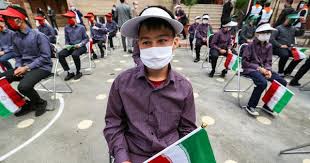
From a high of six children per woman to an average of 1.7 birth per woman, the rate has declined sharply. Because of poor economic condition, people are also finding it difficult to raise more children.

WEBDESKWEBDESK
Jun 4, 2022, 02:03 pm IST
in World
Follow on Google News
Representative Image

Representative Image

FacebookTwitterWhatsAppTelegramEmail

Sharp decline in the Iranian population has posed a new challenge for the Islamic Republic: aging population and a severe shortage of labour. The declining population has created a severe shortage of labour and working population who is supposed to take care of the elderly.

In the 1980s, Iran had six children per woman, which has now come down to 1.7 children per woman. Before Shah Mohammad Reza Pahlavi was thrown out in the Iranian Revolution in 1979, he had promoted a US-backed population control policy, but it had little impact on the reproductive behaviour of people.

Pahlavi’s programmes were such a failure that by the time his reign ended in 1979, Iran had six children per woman. Ayatollah Ruhollah Khomeini, who led a faction of the Revolution and established new Republic, had a very different opinion about population growth.

He wished for massive growth in the population of Shias to balance the power structure in the Middle East. The new regime believed that having more Shias will give them an upper hand in the region.

The new government started promoting the birth of more children. Incentives were provided to women for producing more children.

Even before the new regime could get shape, war with neighbouring Iraq started. Although it furthered the belief that Iran needs more Shias, the economy was in bad shape because of the war. It became difficult for Iran to sustain the incentives.

The more war elongated, the more difficult it became. President Akbar Hashemi Rafsanjani, who assumed office in 1989, changed course and started promoting the two-child norm. The next president, Mohammad Khatami, continued the policy of promoting two children per family.

It helped President Hashemi that the Supreme Court ruled in 1988 that contraceptive measures were fully compatible with Islamic beliefs. After the Iranian Revolution, the government in Iran started promoting that the contraceptive measures were un-Islamic.

The policy was dramatically overturned when Mahmoud Ahmadinejad assumed office in 2005. For the next eight years, till 2013, Iran continued the policy of incentivising more children.

Iran’s Supreme Leader Ali Khamenei has been criticising the population control measures, saying it’ll put Iran in big trouble. Taking a cue, the government has started incentivising more children.

Iran, which is perennially in conflict with Saudi Arabia for dominance in the region, believes that a fewer number of Shias in the Islamic Republic means a weaker Iran. Ali Khamenei, who is the Supreme Leader of Iran, has appealed to the people to produce more children.


Topics: Saudi ArabiaAyatollah Ali KhomeiniShah Mohammad Reza PahlaviIranian RevolutionMohammad KhatamiAkbar Hashemi RafsanjaniIran
Share4TweetSendShareSend
✮ Subscribe Organiser YouTube Channel. ✮
✮ Join Organiser's WhatsApp channel for Nationalist views beyond the news. ✮
Previous News

Telangana BJP chief demands CBI probe into Hyderabad gang-rape case

Next News

Amit Shah to lay foundation stones for various development projects in Panchkula

Related News

From Vietnam to Iran: Has America repeated its greatest strategic mistake?

Representative image

West Asia Conflict: Donald Trump announces landmark US-Iran agreement, raises hopes for peace

Iran-themed World Cup flexes in Narath, Kannur, featuring Ayatollah Khamenei and 'Free Palestine' messaging, have sparked debate over the intersection of football, religion and politics in Keralam

Keralam’s football world cup frenzy takes a religious turn with Iran, Khamenei and free Palestine flexes

America’s Friend, Pakistan’s Burden: The hidden cost of Washington’s Iran strategy

Representative Image

The Labyrinth of War: Easy to enter; Difficult to exit

West Asia Conflict: India issues advisory to citizens in Iran & Israel; Urges to avoid tarvel & exercise utmost caution

Load More

Latest News

80 Years of Organiser: Honouring the editors who steered 8 decades of editorial journey amid authoritarian censorship

Karnataka Liqour License Scam: Minister Satish Jarkiholi under Lokayukta scanner as kin issued 30 license to relatives

SIA identifies Yasin Malik as key conspirator in the Sarala Bhat murder case

Sarla Bhat Murder Case: SIA names Yasin Malik as key conspirator; A testament to the genocide of Kashmiri Hindus

The Hangor Story: What China’s submarine gift to Pakistan really means for India?

Japan pitches to co-produce Mogami stealth frigates under Make-in-India; Aims to reinforce Indo-Pacific security

From Vietnam to Iran: Has America repeated its greatest strategic mistake?

ACME Group Secures Landmark Green Ammonia and Methanol Offtake Deals with Japanese Companies

India emerges as global green fuel supplier with landmark ammonia and methanol export deals with Japan

Proposed D2 Alliance between India and the US: An impetus to strengthen the strategic partnership

India Responds Swiftly to Venezuela’s Humanitarian Crisis

Operation Amistad: How India’s humanitarian mission won hearts in earthquake-hit Venezuela

Indus Water Treaty in Abeyance: New Delhi’s hydro strategy & the crisis of Pakistan is a tool to reclaim PoJK

Load More
  • Privacy
  • Terms
  • Cookie Policy
  • Refund and Cancellation
  • Delivery and Shipping

© Bharat Prakashan (Delhi) Limited.
Tech-enabled by Ananthapuri Technologies

  • Home
  • Search Organiser
  • Bharat
    • Assam
    • Bihar
    • Chhattisgarh
    • Jharkhand
    • Maharashtra
    • View All States
  • World
    • Asia
    • Africa
    • North America
    • South America
    • Europe
    • Australia
  • Editorial
  • Operation Sindoor
  • Opinion
  • Analysis
  • Defence
  • Culture
  • Sports
  • Business
  • RSS @ 100
  • Entertainment
  • More ..
    • Sci & Tech
    • Vocal4Local
    • Special Report
    • Education
    • Employment
    • Books
    • Interviews
    • Travel
    • Health
    • Politics
    • Law
    • Economy
    • Obituary
  • Subscribe Magazine
  • Read Ecopy
  • Advertise
  • Circulation
  • Careers
  • About Us
  • Contact Us
  • Policies & Terms
    • Privacy Policy
    • Cookie Policy
    • Refund and Cancellation
    • Terms of Use

© Bharat Prakashan (Delhi) Limited.
Tech-enabled by Ananthapuri Technologies