During an inspection of an educational institution operating in Badakhedi village of Madhya Pradesh’s Mandsaur district, grave irregularities have come to light, raising serious questions regarding the safety, education, and protection of young girls.
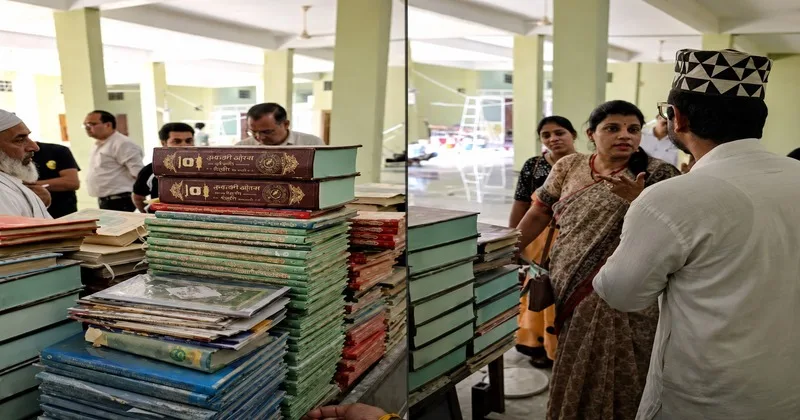
Specifically, an inspection conducted by Dr Nivedita Sharma, Chairperson of the Madhya Pradesh State Commission for Protection of Child Rights (SCPCR), revealed massive discrepancies between official records and the actual situation on the ground. The inspection uncovered unauthorised residential arrangements, a lack of proper documentation for students and the operation of classes beyond the scope of the institution’s official recognition. While the school holds recognition from the Madhya Pradesh Education Board, a significant quantity of books pertaining to “Deeni Taleem” (religious education) was discovered on the premises.
Deeming the matter to be of extreme gravity, the Commission has directed the Education Department to conduct a detailed investigation and take necessary action, including the filing of an FIR against the institution.
Systemic Flaws Exposed During Inspection
When Dr Sharma, Chairperson of the MP Child Rights Commission, along with member Sonam Ninama, arrived to inspect the ‘Darul Uloom Ahle Sunnat Moinia Faizan-e-Garib Nawaz Madrasa’ and the ‘Moinia Girls School’ operating within the same complex, located in Badakhedi village, they were left aghast by the conditions they witnessed. Preliminary investigations revealed that the institution holds recognition from the Madhya Pradesh Board solely for the operation of classes 6 through 8; however, indications were found suggesting that educational activities of a much higher level were being conducted within the premises. The discovery of textbooks and study materials ranging from Class 3 up to Class 12 during the inspection further reinforced the suspicion that the institution was operating classes beyond its officially approved scope.
Major Discrepancy in Records; Questions Raised Over Actual Student Count
The most alarming revelation concerned the actual number of students. While the government’s online portal listed the registration of only 37 students, the school’s internal “Scholar Register” was found to contain the names of 71 students. Furthermore, a large number of school bags, luggage, trunks and other personal belongings were discovered within the premises. Based on the materials found, it was surmised that approximately 100 female students likely resided there, as school bags bearing that many distinct names were counted; surprisingly, however, not a single female student was found present on the premises during the inspection.
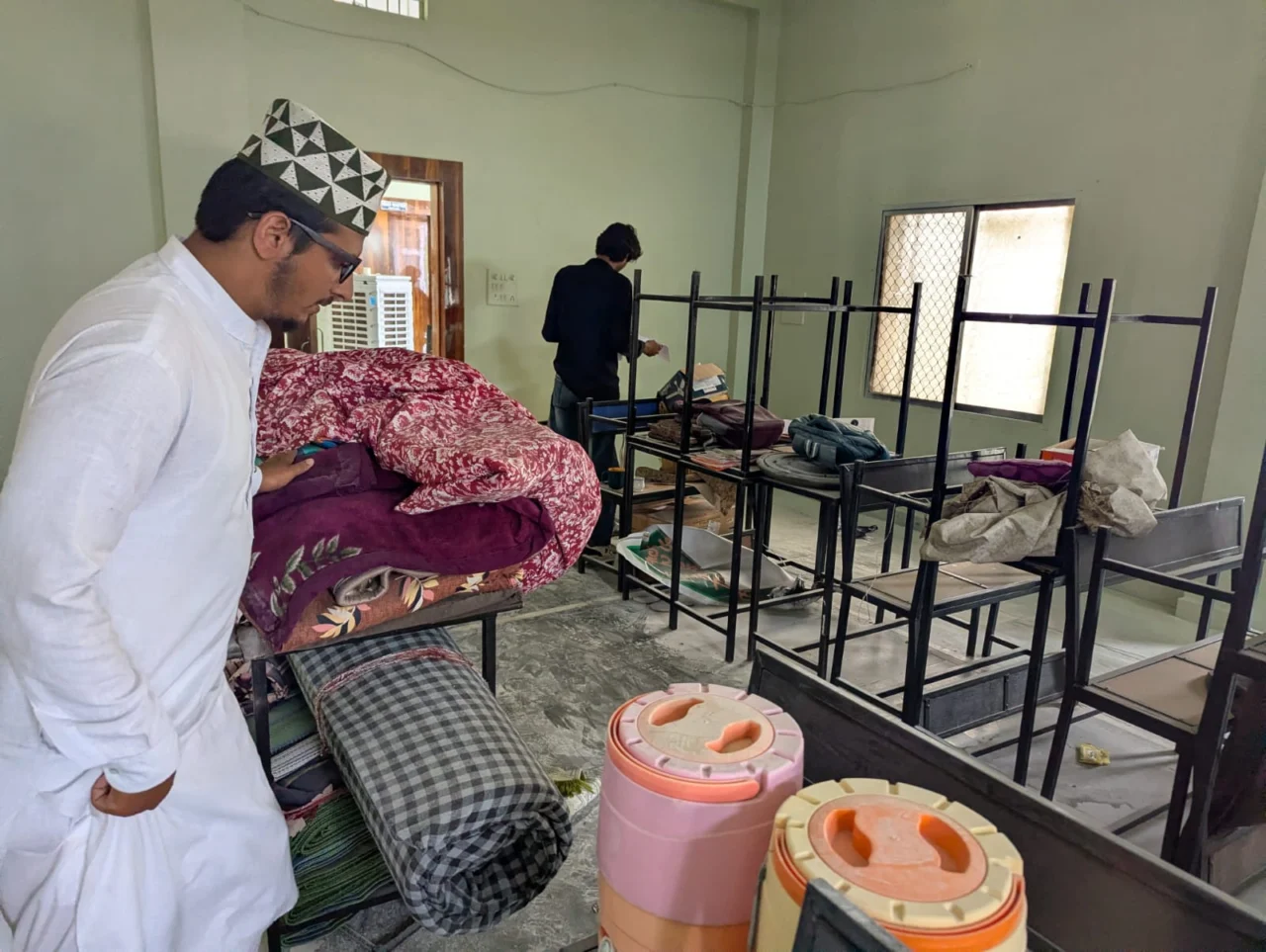
This situation raises several critical questions: If female students were indeed residing there, where were they at the time of the inspection? What is the actual number of students? And why is there such a significant discrepancy between the figures provided by the institution and the reality on the ground?
Indications of Unauthorised Residential Arrangements
The Commission’s inquiry also revealed that arrangements for the accommodation of female students existed within the premises. Students’ personal belongings were found in various rooms, strongly indicating that a residential facility was being operated on-site. While the institution holds official recognition for operating a school, evidence suggests that a residential ‘madrasa’ was, in fact, being run within the premises. Significantly, no clear documentation regarding the legal recognition of this residential arrangement or the operation of the ‘madrasa’ was produced at the site during the inspection. Moreover and most concerning from the perspective of child protection, the inspection team was not even provided with basic documentation pertaining to the female students.
The Commission had requested the students’ personal files, parental details, identity cards, admission records and documents related to the residential arrangements; however, the institution’s management failed to produce them. This constitutes a grave administrative lapse, particularly given that the systematic maintenance of records regarding children’s identities, parental contact details and admission status is a mandatory requirement for any residential or educational institution.
Information Regarding Management and Staff Also Withheld
During the inspection, answers to several fundamental questions regarding the institute’s operations could not be obtained. The Commission was not provided with information regarding who holds the actual management control of the institute, who the Principal is, or who constitutes the Governing Body and the Management Committee. Furthermore, essential details such as staff particulars, wardens, police verification records for employees, salary disbursement details, fee structure and audit reports were not made available. The absence of police verification for staff members working with young girls or the failure to provide information regarding such verification, is a matter of grave concern from a security perspective.
Rooms Not Opened; Suspicion Deepens
The inspection revealed that despite repeated requests to open approximately 10 rooms located in the school office and on the upper floor of the building, the institute’s management refused to do so. The Child Rights Commission asserts that if all records and activities were in compliance with the regulations, there should have been no objection to opening these rooms. Moreover, given that the school holds affiliation with the Madhya Pradesh Education Board, the presence of such a large volume of books on “Deeni Taleem” (Islamic religious education) on the premises raises serious questions.
Safety of Girls is the Highest Priority: Dr. Nivedita Sharma
In this regard, Dr. Nivedita Sharma, Chairperson of the Madhya Pradesh State Commission for Protection of Child Rights, stated, “No form of negligence will be tolerated in matters concerning the safety, education and protection of children, particularly young girls. During the inspection of the Madrasa, serious discrepancies were observed between the available records and the actual situation on the ground. There are significant discrepancies and irregularities ranging from the institute’s official recognition status to the actual number of classrooms and students present on the campus. Most critically, essential documentation pertaining to the girls, including details regarding their guardians and records of their residential arrangements, was not provided. It is the Commission’s duty to ensure the rights and safety of every child. A comprehensive investigation into the entire matter is currently underway and action will be taken against those found guilty, in accordance with the law.”
Focus Also on Other Aspects, Including Human Trafficking
The Child Rights Commission has clarified that the scope of the investigation will not be limited solely to the issue of academic affiliation. In light of the discrepancies observed regarding the actual number of female students, their attendance, residential arrangements, and documentation, other potential aspects of the case will also be investigated.
Was a Hostel Also Being Operated Without Permission?
Commenting on the matter, District Education Officer Teresa Minj stated that she accompanied the Chairperson of the Child Commission during the inspection. Major irregularities came to light during the inspection conducted in Badakhedi village, Mandsaur. Here, a Madrasa and a hostel are being operated under the name of the ‘Moinia Education Society’, ostensibly a school, instead of a standard educational institution. In addition to the illegal operation of the Madrasa, it was discovered that a hostel was also being run without the necessary authorization. This institution was being operated clandestinely, without any prior notification to the Education Department. Further action regarding this matter will be initiated shortly.
Furthermore, District Education Officer Teresa Minj acknowledged that during the inspection, textbooks up to Class 12 were recovered, even though the institution holds accreditation to operate only for classes 6 through 8. She affirmed that necessary further action would be taken based on the findings of the investigation. She also informed that the Child Commission has issued directives to the relevant administrative departments, including the Education Department- to conduct a detailed inquiry into the entire matter and submit a comprehensive report. For the time being, the Madhya Pradesh State Commission for Protection of Child Rights has sent a clear message: under no circumstances will any compromise regarding the safety and rights of girl students be tolerated within the state.