Bengaluru: Barely days after the formation of the new Karnataka government under Chief Minister D. K. Shivakumar, the Congress appears to be facing its first major political crisis. What was expected to be a smooth transition of power has quickly turned into a battle over cabinet portfolios, with senior leaders openly revolting against the party leadership and questioning the authority of both the state government and the Congress high command.
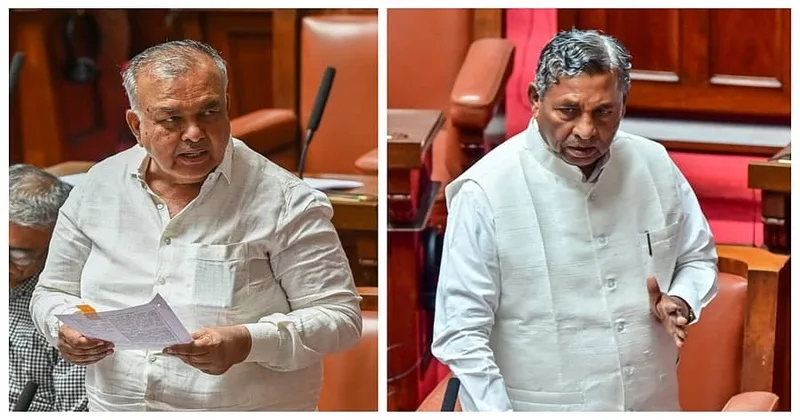
The biggest flashpoint has emerged from the resignation threat of senior Congress leader R. Ramalinga Reddy, who is reportedly furious over being denied the Bengaluru Urban Development portfolio. Instead, he was allocated the Water Resources Department, a move that has triggered a dramatic confrontation within the ruling party.
According to political sources, Ramalinga Reddy had long considered Bengaluru Urban Development as his natural choice, given his deep political roots in the state capital and his extensive experience in city administration. More importantly, there are claims within Congress circles that Shivakumar had personally assured him years ago that the coveted portfolio would be handed to him whenever Shivakumar became Chief Minister.
That promise now appears to have become the centre of a full-blown rebellion.
The portfolio was instead assigned to Krishna Byre Gowda, leaving Ramalinga Reddy feeling sidelined and humiliated. Sources indicate that the veteran leader sees the issue not merely as a matter of power but as one of political credibility and self-respect. His refusal to accept a department he considers unrelated to his expertise has sent shockwaves through the Congress establishment.
The situation has become particularly embarrassing for Chief Minister Shivakumar because reports suggest he personally attempted to convince Ramalinga Reddy to stay in the cabinet. However, those efforts reportedly failed after consultations with senior Congress leaders in Delhi. The inability of the Chief Minister to resolve the issue has raised uncomfortable questions about how much authority he actually enjoys in running his government.
Political observers note that the controversy has once again revived the long-standing criticism that Congress governments are often controlled by the party high command rather than elected state leaders. The perception that crucial decisions are being made in Delhi instead of Bengaluru is now gaining traction among disgruntled leaders.
The rebellion did not stop with Ramalinga Reddy.
In another significant sign of unrest, senior Congress leader and cabinet minister K. H. Muniyappa has publicly expressed dissatisfaction with the portfolio assigned to him. Muniyappa, who was given the Food and Civil Supplies Department, has openly questioned the manner in which cabinet responsibilities were distributed and reportedly refused to take charge of the department immediately.
Speaking to reporters in Devanahalli, Muniyappa voiced frustration over what he described as a lack of respect for seniority within the party. A veteran politician with decades of electoral success, he argued that leaders with long political experience were being overlooked while key portfolios were distributed without adequately considering merit and seniority.
His remarks have exposed another layer of dissatisfaction simmering beneath the surface of the Congress government.
Muniyappa went a step further by warning that such internal conflicts could seriously damage the party’s prospects in the 2028 Assembly elections. He suggested that unless the leadership addressed grievances and ensured fair treatment of senior leaders, Congress could pay a heavy political price in the years ahead.
The growing unrest is not limited to these two leaders alone. Several senior Congress figures who failed to secure cabinet berths in the first round of ministerial appointments are also believed to be unhappy. The discontent among aspirants and their supporters is steadily building, creating the impression that the new government is struggling to balance competing ambitions within its own ranks.
What makes the situation more serious is the timing. The rebellion has erupted at a moment when Congress was expected to project unity and stability under its new leadership. Instead, headlines are being dominated by resignations, public criticism, and accusations of unfair treatment.
The developments have also intensified speculation about factional politics within the party. While Shivakumar has emerged as Chief Minister after years of political struggle, many senior leaders appear unwilling to accept decisions that they believe diminish their influence. The portfolio controversy has therefore become a symbol of a larger power struggle unfolding inside Karnataka Congress.