New Delhi: In a major development that has fundamentally reshaped the geopolitical narrative surrounding the June 2023 assassination of Khalistan terrorist Hardeep Singh Nijjar, United States federal authorities have unsealed a sweeping indictment charging imprisoned Indian gangster Lawrence Bishnoi and his close associate Satinderjeet Singh, alias Goldy Brar, with orchestrating the high-profile targeted killing.
The dramatic revelation, which emerged as part of a massive international law enforcement sweep codenamed “Operation Hardball,” directly challenges the previous narrative that had brought diplomatic ties between Ottawa and New Delhi to a grinding halt. With both American and Canadian law enforcement agencies now confirming that no evidence links New Delhi to the crime syndicates involved, the assassination of Nijjar has shifted from being a diplomatic flashpoint of state-sponsored assassination into an investigative matter primarily between the United States and Canada.
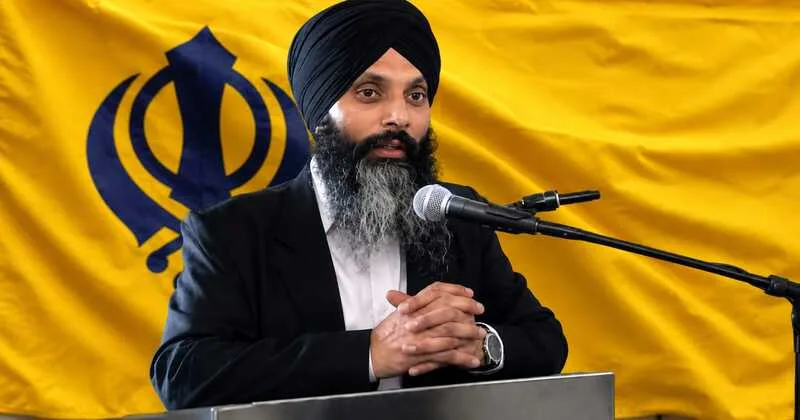
Hardeep Singh Nijjar, a 45-year-old Canadian citizen and prominent Sikh separatist leader who actively campaigned for the creation of Khalistan, a separate Sikh country carved out of India, was shot dead outside a Sikh Gurdwara in Surrey, near Vancouver, British Columbia, on June 18, 2023.
India had long designated Nijjar a terrorist, accusing him of active involvement in violent extremist activities. Following his murder, then-Canadian Prime Minister Justin Trudeau plunged bilateral relations into a historic crisis when he stood up in the House of Commons and announced that Canadian intelligence authorities were “actively pursuing credible allegations” linking Indian government agents to the murder. India had promptly and categorically dismissed those claims as “absurd,” leading to a total breakdown in the relationship. However, the newly unsealed US indictment frames the killing not as a state-directed hit, but as a sophisticated operation executed by a transnational organised crime syndicate.
The US indictment and ‘Operation Hardball
Under a tightly coordinated, years-long global hunt named “Operation Hardball,” law enforcement agencies spanning the United States, Canada, and Europe arrested 24 people for their reported links to three distinct India-based organised crime groups, prominently featuring the notorious Bishnoi gang.
The crackdown was part of a larger federal investigation into transnational syndicates engaged in targeted killings, shootings, extortion, drug trafficking, kidnapping, and widespread violence around the world.
In total, 37 defendants, including two ringleaders who brazenly ran their global criminal networks while imprisoned inside Indian correctional facilities, have been charged across three indictments unsealed in Los Angeles. “The charges set forth in the indictment include allegations that Lawrence Bishnoi and Goldy Brar directed the 2023 assassination of a prominent Sikh leader in Canada identified by his initials HSN (Nijjar) in the indictment,” stated Bilal A. Essay, First Assistant US Attorney, during a press conference detailing the operation.
As part of Operation "Hard Ball," the FBI and our law enforcement partners throughout California, other U.S. cities and in Canada, India and Europe collaborated to execute dozens of search and arrest warrants targeting 37 members of violent transnational organizations who are… pic.twitter.com/WXIOk6vALU
— FBI Los Angeles (@FBILosAngeles) July 7, 2026
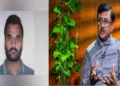
The 33-year-old head of the “Bishnoi Gang,” Lawrence Bishnoi, is well-known for executing high-profile crimes both within India and abroad. Despite having been lodged in an Indian jail since 2015, Bishnoi allegedly directed the complex assassination plot from inside his cell, while his associate Goldy Brar oversaw the ground operations and logistics within North America.
The Federal Bureau of Investigation (FBI) has announced a reward of $50,000 for information leading to the arrest of Brar, who remains at large. Commenting on the scale of the international crackdown, Royal Canadian Mounted Police (RCMP) Commissioner Mike Duheme stated that the joint agencies successfully disrupted the operations of “organised criminals who used murder, cruelty and fear to extort and control people in both Canada and the United States.”
Duheme emphasised the relentless nature of the cross-border operation, adding, “We won’t pause for long to reflect on the work it took to get this job done; we’ll keep doing what we do best to preserve public safety in Canada, in the United States, and around the world.”
From state-sponsored allegations to transnational crime
The unsealing of the US indictment has effectively undercut the earlier public allegations made by the former Canadian administration, which had placed the blame squarely on the shoulders of the Indian state. Several American media reports highlighted that the federal charges focus exclusively on organised crime networks, completely omitting any mention of official Indian involvement.
Crucially, the legal documents do not allege any role, awareness, or complicity by the Indian government or its intelligence agencies in Nijjar’s killing. Reporting on the press conference held in Los Angeles, CNN observed that “Neither First Assistant US Attorney Bill Essayli nor any other official at a press conference in Los Angeles alleged that the Indian government was involved in or aware of the killing.”
This glaring silence on state involvement was mirrored by Canada’s prominent media outlets. On Wednesday, The Globe and Mail newspaper termed the killing and the subsequent international controversy around it as “the catalyst in a geopolitical crisis.”
RCMP Commissioner Mike Duheme spoke yesterday at the joint press conference on the major takedown of the Lawrence Bishnoi, Ravinder Dhanda, and Jaggu Bhagwanpuria criminal network
With FBI and international partners, three Canadians were arrested in B.C. The operation disrupts… https://t.co/gJkzcx4Gyq pic.twitter.com/nly5AtK0Cf
— cbcwatcher (@cbcwatcher) July 8, 2026
Analysing the latest judicial developments, the newspaper noted, “The US indictment accusing Mr Bishnoi and his associates is silent on the suggestion that agents of the Indian government were behind the killing.”
For nearly two years, India was largely blamed in the Western media because of Canada’s public statements regarding suspected government involvement, which New Delhi had strongly and consistently denied. The unsealed documents now entirely reframe Nijjar’s murder as a sophisticated, transnational organised crime operation rather than a state-directed assassination, turning the case into an active bilateral investigative matter between US and Canadian law enforcement agencies.
Canada’s RCMP vindicates India’s stance
In the wake of the US Justice Department’s announcement, senior Canadian police officials have moved to clarify their findings, directly contradicting the previous political rhetoric that had strained bilateral ties. Canada’s Royal Canadian Mounted Police (RCMP) explicitly stated that there is nothing to link the Indian government with the charges announced against Lawrence Bishnoi and other India-based gangs, which include the killing of Hardeep Singh Nijjar.
In an interview with Canada’s CBC News, RCMP Deputy Commissioner Lisa Moreland confirmed that the extensive international investigation found no evidence that Indian officials were involved in the specific crimes alleged in the unsealed indictment. “There’s no evidence to suggest through this organised crime investigation and the charges and the indictment laid forward that Indian officials were charged or involved,” Moreland stated.
When pressed specifically during the interview on whether US and Canadian authorities had come across anything linking New Delhi to these criminal syndicates, Moreland stated: “As you’re aware, there are people in Canada facing charges on that, so I can’t comment on investigation. But…in relation to this matter today, there’s no evidence to suggest that through this organized crime investigation and the charges in the indictment…Indian officials were charged or involved in this investigation.”
United States will seek extradition of Indian gangster Lawrence Bishnoi from India, claims Canadian RCMP Deputy Commissioner Lisa Moreland. pic.twitter.com/PPr21zTaLd
— Aditya Raj Kaul (@AdityaRajKaul) July 8, 2026
Responding to further questions regarding Trudeau’s initial allegations, she reiterated that while the broader investigation remains ongoing, “nothing has come out today to link the Indian government.” Furthermore, Moreland revealed a critical point of diplomatic cooperation, noting that “the Indian government co-operated in the investigation.”
Following the announcement of charges against the criminal syndicates of Lawrence Bishnoi, Ravinder Dhanda, and Jaggu Bhagwanpuria, the RCMP released an official statement detailing that these specific groups had been actively engaged in “extortions, drug trafficking, kidnapping and widespread violence, namely the killing of Hardeep Singh Nijjar, in Canada and the United States”.
According to Indian authorities, these admissions fully vindicate India’s long-standing position that there was never any concrete evidence to back former Canadian Prime Minister Justin Trudeau’s dramatic claims. New Delhi had always maintained that Nijjar’s murder was the direct fallout of a violent gang rivalry and turf war, asserting that the US indictment of Bishnoi and his associates should finally “end the blame game” that had severely marred bilateral ties.
The diplomatic crisis and the political thaw
The original allegations levelled by the Trudeau administration in September 2023 had pushed India-Canada relations to an all-time low. At the height of the diplomatic row, both nations took unprecedented escalatory steps, expelling senior diplomats, freezing ongoing free trade negotiations, and abruptly halting bilateral ministerial dialogues.
India severely criticized Canada for tolerating overt Khalistani separatist activity on its soil, which contemporary political reports attributed to the domestic “compulsions of a coalition government” under Trudeau.
The situation worsened significantly in October 2024 when Ottawa attempted to formally link India’s High Commissioner Sanjay Verma and five other diplomats as “persons of interest” in the Canadian probe. Enraged by the move, India recalled its High Commissioner and the diplomats, while simultaneously expelling an equal number of high-ranking Canadian diplomats from New Delhi.
🚨Canada Betrayed: Trudeau’s #Khalistani Play
Trudeau blamed India for #Nijjar’s killing with no proof to please his coalition.
Now US & RCMP confirm: Lawrence Bishnoi gang did it in a BC drug war.
Politics over truth. Weak leadership🇨🇦#cdnpoli pic.twitter.com/bzVHGbJ3Bd— Olivia Brown (@OliviaBrownew) July 8, 2026
India frequently accused Trudeau of playing “vote bank politics” to secure his political survival at the cost of international relations. However, the domestic political landscape in Canada underwent a radical transformation. With significant political changes culminating in Liberal Party leader Mark Carney becoming the Prime Minister of Canada, Ottawa initiated a thorough reassessment of its foreign policy approach toward New Delhi.
The tense relations between Canada and India subsequently began to experience a steady recovery. The Toronto Sun newspaper noted that “After years of distrust and accusations, tense relations between Canada and India are starting to defrost.” The publication observed that Prime Minister Mark Carney extended an official invitation to his Indian counterpart, Narendra Modi, to visit “his country for talks further signs that relations between the two nations are normalising,” a move that signalled a clean break from the cold ties witnessed under Carney’s predecessor.
“Relations with India soured two years ago after former prime minister Justin Trudeau rose in the House of Commons to publicly accuse the Modi government of orchestrating the June 2023 assassination of Nijjar a prominent Sikh separatist in the parking lot of a British Columbia Gurdwarah,” the Toronto Sun recalled, adding, “The thaw began after Carney invited Modi to attend this summer’s G7 summit in Alberta, prompting both nations to reopen diplomatic relations.”
Alan Kessel, a former Canadian diplomat and a senior fellow at the Macdonald-Laurier Institute, verified the strategic shift. “It was a clear signal that Canada was back to engaging and not isolating,” Kessel told the newspaper.
Future of Canada-India relations under a new era
The diplomatic reset has yielded rapid, tangible outcomes over the last twelve months. Following a constructive meeting between Prime Minister Modi and Prime Minister Carney at the G7 Summit in Alberta, both nations systematically dismantled the barriers erected during the Trudeau era.
Both sides successfully reposted their respective High Commissioners to the capitals, fully resumed suspended visa services, and revived crucial ministerial dialogues spanning trade, energy, environment, and security. Furthermore, security and intelligence officials from both sides have actively begun exchanging vital information regarding shared transnational threats.
While Canadian authorities had previously detained and charged four Indian nationals in 2024 for Nijjar’s murder, and technically continue to probe potential state links regarding those specific individuals, Deputy Commissioner Moreland intentionally refrained from commenting on that separate sub-judice matter.
Had an excellent meeting with Prime Minister Mark Carney. Complimented him and the Canadian Government for successfully hosting the G7 Summit. India and Canada are connected by a strong belief in democracy, freedom and rule of law. PM Carney and I look forward to working closely… pic.twitter.com/QyadmnThwH
— Narendra Modi (@narendramodi) June 17, 2025
Nevertheless, the newly unsealed US federal indictment focuses the legal spotlight almost entirely on the global operations of the Bishnoi, Dhanda, and Bhagwanpuria gangs.
The relationship between India and Canada has rebounded so strongly that Prime Minister Carney visited India earlier this year to solidify bilateral cooperation. Currently, both governments are actively preparing for a highly anticipated official visit by Prime Minister Modi to Canada later this year, where the two leaders are expected to formally sign a comprehensive bilateral trade agreement that has been under intense discussion.
With the US indictment exposing a deep-seated transnational syndicate operating seamlessly across North American borders, the focus has firmly shifted away from New Delhi. The investigation into the logistical architecture behind the murder of Hardeep Singh Nijjar, the chief of the banned Khalistan Tiger Force (KTF), has now evolved into a complex, collaborative investigative matter handled between the federal authorities of the United States and Canada.