Bharat has a long tradition of pilgrimage, a form of cultural learning, self-reflection, community participation, and connection with sacred landscapes. Pilgrimage has been integral to Hindu religious and spiritual traditions since the Vedic period. Over the centuries, pilgrimages contributed significantly to the development of Bharatiya civilisation and the emergence of numerous sacred towns and urban centres. They reflect the enduring presence of the divine in its many forms across the Bharatiya subcontinent. Sacred sites and pilgrimage journeys have historically served as important forces of cultural integration, connecting people across geographical and cultural boundaries while contributing to the continuity and preservation of Bharat’s major faith traditions. They also played an important role in sustaining religious traditions, nurturing spiritual awareness and consciousness, and fostering a sense of unity, belongingness and brotherhood among people despite Bharat’s diverse regional and cultural identities.
Tracing Roots to Tirth Yatra
The roots of Bharat’s contemporary spiritual tourism can be traced to the much older civilisational practice of Tirth Yatra. In Sanskrit, a place of pilgrimage is called a Tirtha, a term associated with a passage, pathway, crossing, or descent towards a river. Traditionally, pilgrimage sites have been located along rivers and other bodies of water. A Yatra represents a journey; therefore, Tirtha Yatra collectively means a journey of devotion, discipline, reflection and cultural encounter. It reflects the close relationship between sacred journeys, natural landscapes, and spirituality. The traditions associated with Jyotirlingas, Shakti Peethas, Char Dham, sacred rivers, Kumbh and innumerable regional mandirs demonstrate the extraordinary geographical spread of Bharat’s pilgrimage culture.
Spurt in Mandir Visits
This historical foundation is important for understanding contemporary youth behaviour. The young Bharatiya travelling to a mandir today is witnessing a tradition that has long connected journey, place, culture and spirituality. For a generation often described through the vocabulary of smartphones, social media, global exposure and rapidly changing lifestyles, an interesting phenomenon is becoming increasingly visible in contemporary Bharat: young people are travelling towards mandirs and spiritual destinations. Pilgrimage centres traditionally associated with family journeys, religious observance, and older generations are increasingly becoming part of the travel choices and cultural experiences of younger Bharatiyas.
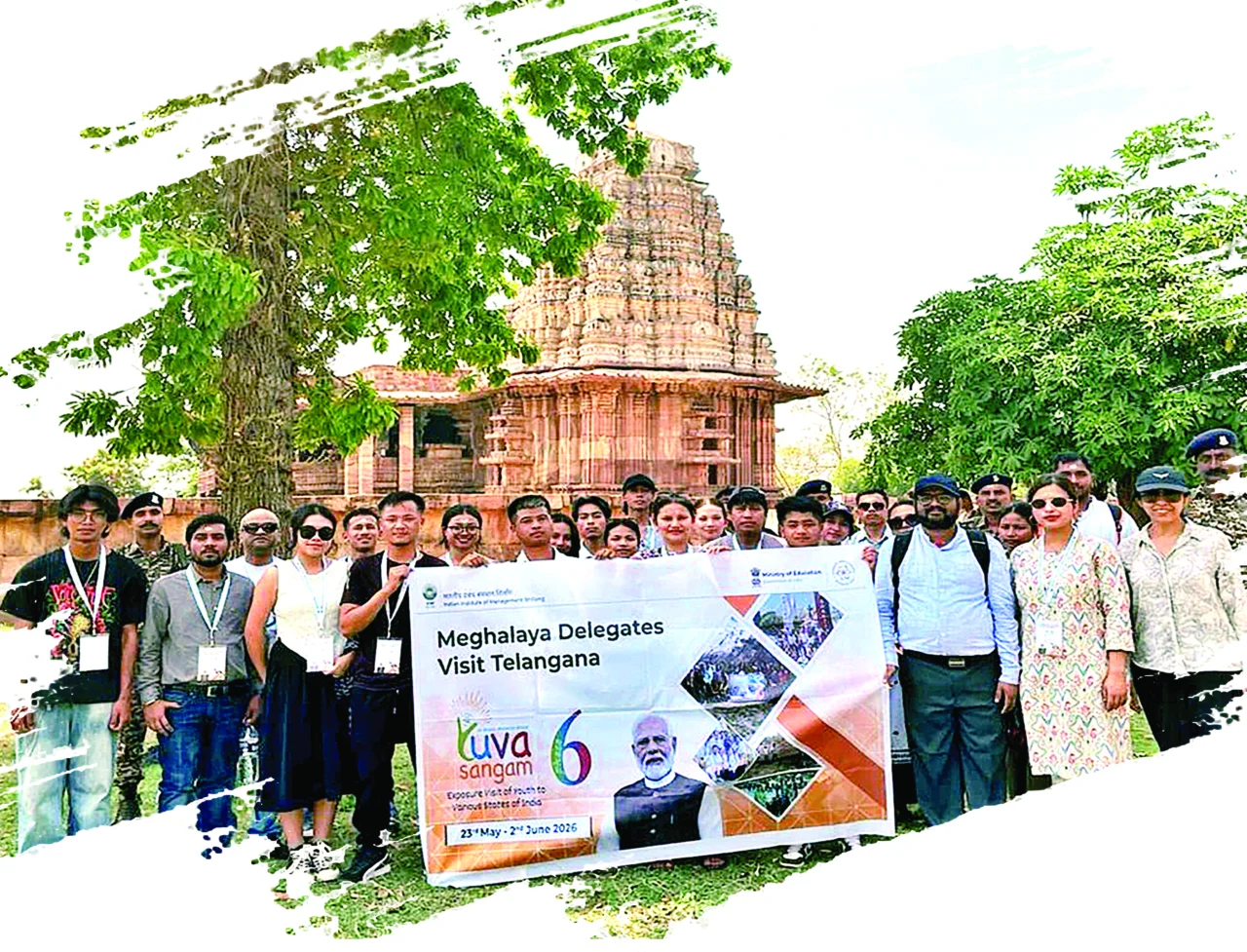
A vivid example of young people’s renewed engagement with spiritual and cultural traditions was seen at Shri Mahakaleshwar Mandir, Ujjain, on August 5, 2024, when 1,390 participants created a Guinness World Record for the largest Damru ensemble during the sacred Shravan month. The strong presence and active participation of young people in this traditional expression of devotion show that the younger generation experiences sacred practices not merely as rituals, but as vibrant forms of cultural participation and spiritual expression. A recent study on Varanasi, for instance, identifies young travellers between 18 and 35 as an emerging group seeking emotional renewal and spiritual connection through experiential engagement with the city’s ghats, heritage, local culture, and spiritual atmosphere. Recent travel data also reflects this shift. According to data reported by a private travel portal in June 2026, Gen Z and young travellers accounted for more than 53 per cent of journeys to spiritual destinations in Bharat during FY2026. The renewed youth engagement with mandirs, therefore, deserves to be understood not simply as a revival of spiritual tourism, but as a multidimensional phenomenon at the intersection of tradition, spirituality, technology, identity, travel, infrastructure and contemporary aspirations.
A study by Future Market Insights in 2026 revealed that the faith-based tourism market in Bharat accounts for 60 per cent of total tours. Youth, who make up the majority of the population, are often seen at pilgrimage sites, partaking in the spiritual journey; this large proportion reflects younger generations’ inclination toward spiritual tourism.
Redevelopment of Mandir Corridors
One of the most visible changes in Bharat’s pilgrimage landscape has been the redevelopment of major temple precincts and spiritual destinations. The Kashi Vishwanath Dham Corridor, Mahakal Lok in Ujjain, redevelopment associated with Kedarnath and Badrinath Dham, the building of Ram Mandir with the transformation of Ayodhya and similar projects have altered the physical and experiential environment surrounding important sacred sites. The Government of Bharat’s tourism programmes have also institutionalised the development of spiritual and pilgrimage destinations. The PRASHAD scheme (Pilgrimage Rejuvenation and Spiritual Heritage Augmentation Drive) focuses on integrated development of identified pilgrimage and heritage destinations, while Swadesh Darshan 2.0 emphasises sustainable and responsible tourism development. These developments matter to youth because the contemporary traveller often evaluates destinations through accessibility, cleanliness, aesthetics, connectivity, safety, information and overall experience. Improved infrastructure does not by itself create spiritual inclination, but it can reduce practical barriers to visiting sacred destinations. Prime Minister Narendra Modi has repeatedly placed pilgrimage, heritage and cultural destinations within broader discussions of economic development, tourism, infrastructure, connectivity and nation’s civilisational heritage. His initiatives and public addresses around destinations such as Kashi, Kedarnath, Mahakal and Ayodhya have contributed to their national and international visibility.
Influence of Social Media
For today’s young traveller, the journey may begin long before reaching the mandir. A short video introduces a destination. A travel vlog demonstrates the route. An Instagram post reveals the sanctity and architecture. A peer can share a personal experience. Online information explains darshan procedures, timings and travel options. The sequence can therefore become: Digital Discovery → Curiosity → Travel Planning → Physical Experience → Digital Sharing.
Recent research on the 2025 Maha Kumbh provides particularly relevant evidence. A mixed-method study found that characteristics of social-media content, including information, visual appeal and entertainment, significantly influenced young adults’ attachment to the event and were associated with their spiritual wellbeing. Similarly, research on young visitors to Varanasi has used Instagram-based digital ethnography to examine how youth narratives are reshaping experiences of sacred spaces. Social media therefore performs two functions simultaneously. It documents spiritual tourism, but it can also participate in producing interest in spiritual tourism. Peer influence works alongside this digital influence. Friends travelling together, family recommendations, online communities and shared experiences can lower the psychological and practical barriers associated with visiting unfamiliar pilgrimage destinations. The young traveller is thus not necessarily travelling alone into tradition. The journey can be seen as socially mediated before, during and after the visit.
Search for Inner Well being
The search for inner well being offers another possible explanation for contemporary youth engagement with spiritual destinations. Contemporary life is characterised by information overload, stress, anxiety and demanding academic, professional and social environments. This has contributed to growing public interest in mindfulness, meditation, yoga, wellness and reflective practices. Spiritual destinations offer a distinctive environment for such experiences. Spiritual tourism offers quietness, reflection, emotional renewal, meditation or a temporary withdrawal from everyday routines. Such motivations suggest wellbeing represents one possible motivation within a wider spectrum of youth engagement.
Spirituality beyond Rituals
Perhaps one of the most significant changes is the possibility that young people may approach spirituality through multiple pathways. KPMG’s 2026 study of Bharat’s spiritual tourism sector describes an emerging “multi-dimensional spiritual traveller” whose motivations can combine spirituality with lifestyle, leisure and self-development. It also identifies youth as an expanding audience for experience-led spiritual tourism.
The economic activity generated around mandirs creating opportunities for local employment, entrepreneurship and community participation, gives spiritual tourism a broader developmental dimension. Consequently, the temple or pilgrimage centre is increasingly experienced not as an isolated religious space, but as part of a dynamic destination ecosystem, one that can attract young travellers by bringing together spirituality, culture, heritage, travel and contemporary tourism experiences. As sacred centres become integrated with wider local economies, they create an ecosystem of hospitality, cafés and food outlets, local markets, handicrafts, cultural activities, transportation, accommodation, entertainment and employment opportunities. For younger travellers, these developments can transform a pilgrimage destination into a more engaging and accessible travel experience, where spiritual exploration can be combined with sightseeing, culture, social interaction and leisure.
Travel & Exploration
Travel and exploration have also emerged as important dimensions of the growing inclination of youth towards spiritual tourism. For many young travellers, visiting a mandir or pilgrimage destination is increasingly becoming an opportunity to explore new places, experience different cultures, discover heritage and encounter unfamiliar traditions. The desire to travel, therefore, leads young people towards sacred destinations, where exploration of the place is accompanied by spiritual and cultural experiences. A journey that may begin with curiosity about a destination, its architecture, history, festivals, landscape or local culture can consequently take the form of a pilgrimage. In this way, contemporary youth experience pilgrimage not only as a religious obligation but also as a meaningful form of travel and exploration, bringing together journey, discovery, spirituality and experience.
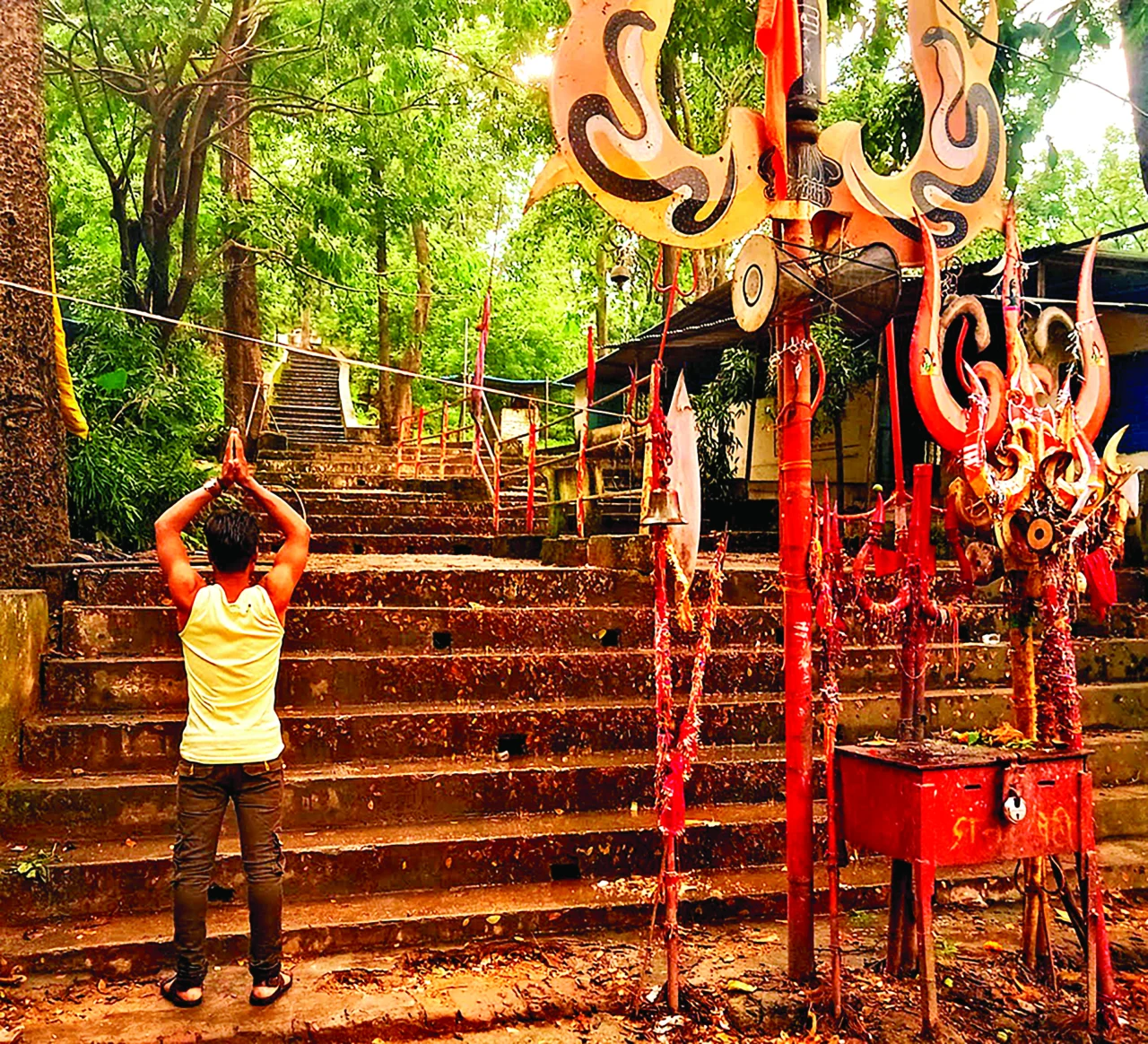
The emerging landscape of spiritual tourism suggests that the young traveller may be creating a bridge between two worlds: the ancient Tirth Yatra and the contemporary experiential journey. In this sense, the renewed youth engagement with temples may represent a new way of encountering the past in the present, and carrying its meanings into the future.
A generation that combines modern education, technological exposure and global aspirations with opportunities for spiritual reflection, cultural rootedness and self-awareness can contribute to a more holistic vision of development. In the Bharatiya understanding, progress is not confined to material advancement; it also encompasses inner growth, ethical awareness, social responsibility and harmony with the larger world. The growing inclination of youth towards spiritual tourism can therefore be viewed as an encouraging expression of this broader search for balance between modernity and tradition, material progress and inner wellbeing, and global outlook and cultural roots. As these young minds become the architects of Bharat’s future, their renewed engagement with its spiritual heritage has the potential to enrich not only their individual journeys but also the cultural and holistic development of the nation.
The rapidly growing inclination of Bharat’s youth towards spiritual tourism reflects a significant transformation in how the younger generation engages with its spiritual and civilisational heritage. At a time when youth constitute a substantial share of the nation’s population, and Bharat is increasingly engaging with the world as a major cultural, economic, and knowledge centre, this renewed interest in temples, Tirth Yatra, and spiritual destinations takes on wider significance. It becomes a journey towards self-discovery, consciousness and inner awakening. The young traveller is increasingly discovering that the mandirs are not only places of worship, but also repositories of philosophy, art, architecture, heritage, community and timeless knowledge. The growing movement of youth towards these sacred spaces may therefore be viewed as part of a broader spiritual and cultural awakening, one in which the younger generation is not merely inheriting Bharat’s civilisational legacy, but experiencing, exploring and carrying it forward into the global future. In this sense, the rise of youth spiritual tourism represents not a retreat from modernity, but a contemporary rediscovery of the spiritual foundations of Bharat.