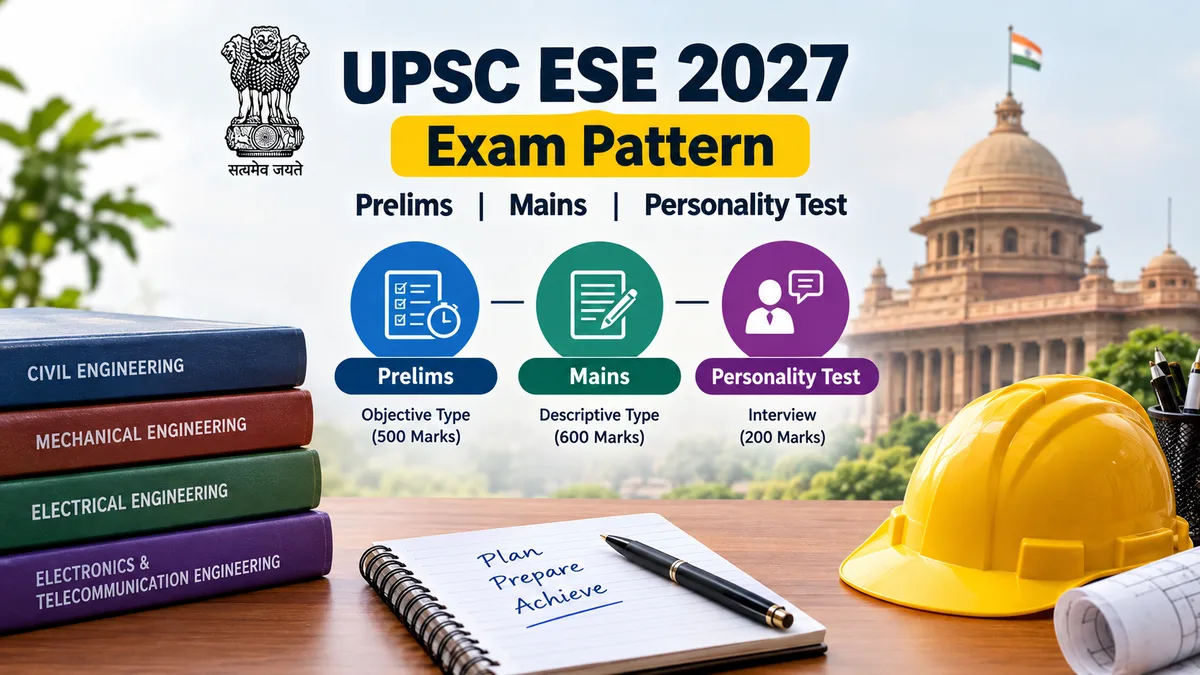
NEW DELHI: UPSC ESE exam pattern 2027 includes details related to number of papers included, types of questions asked, total marks, negative marking, mode of exam and related. Candidates preparing for the UPSC Engineering Services Examination (ESE) 2027 should understand the exam pattern before beginning their preparation. The Engineering Services Examination is conducted by the Union Public Service Commission (UPSC) in three stages: Preliminary Examination, Main Examination and Personality Test.
As per the UPSC ESE exam pattern 2027, in the Preliminary stage, candidates have to answer objective-type questions and conventional descriptive questions in the Main examination. Candidates who qualify for the Main examination are called for the Personality Test.
Overview of UPSC ESE 2027 exam pattern
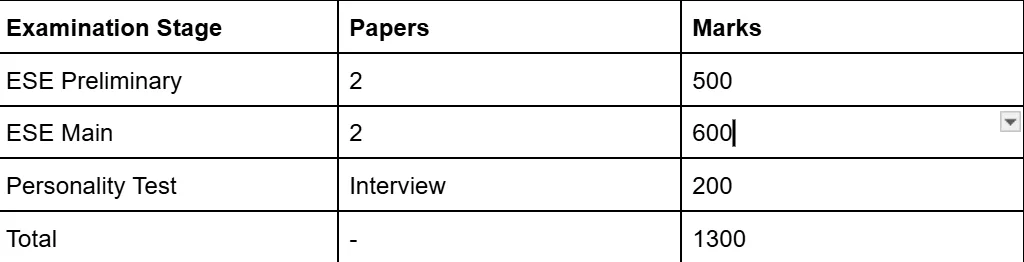
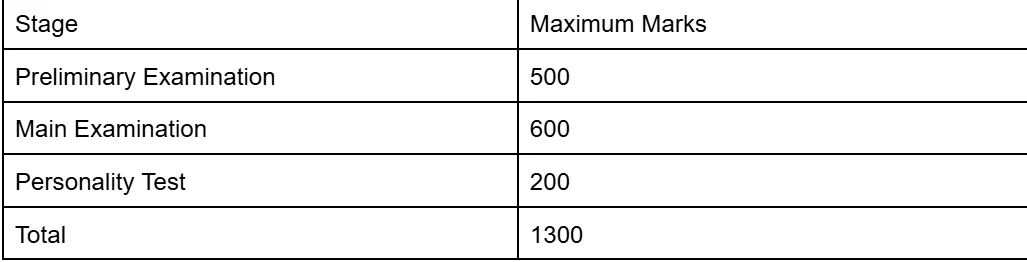
The examination carries a total of 1,300 marks across the three stages. The Preliminary Examination carries 500 marks, while the Main examination and Personality Test carry 600 and 200 marks, respectively.
UPSC ESE Preliminary 2027 Exam Pattern
The UPSC ESE Preliminary Examination consists of two objective type papers. Paper 1 tests candidates on General Studies and Engineering Aptitude, while Paper 2 focuses on the engineering discipline selected by the candidate.
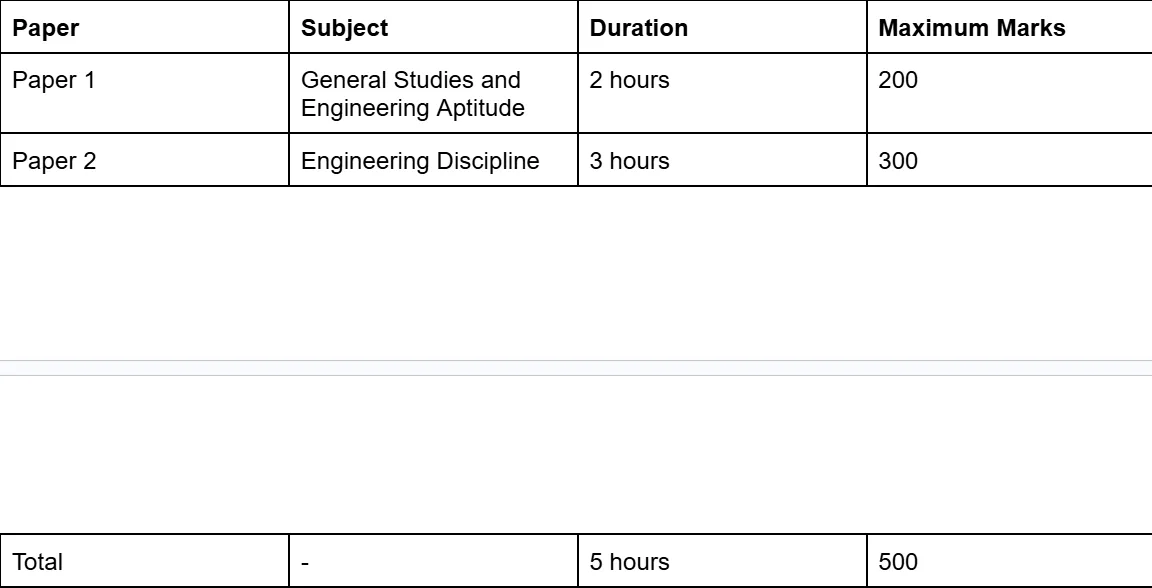
Here, Paper 1 covers areas such as current issues related to engineering, logical reasoning, analytical ability, mathematics, numerical methods, engineering aptitude and related topics. Paper 2 tests the candidate’s knowledge of the selected engineering subject. There are four engineering disciplines: Civil Engineering, Mechanical Engineering, Electrical Engineering, and Electronics and Telecommunication Engineering.
Is there negative marking in UPSC ESE Prelims?
As per the UPSC ESE 2027 Exam Pattern, Yes. Negative marking is applicable in the objective papers of ESE Prelims. For every incorrect answer, one-third of the marks assigned to that question is deducted. There is no penalty for questions that are left unanswered. Candidates should therefore focus on accuracy while attempting the UPSC ESE Prelims 2027 paper.
UPSC ESE Mains 2027 Exam Pattern
Candidates shortlisted through the Preliminary examination appear for the UPSC ESE Main Examination. Unlike Prelims, the Mains papers are conventional or descriptive in nature. The Main examination consists of two papers based on the candidate’s chosen engineering discipline.
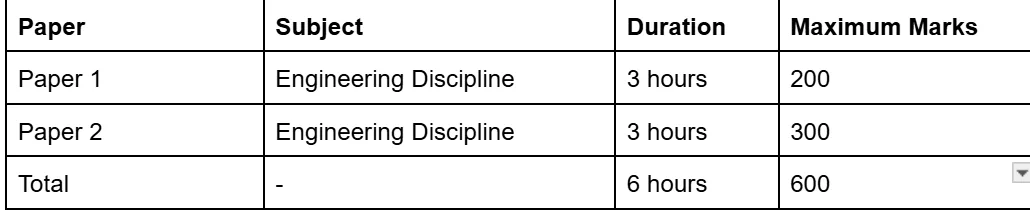
As per the UPSC ESE Mains exam pattern, candidates are required to provide detailed answers to engineering questions. Therefore, preparation for Mains should not be limited to memorising formulas or concepts. Candidates should also practise writing answers within the given time.
UPSC ESE Personality Test 2027
The final stage of the Engineering Services Examination is the Personality Test. Candidates who qualify in the Preliminary and Main examinations are called for the interview. The Personality Test carries 200 marks. It assesses the candidate’s overall suitability for a career in engineering services. Candidates may be asked questions related to their engineering discipline, academic background, current affairs and issues relevant to the services.
Communication skills, judgement, confidence, presence of mind and awareness of matters related to the engineering profession and public service are also important during the Personality Test.
UPSC ESE 2027 Final Merit
The UPSC ESE final merit list is prepared on the basis of marks secured by candidates in the Preliminary Examination, Main Examination and Personality Test.
Candidates should note that the UPSC ESE 2027 notification will be out on September 16. The official notification will provide the final details regarding the examination scheme, syllabus, eligibility criteria, application process and other instructions applicable to the 2027 examination.
How to Prepare as per UPSC ESE 2027 Exam Pattern?
Candidates should plan their preparation according to the requirements of each stage of the examination. For Prelims, candidates should focus on concept revision, previous year’s questions, mock tests, speed and accuracy. Since negative marking is applicable, candidates should also avoid making unnecessary guesses.
For the Mains examination, candidates should practise writing descriptive answers and solving engineering problems within the prescribed time. Regular revision and practice of previous year’s question papers can help candidates become familiar with the type and level of questions asked in the exam.