In the past, a significant portion of every election was typically won by Nehru Gandhi’s Congress, but now it has become a struggle for Rahul Gandhi and other dynastic political parties to secure victories. The growth in literacy, heightened awareness of national issues, and the unveiling of the true nature of Congress and various other opposition factions have become apparent to the citizens of our great nation. Nevertheless, the Gandhi family along with dynastic political organizations are reluctant to face this truth. They persist in thinking that they possess an inherent entitlement to govern both states and nation, and when they do not achieve success in most elections since 2014, they hold accountable the advancements in electoral technology and government institutions, disregarding the actual circumstances.
What Is the Special Intensive Revision (SIR)?
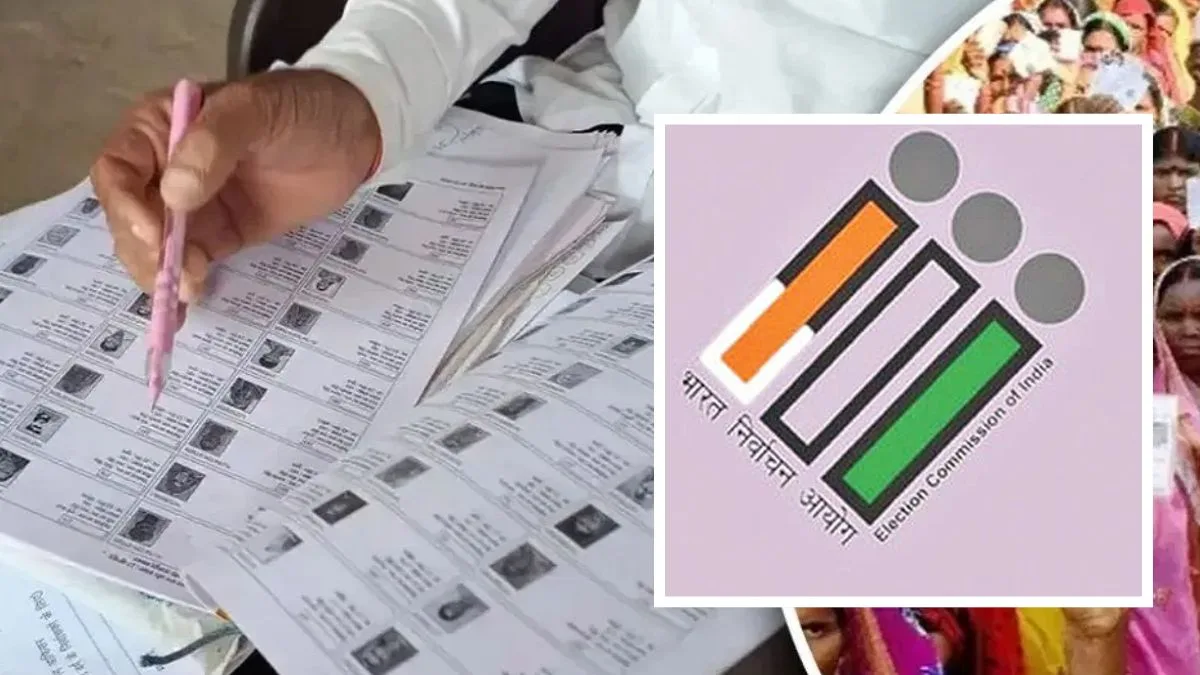
The Special Intensive Revision is a routine or yearly initiative by the Election Commission aimed at refreshing the Electoral Rolls, which is the formal record of qualifying voters. This process includes:
Verification of current voter information.
Adding new voters, particularly those who have just reached the age of 18.
Removing entries that are duplicates, those who have passed away, or individuals who have relocated.
Making necessary corrections for discrepancies in names or addresses.
This procedure has been constitutionally established by the Election Commission of Bharat for a long time; however, it faces strong opposition from rival parties and certain youth groups aligned with these parties seeking to exploit the situation for their own political gain. These individuals are undermining the integrity of our esteemed constitution. If Gyanesh Kumar, the Chief Election Commissioner, is removing individuals from the voter rolls under the SIR to aid the BJP, how can he determine that these voters are exclusively supporters of Congress or opposed to the BJP? Such unfounded accusations against a constitutional entity reveal an anti-Bharat and anti-constitution agenda aimed at securing political power for self-serving purposes. Society must recognize the devious motives and tactics employed to hinder national progress and incite discord within communities through violent actions and the propagation of false narratives.
Why SIR Is Truly Essential
1. Ongoing Demographic Transformations
Every year, Bharat experiences millions of internal relocations. Students, workers, and entire families frequently move between various cities or states. Without the regular update of the Electoral Roll Revision 2025, voter lists would rapidly become obsolete.
2. Combating Electoral Manipulation
SIR reduces the chances of fraudulent voting, duplicate registrations, or ballots cast in the names of those who have passed away. By refreshing the voter lists, the integrity of elections is enhanced through a more reliable process of electoral roll validation.
3. Supporting New Voters
Approximately 15–20 million young Bharatiyas reach the age of 18 annually. Initiatives to register voters in Bharat, particularly through higher education institutions and social media platforms, promote the engagement of young individuals, which is vital for a more inclusive democracy.
4. Narrowing the Digital Gap
Even though online registration is available, rural communities still depend significantly on in-person verification. SIR guarantees that distant populations such as those in tribal areas, mountainous regions, and city slums stay integrated into the electoral framework.
A logical rationale for why EVMs cannot be hacked or tampered
If EVM manipulation were possible, would Congress, under Sonia Gandhi, have allowed PM candidate Narendra Modi to secure a significant victory in the 2014 Lok Sabha elections? If hacking were feasible, why did the BJP, which aimed for over 400 seats in the 2024 elections, end up with only 240, falling short of the simple majority of 272? When Mr. Gyanesh Kumar was not serving as Chief Election Commissioner, the BJP won 303 seats in the 2019 Lok Sabha elections. However, after he assumed the role of CEC, the BJP’s performance dropped to only 240 seats in the 2024 Lok Sabha elections, falling short of a simple majority. It’s quite amusing how Rahul Gandhi and his associates attempt to craft narratives around this situation. Additionally, if EVM tampering were a reality, how did the BJP lose crucial states like Kerala, Tamil Nadu, Telangana, Punjab, and Jammu & Kashmir by such large margins? Considering these points, it seems that the INDI alliance’s narrative is simply an unwillingness to acknowledge their defeat.
Why was the implementation of EVMs necessary?
In the 1990s, Election Commissioner T.N. Seshan recognized the need to address ballot fraud, advocating for the development of Electronic Voting Machines (EVMs) as a solution. Although political parties have raised concerns, there has been no substantial proof of EVM tampering. However, the debate continues. Before EVMs were introduced, Bharatiya elections relied heavily on ballot papers, which were labor-intensive and vulnerable to malpractice like booth-capturing and ballot-box stuffing. This system also resulted in many invalid votes due to improper markings, prolonged counting processes, increased disputes, and delayed results, while also being ecologically detrimental. In 2017, when the Election Commission of Bharat requested political parties to provide evidence of EVM hacking or tampering, none could do so, indicating that claims made by the INDI alliance after their electoral defeat were attempts to mislead voters and undermine faith in the constitutional framework established by Dr. Babasaheb Ambedkar.
Previously, many votes were invalidated due to issues like paper folding and misplacement of stamps by illiterate voters or those with unsteady hands. In some cases, political thugs and troublemakers even tampered with ballot boxes. The manual counting process further increased the risk of inaccuracies, making it a lengthy and complex procedure rife with opportunities for illegal activities.
In contrast, EVMs offer significant and clear advantages.
i. Voting with EVMs is far more straightforward and user-friendly, as voters simply press a button on the machine to select their candidate.
ii. There are no invalid votes with the EVM system, whereas a substantial number of ballots were often invalidated in the paper ballot system, sometimes exceeding the margin of victory for a winning candidate.
iii. EVMs are auditable, transparent, accurate, secure, and minimize human error.
iv. They provide results within hours, which is crucial for large countries like Bharat, where counting used to take days or even weeks due to constituencies with hundreds of thousands of voters.
v. EVMs also conserve time, energy, and resources, sparing millions of trees. In the past, vast quantities of ballot papers were printed, consuming hundreds of tons of paper and requiring extensive operations in numerous government presses, along with the employment of many election officials in each constituency.
vi. Moreover, the innovative adaptation of modern electronic technology for voting highlights the creativity and ingenuity of Bharatiya society while enhancing the country’s reputation globally. Given the extensive experience gained over more than 70 years of conducting elections with both paper and EVMs, as well as the numerous advantages of EVMs, it is clear that EVMs are the preferred voting method.
The traditional use of ballot papers is outdated and inefficient. To solve the issues associated with paper ballots and embrace technological advancements, the Election Commission of Bharat introduced the EVM concept in 1977.
How have different courts responded to allegations concerning EVM machines?
Both the Karnataka High Court and the Madras High Court acknowledged that EVMs offer considerable benefits over the conventional ballot paper and ballot box system. The Hon’ble Madras High Court explicitly rejected claims of EVM tampering, asserting the following: “There is also no risk of viruses or vulnerabilities being introduced, as EVMs are not comparable to personal computers. As noted earlier, computer programming does not pertain to EVMs. While personal computers may have limitations due to internet connectivity that allow for program modifications, EVMs operate as standalone units with a fundamentally different program.”
Concerns regarding potential EVM tampering have been presented to various High Courts since 2001, including:
(a) Madras High Court – 2001
(b) Kerala High Court – 2002
(c) Delhi High Court – 2004
(d) Karnataka High Court – 2004
(e) Bombay High Court (Nagpur Bench) – 2004
Analysis: After evaluating multiple aspects of the technological integrity and administrative procedures related to EVM implementation, all of the aforementioned High Courts determined that EVMs are reliable, secure, and completely tamper-proof. The Supreme Court has also dismissed appeals from petitioners challenging the decisions of these High Courts in several instances.
Election Results for the Maharashtra Assembly
The INDI alliance’s claims regarding the Maharashtra Assembly election results have been thoroughly verified at multiple locations, as requested by the defeated candidate, and the VVPAT slips align perfectly with the votes cast. However, Rahul Gandhi and other leaders from the INDI alliance continue to raise concerns without fully acknowledging their losses in various states. They praise the EVMs and the Election Commission when they win, but claim it’s biased towards the BJP when they don’t. The citizens of our great nation will not tolerate such baseless efforts that undermine the constitution. It’s time for the Gandhi family and other political dynasties to reflect and genuinely work for the public good, rather than just seeking votes. Those misguided youth supporters who are acting against the constitution and resorting to threats must realize that they cannot deceive young people indefinitely. It’s vital to channel energy effectively instead of relying on false narratives. We should trust the intelligence of voters and move away from self-serving agendas.