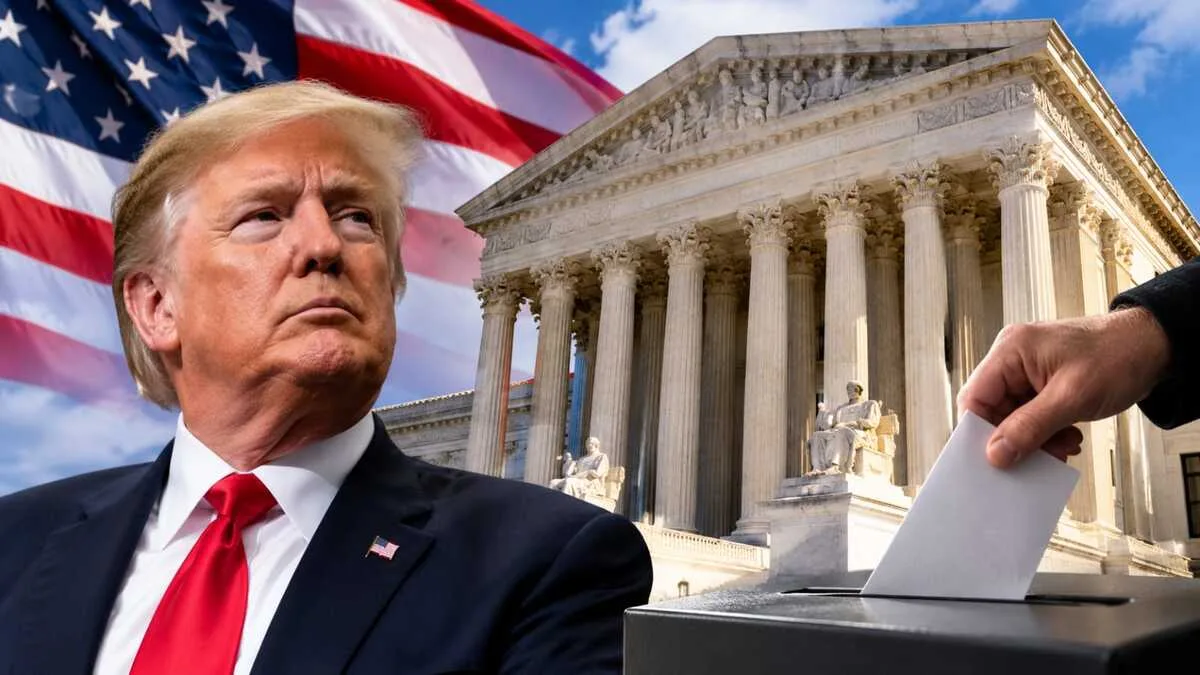
The US Supreme Court on September 25 allowed the Trump administration to use an updated federal immigration database to help verify the citizenship of voters, temporarily lifting a lower-court prohibition while litigation continues. The decision came in an emergency application concerning the revamped Systematic Alien Verification for Entitlements (SAVE) system, which the administration has sought to use to help states check voter-registration records.
The justices’ action stays a June 22 order by US District Judge Sparkle L. Sooknanan, who had vacated the 2025 changes to SAVE. The changes expanded the system by incorporating information from the Social Security Administration, including Social Security numbers, and enabled broader searches of voter records. Sooknanan concluded that federal officials had violated privacy protections in creating and operating the modified database.
A federal appeals court subsequently upheld the restriction in September. On September. 8, the Trump administration asked the Supreme Court to intervene, arguing that the lower-court order prevented the federal government from using Social Security information when responding to state requests to verify the citizenship or immigration status of individuals for voting and other purposes. The administration described the ruling as a threat to the integrity of upcoming elections.
Six justices supported the administration’s request. In a per curiam opinion, the majority said the challenges brought by organisations opposing the database likely lacked merit, including claims that federal officials had exceeded their statutory authority. The majority pointed to the 1996 Illegal Immigration Reform and Immigrant Responsibility Act (IIRIRA), which authorises the Department of Homeland Security to request and receive citizenship and immigration-status information from other federal agencies, including the Social Security Administration.
The justices also said maintaining the lower-court prohibition would inhibit the federal government’s ability to assist state and local agencies with election administration.
Texas experience highlights database’s use and controversy
The SAVE system is already used by states for citizenship and immigration-status verification. Texas Secretary of State Robert Howden has said that the state ran the names of its approximately 18 million registered voters through the database in fall 2025, identifying 2,724 people as potential noncitizens. Subsequent reviews found that 578 of those voters demonstrated citizenship, including 506 whose passport information had been added to SAVE after the initial comparison.
The Supreme Court’s decision was opposed by Justice Ketanji Brown Jackson, whose dissent was joined by Justice Sonia Sotomayor and Justice Elena Kagan. They argued that linking SAVE with Social Security Administration data exceeded the “strict limits” imposed by IIRIRA and that the 1996 law did not override other federal privacy protections, including the Privacy Act.
Jackson also argued that the potential harm to lawful voters outweighed the government’s claimed injury from being unable to use the expanded database while the legal dispute continues. She maintained that even a small number of eligible voters could face burdens or disenfranchisement if citizenship information is inaccurate.
The Supreme Court’s September 25 action does not finally resolve the underlying legal challenge. It allows the administration to use the updated SAVE system while the broader litigation proceeds.