The battle for control of the United States House of Representatives in the 2026 midterm elections is unfolding not only through election campaigns but also through a nationwide struggle over congressional district boundaries.
From Texas and Florida to California and Utah, a series of mid-decade redistricting decisions has changed the electoral landscape, creating new opportunities for both Republicans and Democrats to gain seats.
The contest has brought gerrymandering in the USA into the centre of the political debate. Although congressional boundaries are normally redrawn once every decade following the national census, President Donald Trump’s push for Republican-led states to revise their maps before the 2026 midterms triggered a series of changes.
Democratic-led states responded with their own proposals, turning the drawing of electoral boundaries into a significant part of the fight for congressional control.
The stakes are considerable because Republicans hold only a narrow majority in the House. Even a small number of seats changing hands could determine which party controls the chamber. The 2026 midterm elections will therefore be shaped by two interconnected factors, voters’ choices at the ballot box and the boundaries that determine which voters are grouped together in each congressional district.
What is Gerrymandering and how does redistricting work?
Redistricting is the process of redrawing electoral district boundaries to reflect population changes and other legal requirements. In the United States, congressional districts are generally redrawn following the census conducted every 10 years. The 2020 census established the boundaries intended to govern congressional elections throughout the current decade.
Gerrymandering, however, refers to the manipulation of those boundaries to give a political party or a particular group an electoral advantage. While redistricting is a routine part of the American electoral system, gerrymandering becomes contentious when district boundaries are designed to influence election outcomes rather than simply reflect population distribution.
According to the Bipartisan Policy Center, two techniques are commonly associated with partisan gerrymandering, packing and cracking.
Packing involves concentrating voters who support the opposing party into a small number of districts. This allows those voters to win some constituencies by large margins but reduces their influence in neighbouring districts.
Cracking involves dividing a concentrated group of opposing voters among several districts, preventing them from forming a majority in any of them.
Both methods can affect the relationship between the share of votes a party receives and the number of congressional seats it wins. A party may secure a disproportionately large share of House seats even when its overall share of the vote across a state is considerably smaller.
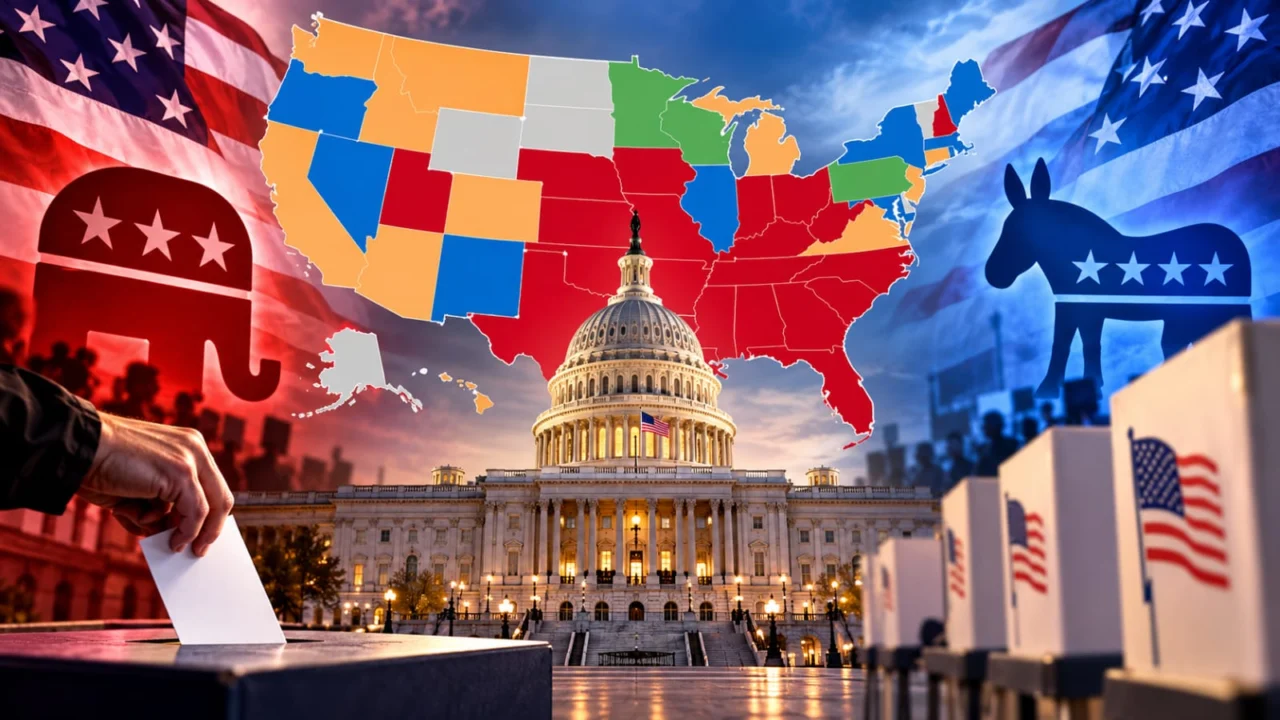
The current redistricting battle differs from the usual post-census process because several states have changed their congressional maps before the 2030 census. According to the National Conference of State Legislatures, 10 states have changed their congressional maps during the mid-decade cycle, Alabama, California, Florida, Louisiana, Missouri, North Carolina, Ohio, Tennessee, Texas and Utah.
The resulting changes have created a new electoral contest ahead of the 2026 US midterms, with both parties attempting to improve their prospects through redistricting.
Texas and Florida lead republican redistricting push
Texas has emerged as the central battleground in the Republican-led redistricting effort. Republicans already control 25 of the state’s 38 seats in the US House of Representatives. The revised congressional map was designed to make as many as five additional seats more favourable to Republicans, targeting districts currently represented by Democrats.
The US Supreme Court allowed the new Texas map to take effect despite an earlier lower-court ruling that found the boundaries were likely to constitute an unconstitutional racial gerrymander. The decision enabled the revised districts to be used in the electoral contest.
If Republicans capture all five targeted seats, Texas could provide a substantial boost to their efforts to retain control of the House in the 2026 midterms. The actual outcome, however, will depend on voting patterns and the competitiveness of individual races.
Florida is another important part of the Republican redistricting strategy. Republicans currently hold 20 of the state’s 28 House seats. A new map backed by Republican Governor Ron DeSantis is intended to improve the party’s chances in four additional districts held by Democrats.
The Florida changes have also faced legal challenges over whether the map violates provisions of the state constitution restricting the drawing of districts specifically to favour or disadvantage a political party. The Texas and Florida maps illustrate how mid-decade redistricting has become an important factor in the 2026 congressional elections.
Instead of waiting until the next census, Republican-led states have revised boundaries to create additional opportunities for the party to gain seats.
North Carolina and Alabama are also part of the Republican effort. Republicans already control 10 of North Carolina’s 14 House seats. The new map is expected to give the party an opportunity to capture one additional Democratic-held district.
In Alabama, a Republican-backed map is expected to provide an advantage in one additional House seat. The state’s redistricting dispute is closely connected to the wider debate over race and voting rights, with litigation focusing on whether the boundaries improperly dilute the voting strength of Black residents.
Tennessee, Missouri and Ohio face electoral boundary disputes
Tennessee’s new congressional map targets the state’s only Democratic-held House district, centred on Memphis. Republicans currently control the other eight districts. The revised boundaries break up the Memphis-based Democratic district and distribute Democratic-leaning voters across districts that are more favourable to Republicans. The change is expected to provide Republicans with an opportunity to gain one additional seat in the 2026 midterms.
The proposed changes have also raised questions about Black political representation because the district being dismantled was majority Black. The dispute highlights how redistricting can affect both partisan competition and the ability of racial and demographic groups to elect candidates of their choice.
Missouri’s Republican-backed map was designed to dismantle a Democratic-held seat based in Kansas City while improving Republican prospects in seven of the state’s eight congressional districts.
However, the projected electoral advantage remains subject to legal and political developments. Missouri’s 2025 map is currently on hold after the Missouri Supreme Court ruled that voters should decide whether to repeal it. The state’s 2022 congressional map has consequently been restored pending a referendum scheduled for November 2026.
The referendum means that the proposed Missouri changes cannot be treated as guaranteed Republican gains. The outcome will depend on the legal position and the result of the vote.
Ohio has also revised its congressional boundaries. A new map approved by the state’s redistricting commission improves Republican chances of flipping as many as two Democratic-held seats. The revised boundaries were more moderate than some Republicans had initially sought.
Republicans currently control 10 of Ohio’s 15 House districts. The new map could strengthen their position, although the number of seats ultimately changing hands will depend on the performance of candidates and the distribution of votes.
Together, Tennessee, Missouri and Ohio demonstrate that redistricting outcomes are shaped by more than partisan calculations.
Court decisions, state constitutional provisions, voting rights disputes and referendum requirements can all influence whether proposed congressional maps are implemented.
California and Utah Provide Democratic Countermoves
Democrats have responded to Republican-led redistricting with changes of their own, particularly in California. The state’s revised congressional map was developed as a countermeasure to the Texas redistricting effort and aims to help Democrats flip as many as five Republican-held seats.
California already has a substantial Democratic majority in its congressional delegation, with Democrats holding 43 of the state’s 52 House seats. The new boundaries shift several competitive districts further towards Democratic candidates, potentially increasing the party’s representation after the 2026 midterms.
The California changes demonstrate that mid-decade redistricting is not confined to Republican-led states. Democratic lawmakers have also used the process to alter the electoral landscape and offset potential Republican gains elsewhere.
Utah offers another possible Democratic opportunity. A state judge rejected the previous Republican-drawn congressional map as illegally partisan and imposed an alternative map. The revised boundaries are expected to give Democrats a chance to flip one of the state’s four Republican-held House seats.
The Utah ruling provides a potential counterweight to Republican advantages projected in states such as Texas, Florida and North Carolina. However, the expected gain remains an electoral possibility rather than a confirmed outcome.
Virginia was another potential Democratic battleground in the redistricting dispute, but it did not produce a new map for the 2026 election. Voters had approved a Democratic-backed proposal that could have enabled the party to flip as many as four Republican-held seats.
The Virginia Supreme Court subsequently blocked the plan after ruling that lawmakers had failed to follow the required procedures. The decision prevented the proposed map from being used in the 2026 midterms, removing a potential source of additional Democratic gains.
These developments show how court rulings and procedural requirements can determine whether a redistricting proposal affects an election. Even when a proposal receives voter approval, legal challenges can prevent its implementation.
How the redistricting battle could shape the 2026 midterms
The scale of the redistricting contest is reflected in the potential seat advantages identified across the affected states. According to a Reuters analysis, Republicans have gained an advantage in races involving approximately 16 seats through redistricting, while Democrats have gained an advantage in six newly drawn districts.
The potential Republican advantages from redistricting include up to five additional seats in Texas, four in Florida, two in Ohio, and one each in North Carolina, Tennessee, Alabama and Louisiana. Missouri could provide Republicans with one additional seat, subject to the outcome of the November 2026 referendum and the legal status of its revised congressional map.
Democrats, meanwhile, could gain an advantage in up to five seats in California and one seat in Utah. These figures represent potential electoral gains rather than guaranteed victories, as the final results will depend on voter turnout, candidate performance and the political conditions in each state.
These figures represent potential advantages associated with the new maps, not guaranteed changes in the composition of the House. A district drawn to favour one party can still produce a different result depending on the candidates, voter turnout, campaign performance and national political conditions.
The consequences of redistricting are particularly significant because Republicans hold only a narrow House majority. In such circumstances, a small number of seats could determine control of the chamber, making even a single district important to both parties.
The 2026 US midterms are therefore taking place against the backdrop of an unusually extensive mid-decade redistricting battle. Republican-led states have sought to strengthen their electoral position, while Democratic-led states have attempted to counter those efforts through revised maps of their own.
The next stage will be decided at the ballot box, where voters will cast their votes within the new congressional boundaries. The outcome will establish whether the advantages created by redistricting translate into actual victories.
As the 2026 midterm elections approach, the contest over gerrymandering and congressional delimitation in the USA remains a central part of the struggle for control of Congress. The revised maps have changed the electoral landscape, but the final balance of power will depend on how voters respond to the candidates competing within them.