Special Intensive Revision (SIR) is an intensive exercise undertaken by the Election Commission of India (ECI) to comprehensively verify and update electoral rolls, with the stated objective of ensuring that eligible citizens are included while deceased, shifted, duplicate and otherwise ineligible entries are identified and removed.
Is this the first time that such an exercise in being undertaken by ECI? There have been 13 previous instances where Election Commission of India (ECI) had conducted ‘SIR’. Although electoral-roll revision is an exercise undertaken by the independent constitutional authority, it is useful to examine the political context in which earlier intensive revisions took place, particularly because the present exercise has acquired a political dimension.
Congress Prime Minister-Wise Breakdown
- Jawaharlal Nehru: 3 – 1952–56, 1957, 1961
- Lal Bahadur Shastri: 1 – 1965
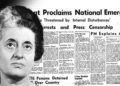
- Indira Gandhi: 2 – 1966, 1983–84
- Rajiv Gandhi: 1 – 1987–89
- P.V. Narasimha Rao: 3 – 1992, 1993, 1995
l Dr Manmohan Singh: 1 – 2004 - Total: 11
BJP Prime Minister-wise breakdown
Atal Bihari Vajpayee: 2 – 2002 & 2003
The Election Commission’s own historical record shows that intensive revision of electoral rolls is not a new BJP-era practice. Before the present SIR, the ECI records 13 earlier intensive revisions. Eleven of those revision periods took place when a Congress Prime Minister was in office — under Jawaharlal Nehru, Lal Bahadur Shastri, Indira Gandhi, Rajiv Gandhi, P.V. Narasimha Rao and, in 2004, Dr Manmohan Singh. Only two of the 13 earlier periods — 2002 and 2003 — were under the BJP-led Government of Atal Bihari Vajpayee.
What Opposition parties alleging?
The main claims fall into five areas:
1. Eligible Voters may be
Getting Excluded.
Opposition parties argue that the scale of deletions during SIR creates a risk that genuine voters, particularly poorer, migrant and otherwise vulnerable citizens, could be left off the rolls because they cannot produce the required documents or complete the process.
2. The Exercise could Disproportionately Affect Certain Communities.
Congress and other Opposition parties have alleged that deletions could disproportionately affect minorities, including Muslims, and other socially vulnerable groups. This is an opposition allegation without any evidence or proof.
3. They Question the Burden of Proof placed on Existing Voters.
Their argument is essentially: if someone is already on the electoral roll, why should that voter have to overcome a substantial documentation/verification burden to remain enrolled? The
Supreme Court, however, upheld the Bihar SIR framework in May 2026, finding that the
ECI had legal authority to conduct the exercise and that the framework, including notice/hearing safeguards, was constitutionally permissible.
4. They Question the ECI’s Transparency and Independence.
This has become a major part of the current protest. Opposition parties are citing reported disagreements within the Election Commission over aspects of the revision process and have accused CEC Gyanesh Kumar of excessive centralisation and insufficient transparency. They are therefore demanding his resignation. The ECI rejects the allegations and says differences within an institution do not invalidate its decisions.
5. They allege that SIR can be used as a political instrument.
Rahul Gandhi and other opposition leaders have characterised the process as “vote chori”, alleging that voter-list changes are being used in a way that could advantage the BJP. The ECI has rejected this framing and has repeatedly said that deletions are intended to remove dead, duplicate, shifted or otherwise ineligible entries and to maintain accurate rolls.
To Verify the Truth Time to Study the SIR Architecture:
1. BLO goes to a Voter’s Residence: The process begins with a door-to-door verification. If the BLO cannot establish the required linkage or finds a discrepancy, that is a verification issue, not automatically a final deletion. ECI has prescribed multiple visits before treating an elector as untraceable. Bottom line is that not being found during verification does not mean that a voter is permanently out of the electoral roll.
2. Voter Name is Checked against the Old Roll: For States where the previous SIR roll is being used as the baseline, being present in that old roll provides an important evidentiary advantage. But not being in the old roll does not mean there is no route forward. This is the most pertinent point in the architecture. The Supreme Court specifically treated the absence from the 2003 roll as requiring additional verification/ documentation rather than automatic permanent exclusion. Voter name is mapped with that of their family in the previous rolls.
3. If a voter’s family link cannot be established, they can take the document route: If neither the elector nor the relevant family linkage can be established from the old roll, the person can use the prescribed documentary route to establish eligibility. The Supreme Court has confirmed that ECI can prescribe documentation for an intensive revision.
4. Draft Roll gives Voter a Second Chance: The draft electoral roll is published before the final roll. If a voter’s name is missing, they get an opportunity to file a claim/objection within the prescribed period. ECI’s stated safeguards include claims through Forms 6, 7 and 8.
5. If ECI has a doubt about a Voter, then that Voter gets a Notice: This is perhaps the most important legal safeguard. The Supreme Court has expressly said that non-inclusion in the draft roll is provisional. Where eligibility is doubtful, the voter must get notice, an opportunity to respond, an inquiry and a reasoned decision. ECI has also stated that a name cannot simply be deleted from the draft without the prescribed inquiry
and opportunity.
6. Voter can Submit Documents against the Notice: The current SIR voter portal also provides a facility to “Submit Document Against Notice issued.” This is particularly relevant for electors whose circumstances may have changed because of migration, employment, urbanisation or relocation. Such electors can submit the prescribed documents and explanation through the available process, subject to the statutory requirements for electoral registration.
7. If the ERO Rejects the Claim, there is an Appeal Route for the Voter: The Supreme Court recorded the two-tier appeal mechanism under Section 24 of the Representation of the People Act. So the ERO’s word is not final and the voter can appeal against the rejection by ERO.
8. The Process itself is Subject to Scrutiny and Quality Checks: ECI has clearly stated that SIR includes supervisory cross-verification, random sample audits of deleted entries, and public disclosure of draft and final rolls. It is not supposed to be one BLO making an unchecked decision. There are supervisory and audit mechanisms within the process. This is where the role of political parties & Booth Level Agents (BLA’s) comes into picture
9. Political Parties can also Check this Process: Before the commencement of SIR process, the ECI had published in public the number of Booth Level Agents from each political party. For instance in November 2025, Election Commission had published the following data about BLA’s in Uttar Pradesh. The total number of polling stations or booths in Uttar Pradesh 1,62,486. The below table is based on the ECI publication as on November 28th 2025 before the commencement of SIR process. The following Uttar Pradesh data, published by ECI on November 28, 2025, illustrates the extent of political-party BLA deployment before the SIR process.
These figures demonstrate that recognised political parties had an institutional mechanism to scrutinise electoral-roll entries through their Booth Level Agents. Their BLA’s can & should identify & raise cases of possible wrongful exclusion. This is to protect the voter and also to ensure that political parties remain as key stakeholders in the process.
10. Even after SIR, there is a route back onto the roll: ECI has now directed the 20 States/UTs where SIR has been completed to conduct a special enrolment drive for people left out of SIR, including young and first-time voters, through the normal continuous-updating process. Even after SIR, there is a route back onto the roll. ECI has directed the 20 States/UTs where SIR has been completed to launch special enrolment drives for eligible persons left out during or after SIR, including young and first-time voters. Such persons can apply to the concerned ERO through the continuous-updating process, subject to the statutory requirements.”
11. If the dispute is actually about citizenship, there is another safeguard mechanism built into the architecture: While the citizenship question cannot be resolved by ECI, the Court directed that the matter be referred to the competent authority, with notice and an opportunity for hearing. If that authority determines that the person is a citizen, the person must be included in the electoral roll. The Supreme Court has distinguished between ECI’s limited inquiry into electoral eligibility and the formal determination of citizenship under the Citizenship Act. Where a citizenship question requires determination by the competent authority, the prescribed process, including notice and an opportunity to be heard, applies. This establishes an important legal boundary between ECI’s limited inquiry into electoral eligibility and the formal determination of citizenship under the Citizenship Act.
But the next big allegation is that 13.39 crore voter names have been deleted during SIR: This figure has generated considerable political and media attention. But before drawing a conclusion from the number,
it is important to understand what the 13.39 crore figure actually represents.
THE ALLEGATION
13.39 crore voters have been deleted during SIR.
WHAT THE ECI DATA SHOWS
The 13.39 crore figure refers to electors identified during the SIR exercise in categories requiring verification or exclusion from the electoral roll. These broadly include:
- 3.01 crore – Absent / Untraceable
- 6.30 crore – Permanently Shifted
- 2.80 crore – Deceased
- 1.02 crore – Duplicate
- 26 lakh – Other
These categories are not, by themselves, proof that 13.39 crore eligible voters have been permanently or wrongfully deleted.
ECI’s prescribed process involves house-to-house verification, identification of probable reasons for non-inclusion, publication of the Draft Electoral Roll, claims and objections, and further verification before the final roll is published.
During SIR in Meghalaya, 2,22,786 electors could not be linked to the previous SIR database and were placed in the ‘No Mapping’ category. The Chief Electoral Officer, Meghalaya, explicitly clarified: ‘Electors identified under the No Mapping categories are not automatically deleted from the electoral roll.’
WHAT HAPPENS TO A GENUINE VOTER WHO IS WRONGLY LEFT OUT?
The remedial architecture is: Verification → Draft Roll → Claims & Objections → Notice/Hearing where required → ERO Decision → Appeal → Restoration / Continuous Updation
ECI has specifically provided that electors whose records require further verification can receive notice and an opportunity to submit documents. In cases involving unmapped electors or logical discrepancies, BLOs can also visit the elector’s residence to collect documents for consideration by the ERO.
POLITICAL PARTIES ALSO HAVE A ROLE
ECI has directed that booth-wise lists of electors classified as Absent, Shifted, Dead or Duplicate (ASDD) be shared with Booth Level Agents appointed by political parties before publication of the Draft Electoral Roll. The purpose is specifically to allow BLAs to check the status of individual electors and identify errors that can be rectified before the Draft Roll is published. Therefore, 13.39 crore should not be presented as 13.39 crore confirmed wrongful deletions. It is a figure associated with categories identified during the SIR verification process, against which the electoral-roll system provides further verification and remedial mechanisms.
IMPORTANT DISTINCTION
The allegation is about 13.39 crore “deletions”. The actual administrative question is: how many of these cases ultimately remain excluded after verification, claims, objections, appeals and restoration?
That is the figure that ultimately matters. And this is why the final electoral roll, rather than the preliminary category count, is the appropriate basis for judging the ultimate impact of SIR. ECI itself has stated that the final figure of electors will be known only after the final rolls are published in the remaining Phase-III states.
It is also important to distinguish between two separate questions: whether electoral rolls should be periodically cleaned and whether the methodology used for such revision is fair and accurate. The first is an established administrative necessity; the second is a legitimate subject for scrutiny. The democratic debate, therefore, should focus on the methodology adopted, the evidence used for exclusion, the safeguards available to affected electors, the functioning of the claims-and-objections process, and the number of eligible voters ultimately restored to the rolls. It would be important to recall the statements made by some of the opposition party members who are raising allegations now.
Let us be clear about the issue. Voter-list revision is not an anti-democratic concept. Kapil Sibal, when he was the Union Law Minister, had mentioned in the floor of the Parliament that every genuine voter deleted has got enough opportunities to get remedial measures and get their name back in the voter rolls. DMK leaders have themselves said they are not against revision; DMK MP N.R. Elango has acknowledged the ECI’s constitutional power to conduct electoral revision; Sachin Pilot has said in 2018 that voter-list revision is the Election Commission’s job; Congress in Rajasthan had previously demanded a sanitised electoral roll; and Congress MP Abhishek Manu Singhvi himself highlighted alleged duplicate registrations across Andhra Pradesh and Telangana in 2018. This is true since some of the people who are natives of Andhra Pradesh reside in Hyderabad and they used to have 2 voter cards one in Hyderabad and another in their native village at Andhra. In Kerala, Shashi Tharoor has said that the removal of duplicate registrations may have benefited Congress and has expressly said he has no problem with removing spurious, deceased, absent or migrated voters. The legitimate debate is therefore about the methodology, safeguards and correctness of individual cases—not whether accurate electoral rolls are necessary.
A clean electoral roll and protection of every genuine voter are not competing objectives. They are two sides of the same democratic responsibility. If there is an individual error, identify it and correct it.