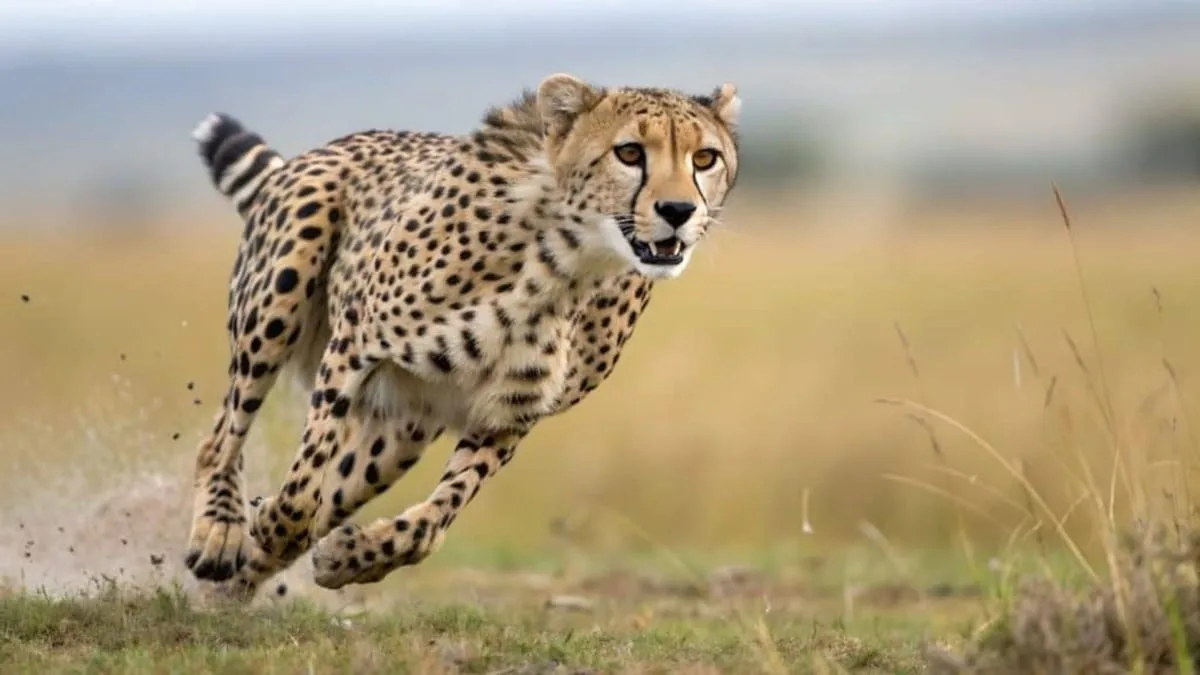
From being officially declared extinct in India in 1952 to a population of 56 cheetahs in September 2026, the return of the fastest land animal to the country has emerged as one of India’s most ambitious wildlife conservation programmes. Launched in 2022, Project Cheetah has moved beyond the initial translocation of animals from Africa and is now witnessing successive generations of cheetahs being born on Indian soil.
From being declared extinct in 1952 to a population of 56 cheetahs in 2026, India’s cheetah reintroduction journey marks a significant chapter in wildlife conservation. Under Project Cheetah, 36 of the 56 cheetahs have been born in India, marking continued progress in the… pic.twitter.com/iAfhoStOyJ
— DD News (@DDNewslive) September 21, 2026
The latest milestone came in September 2026, when KGP12, a female cheetah born in India, gave birth to four cubs at Kuno National Park in Madhya Pradesh. With these births, India’s cheetah population rose to 56, including 36 cheetahs born in the country. The development is particularly significant because KGP12 herself is a product of Project Cheetah, being the daughter of South African cheetah Gamini.
A species that disappeared from India
Cheetahs once occupied large parts of the Indian subcontinent. However, their numbers declined sharply over centuries because of hunting, capture of wild cheetahs for coursing, habitat conversion and the depletion of their prey base.
The last confirmed cheetahs in the Indian wilderness were recorded in 1947 in present-day Chhattisgarh, when three animals were shot in the forests of Koriya district. The Government of India officially declared the cheetah extinct in the country in 1952. The disappearance of the cheetah made it the only large carnivore species to have gone extinct in independent India, according to the National Tiger Conservation Authority.
For decades, the possibility of bringing the species back remained largely a conservation aspiration. That changed with the development of a scientific reintroduction plan and international cooperation with African countries.
Project Cheetah begins in 2022
India formally began its modern cheetah reintroduction programme on September 17, 2022, when eight cheetahs were brought from Namibia to Kuno National Park in Madhya Pradesh.
The first batch consisted of five females and three males. Their arrival marked what the government described as the world’s first intercontinental translocation of a large carnivore.
Kuno was selected after assessments of potential sites because of its habitat suitability, prey availability and relatively low levels of human disturbance. The broader objective was not merely to keep a small number of cheetahs alive in captivity or under intensive management, but to establish a free-ranging population capable of reproducing and eventually becoming self-sustaining. The project also sought to restore and strengthen grassland and open-forest ecosystems in which cheetahs historically played an ecological role.
South African cheetahs strengthen the founder population
The first eight cheetahs were followed by another major translocation. On February 18, 2023, India received 12 cheetahs from South Africa, seven males and five females. The animals were brought to India under a bilateral cooperation framework between the two countries. Together, the Namibian and South African animals formed the initial founder population for the programme.
The early years were not without challenges. Some translocated cheetahs died, while wildlife managers had to deal with the difficulties associated with acclimatisation, health monitoring, breeding and adapting the animals to a new environment.
At the same time, the programme began recording births, providing an important indication that the introduced animals were adapting and reproducing in India.
The first cubs are born in India
One of the most important developments in Project Cheetah has been the birth of cubs after the arrival of the African cheetahs.
Namibian female Jwala produced a litter in March 2023. Further litters followed in 2024, including births involving Asha, Jwala and Gamini. By the end of 2025, India had recorded 30 cheetahs, including 19 individuals born in India, according to a government account of the programme. The births changed the nature of the project. India was no longer simply providing a new home for imported cheetahs; the animals were beginning to establish a breeding population. In March 2026, Jwala gave birth to five more cubs, taking the country’s total cheetah population to 53 and the number of thriving Indian-born cubs to 33 at that point.
The significance of second-generation cheetahs
The September 2026 milestone is even more significant because of the generation of cheetahs now being born in India. KGP12, the female that gave birth to four cubs in September, was herself born in India to Gamini, a South African cheetah introduced under Project Cheetah. This means the programme has progressed from importing founder animals to seeing India-born cheetahs reproduce.
This is an important distinction in any reintroduction programme. The long-term objective is not simply to maintain the original animals brought from another country, but to establish a population capable of surviving, breeding and passing on its genes through successive generations. The latest births therefore represent another stage in the effort to establish a sustainable cheetah population in India.
From 8 animals to 56
The numerical growth illustrates the pace of the programme. In September 2022, India began with eight cheetahs from Namibia. A further 12 were brought from South Africa in February 2023, strengthening the founder population. In February 2026, India received another batch of cheetahs from Botswana, adding another dimension to the programme.
By March 2026, the population had reached 53, including 33 Indian-born cubs. By September, the population had risen to 56, of which 36 were born in India. Thus, more than 60 per cent of the current population consists of cheetahs born in India, rather than animals directly brought from Africa.
While Kuno remains at the centre of Project Cheetah, the programme is not intended to remain confined to a single location.
Gandhi Sagar Wildlife Sanctuary in Madhya Pradesh has been developed as another site for cheetah conservation. The government has also been working towards establishing a larger landscape capable of supporting a metapopulation rather than relying on one isolated population. The broader vision involves connecting suitable landscapes and establishing multiple populations over time. Such an approach can reduce the risks associated with depending on a single site and can improve the long-term genetic and ecological resilience of the species in India.
Project Cheetah is also designed as an ecosystem restoration initiative. According to the NTCA, the return of the cheetah is intended to help restore the ecological role of a top predator while supporting the conservation of prey species and other wildlife associated with grassland and semi-arid ecosystems.
The project therefore extends beyond the individual animals. Habitat management, prey availability, veterinary care, monitoring, protection from human disturbance and community participation are all part of the larger conservation effort.
The programme has also created opportunities for local participation around Kuno. A government account reported the involvement of hundreds of Cheetah Mitras, along with direct employment and eco-tourism-related benefits for communities around the landscape.
A new phase for Project Cheetah
The four-year journey has also demonstrated that reintroduction is a gradual process rather than a single event. The initial phase involved bringing the animals from Africa, quarantine, health monitoring and acclimatisation. This was followed by breeding, survival of cubs and gradual release into larger landscapes.
The latest phase is increasingly focused on the survival and reproduction of India-born cheetahs. A September 2026 status review described the establishment of breeding females and survival of second-generation cubs as an important consolidation phase for the programme.
The birth of four cubs to KGP12 therefore carries significance beyond the increase in numbers. It demonstrates that a cheetah born in India has itself reached reproductive age and produced offspring in the same landscape.