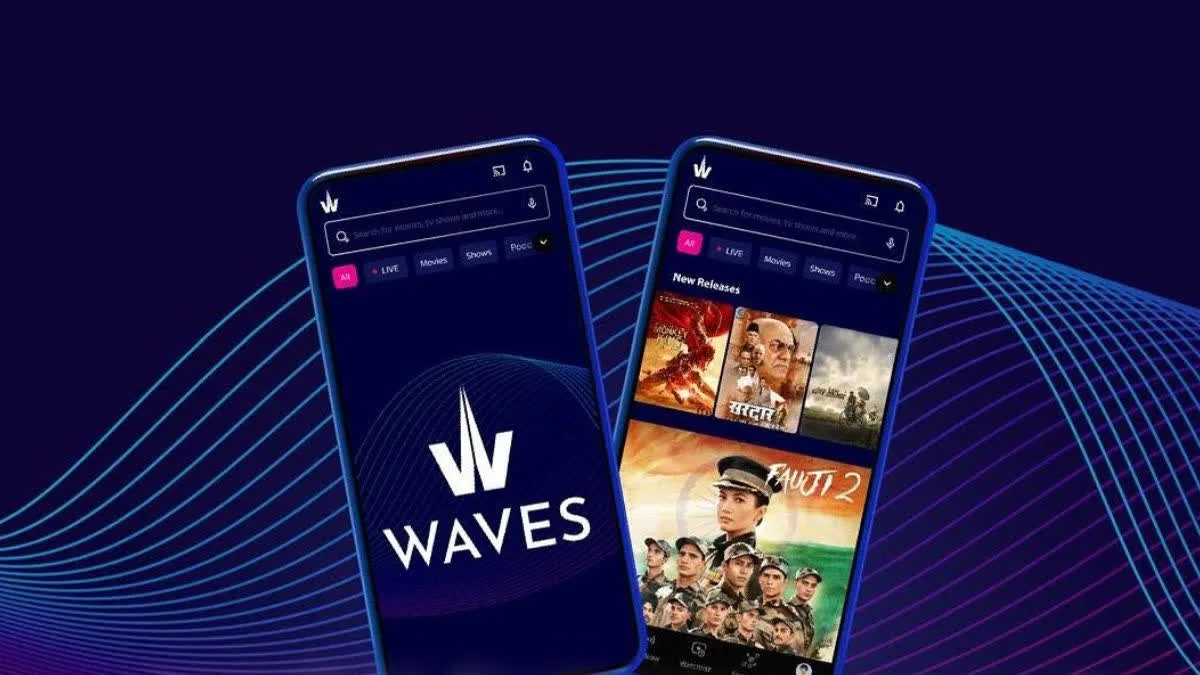
Prasar Bharati’s digital streaming platform WAVES OTT has crossed 1.2 crore registered users and more than 1.5 crore downloads, highlighting the rapid expansion of India’s public broadcasting network into the digital entertainment and information space.
Launched on November 20, 2024, WAVES OTT was developed as a public-service digital platform bringing together television, radio, entertainment, news, education, culture and archival material under one digital ecosystem.
The platform currently offers more than 24,000 titles and 15,000 hours of content and is available to audiences in more than 130 countries. Content is offered in more than 26 languages, giving regional and multilingual programming a significant place in the platform’s digital strategy.
Unlike conventional commercial OTT platforms that primarily focus on entertainment, WAVES OTT combines entertainment with public information, education, culture, news, heritage and government-supported programming.
From television and radio to one digital platform
WAVES OTT brings together a large part of Prasar Bharati’s existing broadcasting network.
The platform provides access to more than 140 television channels and 220 radio services, allowing users to access live television and radio through smartphones, websites and connected television devices.
It also carries all 35 Doordarshan satellite channels, while drawing on Akashvani’s national and regional radio networks.
The objective is to make public broadcasting available beyond traditional television and radio sets.
A viewer can access live programming, recorded shows, archived material and other digital content through the same platform. Similarly, radio listeners can access Akashvani services digitally instead of depending only on conventional radio receivers.
The platform also carries live coverage of major national events, sports, cultural programmes and devotional broadcasts.
This combination gives WAVES a different position from conventional streaming services, as its content is not limited to films, television series or entertainment programmes.
Education and publications form a major part of WAVES
Education is another important component of the platform.
WAVES OTT includes programming from PM eVidya channels, giving students access to educational content through the same digital ecosystem.
The platform has also incorporated digital publications and archival resources, including Yojana and Kurukshetra, along with e-books and photo collections.
This allows the platform to function not just as an entertainment service but also as a digital repository for educational, cultural and public-service content.
Its archive component is particularly significant for Prasar Bharati, which has accumulated decades of television and radio material through Doordarshan and Akashvani.
Digitising and distributing this material gives audiences an opportunity to access older programmes and historical broadcasts that may otherwise remain difficult to find.
WAVES makes regional content more accessible
Language diversity is another key feature of the platform.
With content in more than 26 languages, WAVES is seeking to address one of the challenges faced by national digital platforms, ensuring that audiences outside major Hindi- and English-speaking markets have access to relevant programming.
Regional programming, subtitles and content from different parts of the country are being used to expand the platform’s reach.
This also creates an opportunity to give greater visibility to regional culture, traditions, music, documentaries and local stories.
The platform’s international reach, with audiences in more than 130 countries, also provides a potential digital window for Indian content among the Indian diaspora and international audiences interested in India’s culture and public broadcasting.
WAVES was launched as a public-service OTT platform
WAVES OTT was unveiled at the 55th International Film Festival of India in Goa as Prasar Bharati’s public-service OTT platform.
The launch represented an effort by India’s public broadcaster to adapt to changing viewing habits, as audiences increasingly consume television and video content through smartphones, apps and connected televisions.
The shift is particularly important as traditional broadcasting competes with streaming platforms and social media for viewers’ attention.
Rather than abandoning its existing television and radio networks, Prasar Bharati is using WAVES to bring these services into the digital environment.
The platform therefore combines the broadcaster’s existing infrastructure and archives with newer forms of digital distribution.
New content partnerships being explored
Prasar Bharati has also introduced a Pay-Per-View Content Sourcing Policy for WAVES OTT.
The policy provides a mechanism through which producers and rights holders can offer content to the platform.
This could help expand the range of programming available on WAVES while creating opportunities for independent producers and content owners.
The organisation has also been working on distribution and partnership initiatives, including ONDC integration and railway-related digital distribution initiatives.
These efforts are aimed at taking WAVES content beyond the traditional broadcast ecosystem and making it available through additional digital channels.
MyWAVES brings citizens into the content ecosystem
Prasar Bharati has expanded the WAVES ecosystem further through MyWAVES, which was launched on March 23, 2026.
Unlike the main OTT platform, which primarily provides professionally produced and broadcast content, MyWAVES is designed to give citizens an opportunity to create and upload their own content.
Users can create and share formats such as short videos, vertical videos and episodic content.
The initiative is intended to provide opportunities to emerging creators, particularly those who may not have access to established media or entertainment networks.
Its multilingual interface is designed to encourage participation from creators across different regions of the country.
MyWAVES also provides a digital platform for initiatives such as the Create in India Challenge, connecting citizen-generated content with the broader creative economy.
Gems of India Challenge focuses on local stories
One of the initiatives launched under the MyWAVES ecosystem is the Gems of India Challenge.
Launched in July 2026 across six pilot States and Union Territories, the initiative invited creators to produce one- to three-minute videos showcasing their districts.
The subjects include local culture, heritage, tourism, folk traditions, handicrafts, personalities and achievements.
The initiative brings together Prasar Bharati, My Bharat and state and district administrations, with educational and cultural institutions also supporting participation.
YouTube and Meta are supporting outreach through their respective creator communities.
The programme is expected to expand to other States and Union Territories, potentially creating a large collection of short-form digital stories about India’s districts.
WAVES ecosystem extends beyond OTT
The broader WAVES initiative is not limited to the streaming platform.
The World Audio Visual and Entertainment Summit, or WAVES, brings together creators, companies, investors, policymakers and technology leaders from the media and entertainment sector.
The inaugural edition was held in Mumbai from May 1 to 4, 2025.
The summit covered areas including broadcasting and infotainment, animation, visual effects, gaming and comics, extended reality, digital media and films.
According to the figures provided by Prasar Bharati, the 2025 edition attracted more than 10,000 delegates from over 100 countries, along with 1,000 creators, 300 companies and more than 350 start-ups. Overall participation crossed one lakh.
WAVES Declaration and Create in India Challenges
Several initiatives were launched through the wider WAVES ecosystem to strengthen India’s position in the global media and entertainment sector.
The WAVES Declaration was adopted by 77 countries, while the Create in India Challenges received nearly one lakh registrations from more than 60 countries.
The ecosystem includes platforms such as the Global Media Dialogue, CreatoSphere, Create in India Challenges, WAVES Bazaar and WaveX.
WAVES Bazaar recorded around Rs 1,328 crore in business transactions through more than 3,000 meetings, while WaveX provided a platform for more than 30 start-ups to pitch their ventures.
Together, these initiatives seek to connect India’s creative community with investors, technology companies and international markets.
Public broadcasting enters a new phase
The growth of WAVES OTT reflects the changing nature of India’s media consumption.
Television and radio remain important, but audiences are increasingly accessing content through mobile phones, streaming platforms and connected devices.
For Prasar Bharati, the challenge is therefore not simply to digitise existing broadcasts but to create a larger digital ecosystem around them.
With 1.2 crore registered users, more than 1.5 crore downloads, over 24,000 titles and 15,000 hours of content, WAVES has established a significant user base less than two years after its launch.
The addition of MyWAVES further expands that ecosystem by moving beyond the traditional broadcaster-viewer relationship and allowing citizens themselves to participate in content creation.
The larger WAVES initiative adds another layer by connecting creators, businesses, investors and technology companies.
Together, WAVES OTT, MyWAVES and the WAVES ecosystem represent Prasar Bharati’s effort to move India’s public broadcasting network from a primarily television-and-radio model towards a broader digital ecosystem covering entertainment, education, culture, archives, public information and citizen-generated content.