DEHRADUN: Uttarakhand, popularly known as Devbhoomi, is facing a serious electricity-loss crisis, with the state reportedly suffering financial and distribution losses running into nearly Rs 1,000 crore every year. The issue has come under sharper scrutiny after departmental assessments reportedly indicated that around Rs 800 crore of the losses were linked to areas with substantial Muslim populations.
The figures have triggered a political and public debate, with questions being raised over whether the concentration of electricity theft in certain localities should be described as “electricity jihad”. However, the allegation remains a matter of political discourse, while the state government and energy authorities are focusing on the larger issue of power theft, unpaid bills and high distribution losses.
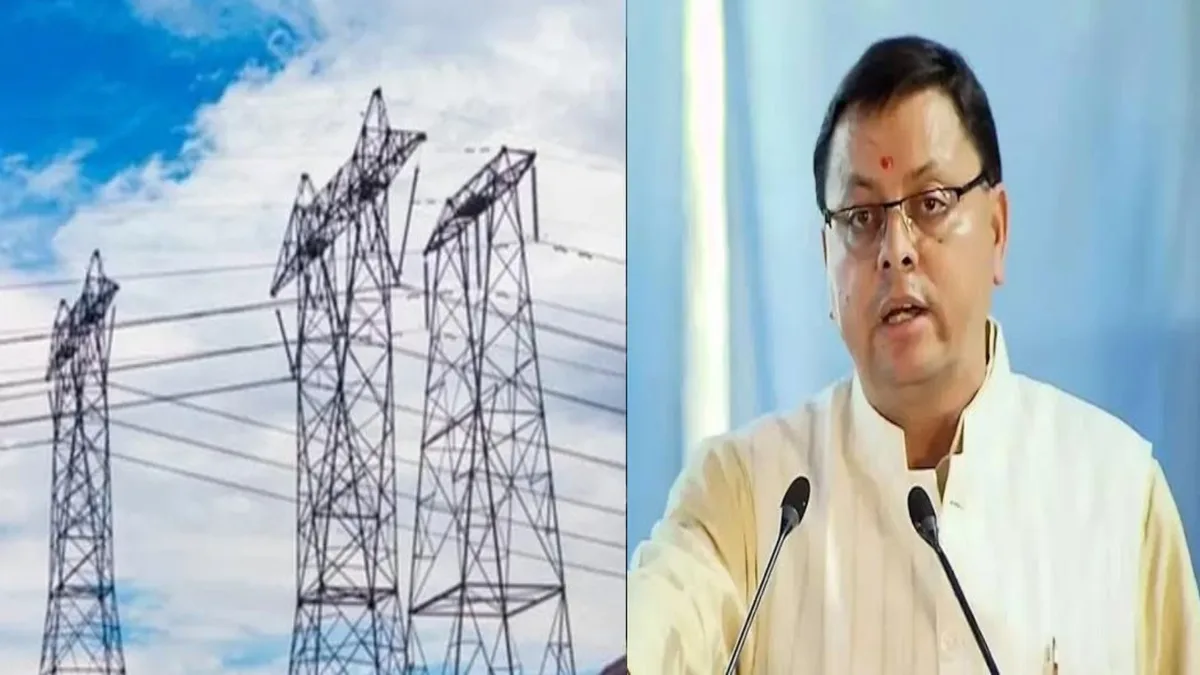
The Pushkar Singh Dhami government has begun tightening enforcement mechanisms, particularly in areas recording unusually high losses. The Energy Department has intensified inspections and launched raids with police assistance in several districts.
Haridwar, Roorkee among worst-affected areas
Nainital, Haridwar, Udham Singh Nagar, Dehradun and Pauri are among the districts where high levels of electricity loss have been reported.
Haridwar has emerged as a particularly concerning area. The Roorkee circle alone has reportedly recorded an electricity loss of around 900 million units, translating into a financial loss of more than Rs 500 crore. In some areas, electricity losses have reportedly touched as high as 80 per cent.
Several localities in and around Roorkee have frequently been flagged for suspected electricity theft. Energy Department teams have faced resistance during enforcement drives in the past, according to officials and reports.
Regular consumers bear the cost
The financial burden of electricity theft and technical losses ultimately affects consumers who pay their electricity bills regularly.
The state is required to purchase power to meet its demand, and high levels of distribution losses increase the financial pressure on the power utility. Authorities have warned that the cost of these losses cannot simply be absorbed by the government and eventually affects the wider consumer base.
The problem becomes more striking because just eight towns account for a disproportionately high share of the state’s overall distribution losses, placing an indirect burden on consumers across the remaining 114 towns.
Eight towns record losses of up to 69 per cent
According to data cited from the Uttarakhand Electricity Regulatory Commission’s tariff order, several towns have recorded distribution and financial losses ranging from around 27 per cent to nearly 69 per cent.
The towns identified among the high-loss areas include Laksar, Landhaura, Manglaur, Sitarganj, Khatima, Gadarpur and Jaspur, besides Joshimath.
Landhaura reportedly has a line loss of 69.40 per cent, while Manglaur has recorded 47.62 per cent. Khatima has reported losses of around 53 per cent.
The figures raise questions over the effectiveness of electricity distribution and enforcement mechanisms in these areas.
Uttarakhand has 46 energy divisions
The Uttarakhand Power Corporation has 46 divisions, of which 19 are located in the hill regions and 27 in the plains. The state has 122 sub-divisions, including 51 in the hills and 71 in the plains.
The Electricity Regulatory Commission has directed the corporation to take effective measures to bring down distribution losses. The commission is also expected to monitor the utility’s performance regularly and ensure proper energy audits.
Expenditure under operations and maintenance, as well as capital expenditure, is also to be monitored to ensure that resources are being utilised effectively.
Distribution losses remain a persistent problem
The state’s distribution losses have remained a concern over the past several years. According to the figures cited in the tariff order, the overall distribution loss stood at 14.70 per cent in 2021-22.
It increased to 16.39 per cent in 2022-23, before declining marginally to 15.63 per cent in 2023-24.
Despite the marginal improvement, the continued presence of high-loss pockets remains a major concern for the state’s power sector.
Technology being used to detect theft
The Energy Department is now increasingly relying on technology to identify the sources of electricity theft.
Officials are using dual-metering systems and transformer-level monitoring to determine where electricity is being consumed and where discrepancies are occurring. The objective is to identify transformers and distribution networks where abnormal losses indicate possible theft.
According to the data cited, line losses stand at:
Gadarpur: 30.58 per cent
Jaspur: 27 per cent
Khatima: 53 per cent
Laksar: 27 per cent
Landhaura: 69.40 per cent
Manglaur: 47.62 per cent
Sitarganj: 27.25 per cent
The concentration of several high-loss towns in the plains has also fuelled allegations that electricity theft is particularly prevalent in some Muslim-majority localities. Critics have used the term “electricity jihad” to describe what they allege is an organised pattern of theft. The authorities, however, are officially treating the matter as electricity theft and distribution loss rather than assigning it a religious character.
Police support sought for enforcement
The Energy Department has also sought greater police support for anti-theft operations.
According to UPCL Kumaon Chief Shekhar Tripathi, an intensified campaign has already begun. He said that teams, with police assistance, have conducted operations in Haldwani, Ramnagar and Kashipur and registered more than 250 electricity-theft cases.
Tripathi said the campaign would continue and that the department’s objective was to eliminate transmission and distribution losses so that the financial burden on the state could be reduced.
CM Dhami orders strict action
Chief Minister Pushkar Singh Dhami has directed the Energy Department to take stringent measures against electricity theft. Dhami has maintained that the responsibility for preventing power theft lies with the Energy Department and stressed that losses running into hundreds of crores represent a significant financial burden for the government as well as legitimate consumers.
The Chief Minister has also indicated that police force will be deployed wherever necessary to ensure that enforcement teams can conduct inspections and take action against electricity theft.
The latest crackdown is therefore aimed not only at recovering revenue but also at reducing the massive gap between electricity supplied and electricity actually billed. For Uttarakhand, where consumers across the state ultimately bear the cost of distribution inefficiencies and theft, bringing down these losses has emerged as a major challenge for the Dhami government.