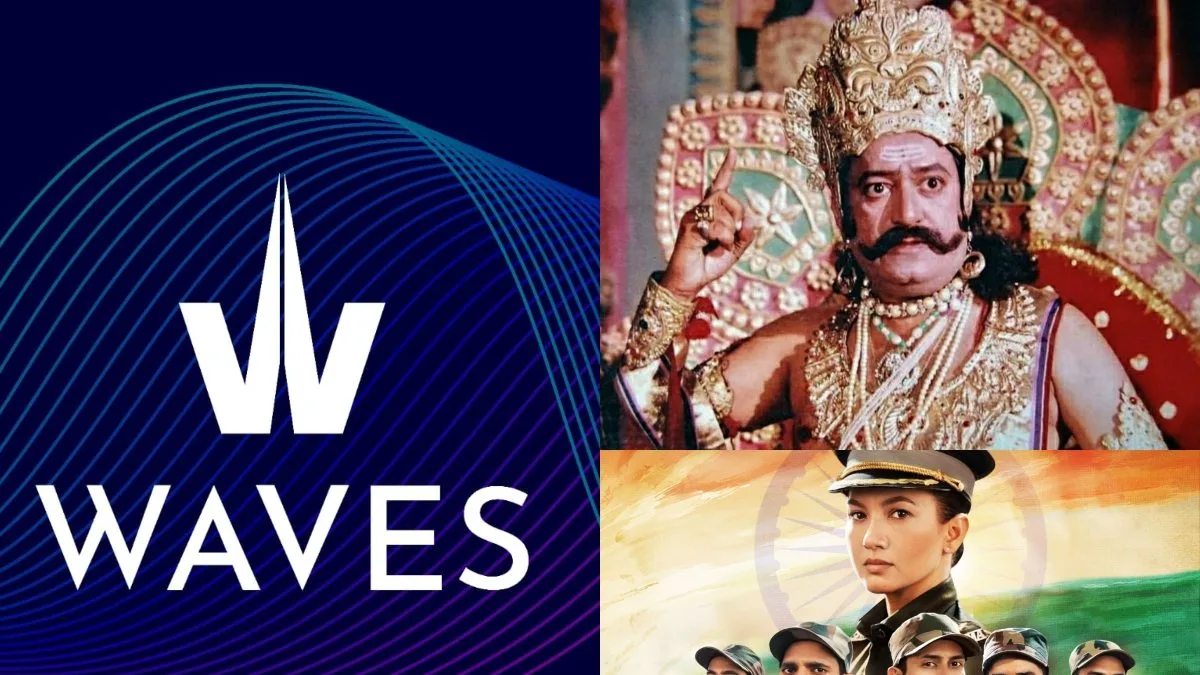
India’s Over-the-Top (OTT) ecosystem has emerged as a powerful vehicle for cultural diplomacy, storytelling and creative expression, significantly enhancing the country’s global soft power. Informing Parliament on Wednesday, the government said digital platforms have enabled Indian narratives, independent cinema, cultural heritage and regional creativity to reach audiences well beyond national borders. A notable contributor to this expanding footprint is WAVES OTT, the digital platform of public broadcaster Prasar Bharati, which has crossed 80 lakh downloads within its first year of operation.
The information was shared by Minister of State for Information and Broadcasting Dr L. Murugan in a written reply to a question in the Lok Sabha, highlighting the rapid growth of India’s digital media landscape and the increasing relevance of public service broadcasting in the OTT era.
OTT Sector Growth Reflects Rising Digital Consumption
Citing industry estimates from the FICCI-EY Media and Entertainment Industry Report 2025, the government noted that India’s video subscription revenues grew by 11 per cent in 2024, reaching approximately Rs 9,200 crore. The number of users paying for OTT streaming services is estimated to be between 9.5 crore and 11.8 crore, reflecting a steady rise in digital consumption across urban and rural markets.
Officials said the growth of OTT platforms has not only transformed entertainment consumption patterns but also created new opportunities for showcasing India’s linguistic diversity, regional identities and creative talent on a global stage.
Against this backdrop, WAVES OTT has emerged as a distinct public service platform, strengthening India’s digital cultural outreach by making the extensive archives of Doordarshan and All India Radio (Akashvani) accessible to viewers worldwide. The platform hosts a wide array of content, including regional arts, documentaries, classical music performances, literature-based programmes, educational series and multilingual offerings.
By digitising and curating decades of public broadcasting content, WAVES OTT has positioned itself as a cultural repository, preserving India’s broadcast heritage while adapting it for contemporary digital audiences.
Focus on Regional and Multilingual Content
Officials emphasised that one of WAVES OTT’s key strengths lies in its emphasis on regional and multilingual programming. In contrast to many commercial OTT platforms that focus primarily on mainstream entertainment, WAVES OTT foregrounds cultural depth, traditional art forms and regional narratives that often remain underrepresented in the private digital space.
This approach, the government noted, aligns with Prasar Bharati’s mandate to promote cultural inclusion and ensure equitable access to content across linguistic and geographic boundaries.
Beyond archival content, WAVES OTT has also introduced a framework aimed at supporting emerging filmmakers and independent creators. By offering a technology-driven distribution platform, the service enables new voices to reach diverse audiences in India and abroad without the commercial barriers typically associated with mainstream OTT platforms.
Officials said this initiative has the potential to democratise content distribution and nurture grassroots creativity, particularly in regional and documentary filmmaking.
Subscription-Free Public Service Model
Unlike most commercial OTT platforms, WAVES OTT operates primarily as a subscription-free public service medium. It does not follow a subscription-based revenue model, ensuring free access to public broadcasting content for users across socio-economic segments.
Advertising remains the platform’s main source of revenue, with a stated focus on balancing financial sustainability with its public service mandate. The government underlined that the objective is to democratise access to cultural and informational content rather than maximise commercial returns.
Currently in a phase of growth and expansion, WAVES OTT has witnessed a steady rise in its international user base. Officials said revenue streams from overseas markets are being gradually developed through strategic partnerships, reflecting growing interest among global audiences in Indian public service content.
The platform’s international expansion is viewed as a key component of India’s cultural diplomacy, enabling global audiences to engage with Indian traditions, history and contemporary narratives through a credible public broadcaster.
Strong User Adoption Signals Demand
User adoption figures indicate strong momentum, with more than 80 lakh downloads recorded within the first year of the platform’s launch. Officials attributed this uptake to rising demand for multilingual Indian content, increased smartphone penetration and greater acceptance of public service media in digital formats.
The download milestone, they said, highlights the relevance of public broadcasting in a competitive OTT landscape dominated by private players.
The government also highlighted steps taken to curb digital piracy, a persistent challenge for the film and OTT industry. The newly inserted Section 7(1B)(ii) of the Cinematograph Act, 1952, amended in 2023, empowers the Central Government under Section 79(3) of the Information Technology Act, 2000 to take remedial action against intermediaries hosting pirated film content.
Officials said the legal provisions strengthen enforcement mechanisms and help protect the rights of content creators while promoting a lawful digital ecosystem.
As India’s OTT sector continues to grow, platforms like WAVES OTT demonstrate how public broadcasting can adapt to the digital age while reinforcing cultural identity and soft power. The government said the platform’s expansion reflects a broader commitment to leveraging technology for inclusive cultural dissemination, both within India and across the world.