More than 90,000 sewer and septic tank workers have been validated under the Centre’s National Action for Mechanized Sanitation Ecosystem (NAMASTE) Scheme, according to the Ministry of Social Justice and Empowerment.
As of September 22, 2026, a total of 90,186 workers had been validated under the sewer and septic tank workers component of the scheme. The programme now covers all 36 States and Union Territories, giving the Centre a nationwide database of workers engaged in sewer and septic tank-related sanitation activities.
The latest figures were shared by Social Justice and Empowerment Ministry Secretary Sudhanshu Pant. The government said the scheme is focused on improving the safety and dignity of sanitation workers while providing support related to healthcare, protective equipment, occupational training and livelihoods.
Men account for majority of validated sanitation workers
The data shows that men constitute the overwhelming majority of the validated sewer and septic tank workforce. Of the 90,186 workers identified so far, 86,468 are men, while 3,713 are women and five are transgender persons.
The worker validation exercise is an important part of the NAMASTE Scheme because it allows the government to identify people involved in sanitation-related work and connect them with various welfare and safety interventions. The exercise is also intended to bring greater visibility to a workforce that often operates in difficult and potentially hazardous conditions.
More than 87,000 PPE kits have been delivered
Providing safety equipment is one of the major components of the scheme. According to the Ministry, 87,037 Personal Protective Equipment (PPE) kits have been ordered, of which 87,008 have already been delivered.
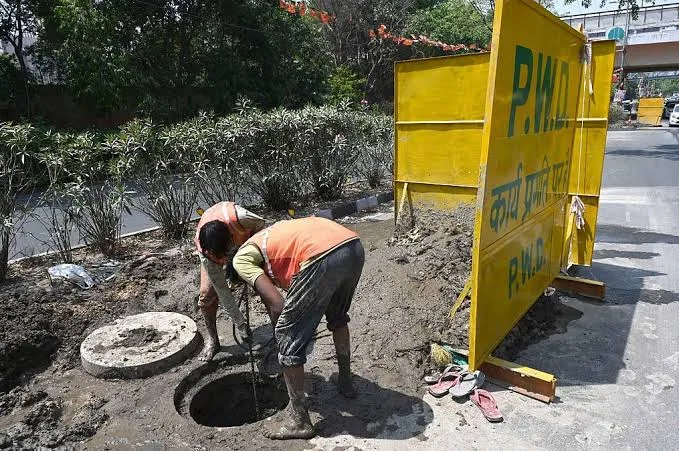
The equipment is intended to provide sanitation workers with protection while carrying out work involving sewer and septic tank infrastructure. Such activities can expose workers to hazardous environments, making appropriate protective equipment an important part of workplace safety.
In addition to PPE kits, the government has distributed 753 Emergency Response Sanitation Unit (ERSU) safety equipment sets among stakeholders. These interventions form part of the broader effort to improve emergency response capabilities and encourage safer sanitation practices.
Health insurance support being extended to workers
The NAMASTE Scheme also focuses on improving access to health-related welfare measures. Under the sewer and septic tank workers component, the Ministry has completed 27,034 health-insurance eKYC processes.
The eKYC process helps establish the identity and eligibility of workers for health-insurance-related benefits. By combining worker profiling with health coverage, the scheme seeks to ensure that sanitation workers receive support not only for workplace safety but also for their broader welfare needs.
The health component is particularly important because sanitation work can involve occupational exposure to hazardous conditions. The government is therefore attempting to connect identified workers with formal welfare and insurance systems.
Thousands of workers receive occupational training
The Centre is also focusing on training sanitation workers to improve their knowledge of occupational safety and sanitation practices.
According to the Ministry, 5,449 occupational training programmes have been conducted for sewer and septic tank workers. In addition, 1,841 workshops have been organised for workers in the sector.
The training programmes and workshops are intended to improve workers’ understanding of safety procedures, the use of protective equipment and safer sanitation practices. Training is also linked to the government’s broader objective of encouraging mechanisation and reducing dependence on hazardous manual methods.
Mechanisation is a major focus of the scheme
A key objective of NAMASTE is to encourage the use of machines in sanitation work. The government is seeking to move towards a system where hazardous sewer and septic tank operations can increasingly be carried out using appropriate mechanised equipment.
Under the capital-subsidy intervention through the Swachhta Udyami Yojana, the government has supported 983 beneficiaries with financial assistance amounting to Rs 34.16 crore.
The assistance is aimed at supporting mechanisation and entrepreneurship in sanitation-related activities. The approach is intended to provide workers and beneficiaries with opportunities to use machines and specialised equipment instead of relying on unsafe manual practices.
Mechanisation is therefore being positioned not only as a safety intervention but also as a potential livelihood and entrepreneurship opportunity within the sanitation sector.
NAMASTE scheme also covers waste pickers
The government’s intervention under NAMASTE extends beyond sewer and septic tank workers. The scheme also has a dedicated waste-picker component, under which more than 2.5 lakh waste pickers have been profiled.
According to the Ministry, 2,51,756 waste pickers have been profiled across 34 States and Union Territories. This includes 1,35,233 men, 1,16,498 women and 25 transgender persons.
The data shows a much more balanced gender distribution among waste pickers compared with the sewer and septic tank workforce. Women account for a significant share of the waste pickers profiled under the scheme.
The profiling exercise is intended to help identify workers operating in the informal waste-management sector and connect them with welfare, healthcare, training and livelihood-related interventions.
More than 7,500 waste pickers have completed health-insurance eKYC
Healthcare support under the programme is also being extended to waste pickers.
The Ministry said 7,526 health-insurance eKYC processes have been completed under the waste-picker component. The process is intended to help eligible waste pickers access health-insurance-related benefits and bring them into a more formal welfare framework.
The government’s approach under this component is focused on identifying waste pickers and connecting them with support systems that can improve their access to healthcare and other welfare measures.
Training Network Includes 17 Providers and 33 Resource Organisations
The implementation of the NAMASTE Scheme is supported by a network of training and resource organisations.
The Ministry said 17 training providers and 33 resource organisations are supporting implementation. These organisations are involved in training, capacity building and other activities associated with the programme.
The network is intended to strengthen implementation at the ground level and help deliver training and other interventions to sanitation workers and waste pickers across different parts of the country.
What is the NAMASTE scheme?
The National Action for Mechanised Sanitation Ecosystem, commonly known as the NAMASTE Scheme, is a government programme aimed at improving the safety, dignity and livelihood opportunities of sanitation workers.
The scheme focuses on identifying and profiling sanitation workers and waste pickers and providing them with interventions such as protective equipment, health-insurance support, occupational training and mechanisation opportunities.
A key element of the programme is the effort to reduce workers’ exposure to hazardous sanitation practices by encouraging the use of machines and specialised equipment.
The scheme also seeks to support sustainable livelihoods and entrepreneurship among sanitation workers through financial and capacity-building interventions.
Scheme implemented through NSKFDC
The NAMASTE Scheme is being implemented through the National Safai Karamcharis Finance and Development Corporation (NSKFDC).
Through its different interventions, the programme seeks to create a broader ecosystem around sanitation work. Instead of focusing only on the immediate task of cleaning sewers or collecting waste, the scheme brings together worker identification, safety equipment, healthcare, training, mechanisation and livelihood support.
The latest figures indicate that the programme is now operating across the country, with the sewer and septic tank workers component covering all 36 States and Union Territories.
From worker identification to safer sanitation work
The latest data gives an overview of the scale of the NAMASTE Scheme. As of September 22, the government had validated 90,186 sewer and septic tank workers, delivered 87,008 PPE kits, completed 27,034 health-insurance eKYC processes and conducted 5,449 occupational training programmes.
The government has also organised 1,841 workshops and provided Rs 34.16 crore in financial assistance to 983 beneficiaries under the mechanisation-focused Swachhta Udyami Yojana.
At the same time, the waste-picker component has profiled 2,51,756 people across 34 States and Union Territories, with 7,526 health-insurance eKYC processes completed.
Taken together, these interventions show the scheme’s focus on moving sanitation work towards a system based on worker identification, occupational safety, healthcare, training, mechanisation and sustainable livelihoods.