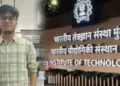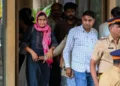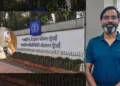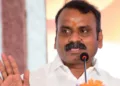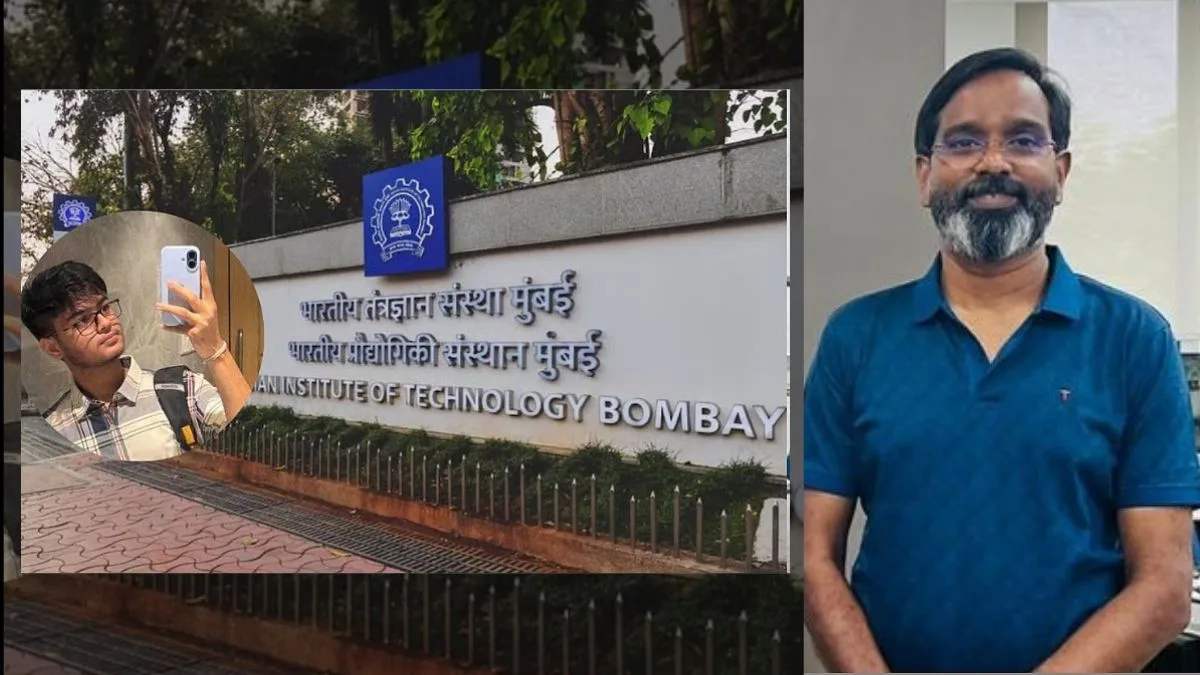
The quiet, bearded scholar who spent years building smart grids and mentoring students has suddenly become the most talked-about faculty member on campus after the tragic death of 20-year-old Sahil Wakode on 18 September 2026.
This IIT-Bombay professor is under scrutiny after the deceased student’s parents alleged that their son died by suicide due to caste-based torture at the hands of the professor. Prior to that, the initial reports from fellow students and the premier technological institute said that the boy was upset after allegedly being caught cheating (using ChatGPT) by Prof Doolla who was the invigilator in the exam hall.
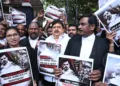
The case has sparked campus protests, an FIR, and calls for an independent inquiry. The boy’s parents have demanded the stringent Prevention of Dalit Atrocities Act. The Scheduled Castes and the Scheduled Tribes (Prevention of Atrocities) Act, 1989 is a law made to stop hate crimes, discrimination, and abuse against members of marginalized Dalit and Adivasi communities.
That brings us back to the question: Who is Professor Suryanarayana Doolla?
A long-time professor in the Department of Energy Science and Engineering, Doolla has for over a decade taught, researched and administered at India’s premier technology institute. He is said to belong to the Telugu-speaking Kapu community from Andhra Pradesh though the professor has not claimed so on any site.
His academic journey reads like a classic IIT success story: B.Tech from Nagarjuna University (2000), M.Tech in Energy Systems from IIT Bombay (2002), and a Ph.D in Power Systems from IIT Delhi (2007).
Before returning to Bombay, he cut his teeth in industry with Power Research and Development Consultants in Bengaluru and Machine 2 Machine in Hyderabad.
Research Focus and Contributions
His research centres on power electronics and power systems, with particular emphasis on:
- Smart grids and micro-grids
- Active distribution networks
- Converter topologies and control
- Grid integration of distributed energy resources
- Real-time simulation and emulation
- Protection in inverter-based active distribution networks
- He has published extensively in these areas and has been recognised for editorial excellence, including Outstanding Editor awards from ITEES (Wiley) in 2017–2019 and Best Associate Editor of IEEE JESTPE in 2018
Academic Laurels and Awards
Doolla’s teaching and research have earned multiple institutional and professional honours:
- Prof. S. P. Sukhatme Excellence in Teaching Award (September 2021, IIT Bombay)
- Excellence in Teaching Award (2017, DESE, IIT Bombay)
- Young Faculty Award (2009, IIT Bombay)
- Best Paper Award, IEEE TPEC 2021 (USA)
- Third Paper Prize Award, 2017 IEEE IAS Annual Meeting (Cincinnati, USA)
- Bhaskara Advanced Solar Energy Fellowship (2017)
- Visiting Faculty under the Linnaeus-Palme International Exchange Program (2016)
- Administrative Service and Campus Roles
Beyond the classroom, Doolla has held significant administrative responsibilities.
He served as Warden of Hostel 6 (2012–2021) and Associate Warden earlier. He was involved in organising national-level entrance examinations, including as Organising Chairman of JEE (Advanced) 2022 and CEED/UCEED 2022, and as Vice Chairman for those examinations in previous years. In March 2023 he was appointed Dean of Student Affairs, a role that placed him at the centre of student welfare and campus life.
His official profile lists regular office hours (Monday–Friday, 9 a.m.–5 p.m., by appointment) and contact details in the Energy Science and Engineering Building at IIT Bombay.
Human Side and Student Mentorship
Accounts from former students portray a professor who went beyond formal duties. One student recalled receiving unexpected financial support for hostel fees and described Doolla as someone available even in the early hours for those in difficulty or hospitalised.
Another student who had academic disagreements still noted encouragement rather than harassment. These personal recollections have circulated amid the current debate, painting a picture of a faculty member who supported students facing practical hardships.
On the allegations against him, the IIT Bombay has stated that the student was counselled by the instructor and Head of Department and assured that the incident would not harm his academic career; no formal disciplinary action had been initiated before his death.
Wakode’s family alleged harassment and caste-based discrimination. Mumbai Police registered a case under the SC/ST (Prevention of Atrocities) Act, naming Doolla among others. However, these allegations remain under investigation.
Students Protests and Agitations in support of Suryanarayana Doolla
Student protests on campus demanded action against Doolla. On 20 September 2026, IIT Bombay Director Prof. Shireesh Kedare met the protesting students and signed an 18-point charter that included action against the professor. That evening Doolla was removed from the post of Dean of Student Affairs. The IIT Bombay Faculty Forum publicly backed him, stating he had performed his duties as invigilator and followed prescribed procedure.
Faculty forums at IIT Kanpur and IIT Indore have also expressed support, emphasising that professors must be able to carry out academic responsibilities without personal attacks. As of late September 2026, Professor Doolla has been relieved of the Deanship. The police investigation into the circumstances surrounding Sahil Wakode’s death continues.
Institutional support from sections of the faculty community remains strong, while student protests and family allegations have kept the matter in the public eye. The episode has highlighted tensions around examination integrity, student mental health, and the handling of sensitive allegations on elite campuses.
Doolla’s career, marked by rigorous research in energy systems, recognised teaching excellence, long administrative service, and accounts of personal support for students, now sits at the intersection of academic duty and a tragic campus crisis still unfolding.