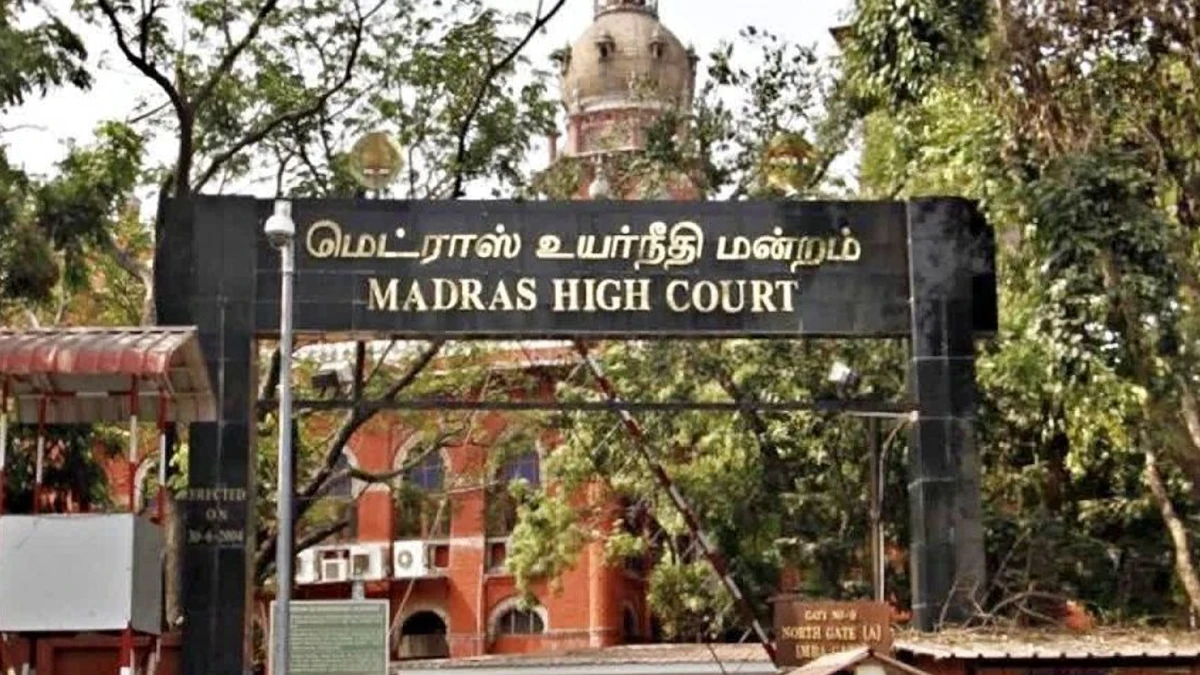
CHENNAI: The Madras High Court has set aside an order rejecting a Customs officer’s Hindu Adi Dravidar community certificate, finding that the scrutiny committee relied partly on irrelevant physical characteristics and failed to explain its other conclusions adequately.
Justice D. Bharatha Chakravarthy directed a fresh examination of the claim in M. Ravikumar v. District Level
Vigilance Committee and Others. The September 11 order makes clear that the inquiry must address whether the petitioner genuinely follows Hinduism and has been accepted into his ancestral caste community.
Ravikumar’s father, originally a Hindu Adi Dravidar, converted to Christianity in 1960. Ravikumar was born in 1966. According to his account, he and his father subsequently embraced Hinduism through ceremonies at an Arya Samaj centre in Chennai in 1983.
He obtained a Hindu Adi Dravidar community certificate in December 1986 and entered the Customs Department. The certificate expressly recorded the history of conversion to Christianity and subsequent return to Hinduism.
Shortly before his scheduled retirement in May 2026, the certificate’s genuineness came under scrutiny. The Tiruvannamalai District Level Vigilance Committee rejected it by an order dated May 4.
Before the High Court, Ravikumar relied on material concerning his family’s religious life, including photographs of his marriage, ceremonies performed for his children and his daughter’s marriage. His counsel submitted that these demonstrated observance of Hindu customs.
The committee had, however, referred to the family’s fair complexion, height, physique, curly hair and ability to speak Tamil and English. It also relied on his father’s burial in a Christian cemetery and concluded that the Adi Dravidar community had not accepted him after reconversion.
The State defended the scrutiny, questioning whether the claimed return to Hinduism was genuine. Counsel for the Customs Commissioner also pointed to records that continued to use the petitioner’s and his father’s earlier names.
The High Court examined the competing submissions against the Supreme Court’s decision in K.P. Manu v. Chairman, Scrutiny Committee for Verification of Community Certificate. The principle applied was that a person born after the parents’ conversion to Christianity could return to the original caste upon embracing Hinduism and being accepted by its members.
The committee’s reasoning did not adequately establish whether those requirements were met.
Its reference to the petitioner’s daughter being described as Christian in a 1994 ration card was questioned against his submission that she was born only in 1998. Its conclusion concerning community acceptance lacked concrete supporting reasons or facts.
The court also rejected the relevance of the physical and linguistic characteristics cited. Whether the petitioner actually practised Hinduism was material; complexion and English proficiency could not answer that question.
Setting aside the committee’s order, the court directed a personal hearing. Ravikumar was allowed four weeks from receipt of the web copy to appear and produce supporting material. The committee was directed to decide afresh within eight weeks of his appearance.
The judgment did not finally authenticate his certificate. It expressly required evidence of an unequivocal belief in and practice of Hinduism, beyond a formal conversion, together with evidence of acceptance by the community. The fresh inquiry must therefore examine the substance of his religious and community life and give reasons for its conclusion.