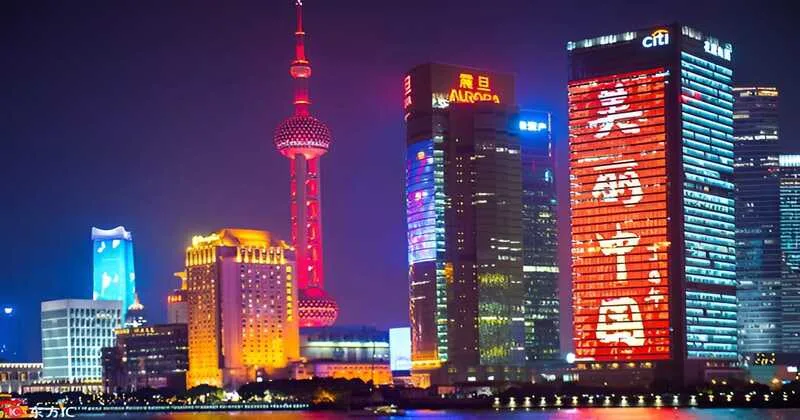
Shanghai, once celebrated as one of China’s most prosperous, vibrant and internationally connected cities, is increasingly showing signs of a prolonged economic slowdown. The city’s troubles have emerged from a combination of the aftermath of the COVID-19 lockdowns, a weakening property market, deteriorating local government finances, falling consumer spending and the departure of foreign companies and highly paid workers.
The decline of Shanghai is particularly significant because the city has long been regarded as China’s leading economic powerhouse. As China’s largest economic centre by GDP, Shanghai has traditionally been among the country’s strongest fiscal performers. However, the latest economic indicators suggest that even China’s most prosperous urban economy is no longer immune to the country’s broader economic difficulties.
China’s Ministry of Finance reported in late July that none of the country’s 31 provincial-level regions generated enough fiscal revenue in the first half of 2026 to cover their expenditures. Collectively, the fiscal self-sufficiency rate of China’s local governments stood at just 56.3 percent.
Even Shanghai, traditionally one of China’s strongest regions in terms of fiscal performance, is now spending more than it collects from its own revenue sources.
The deterioration in Shanghai is important because it demonstrates that China’s economic problems are no longer confined to the less-developed central and western regions. If the fiscal self-sufficiency rate in high-income regions such as Shanghai continues to decline, it would indicate that the weakening of the real estate sector, corporate profits and local tax bases has spread into China’s richest and most economically developed areas.
Shanghai’s commercial districts feel the economic slowdown
The Shanghai economic slowdown is becoming increasingly visible across commercial districts that were once known for crowded shopping malls, restaurants and office buildings. Consumer spending has weakened sharply, reflecting the increasingly depressed state of the city’s economy.
Several shopping centres that were previously packed with customers have either closed or experienced a sharp decline in business. High-end restaurants in Shanghai’s Lujiazui financial district, one of China’s most important financial centres, have also shut down.
The decline in consumer spending has been compounded by a much larger structural problem that the departure of foreign companies, foreign capital and their highly paid employees.
China's property market collapse has left the country with an unsustainable level of debt.
The Chinese government is trying to make up for this by collecting back taxes on companies and the wealthy. But the arbitrary enforcement is damaging the economyhttps://t.co/sBPvvyh0Zd
— Michael Ron Bowling (@mrbcyber) August 26, 2026
Foreign companies once supported an extensive ecosystem of local businesses, employees, restaurants, property markets and commercial services. However, the withdrawal of companies and the relocation of factories have significantly reduced the number of foreigners and Chinese executives working for foreign-funded companies in Shanghai’s central urban areas.
As foreign businesses and highly paid workers leave, Shanghai’s consumption economy has also weakened. Several foreign companies have reduced or ended their operations in Shanghai in recent years. Among those reported to have scaled back their operations in 2026 are French cosmetics company Filorga and American industrial paint manufacturer Sherwin-Williams.
Sherwin-Williams has liquidated its Asia-Pacific headquarters in Shanghai and withdrawn from China, reflecting a broader decline in foreign corporate activity in the country.
Shanghai’s high-tech sector also faces pressure
The economic downturn is not limited to traditional commercial districts or the property market. It has also spread into Shanghai’s high-tech sector, including the Zhangjiang High-Tech Development Zone, a major centre for pharmaceutical and semiconductor companies.
The slowdown has affected employment, particularly among younger workers. Many younger workers previously employed in Zhangjiang have reportedly lost their jobs. Some have left China, while others have moved away from Shanghai or adopted a less active lifestyle as employment opportunities have declined.
The change in demand for commercial and industrial property has also become increasingly visible in Zhangjiang.
Previously, competition to rent factory warehouses and company offices in the area was intense, and finding available space was difficult. Now, many warehouses and office properties are reportedly empty, with significantly weaker demand from companies and tenants.
The situation underlines the growing concern over the health of Shanghai’s economy. Zhangjiang was once considered one of China’s most dynamic technology and innovation centres, but rising unemployment and declining demand for commercial space now reflect the wider economic slowdown affecting the city.
Shanghai property crisis hits local government revenue
The collapse in property demand has struck at one of the most important sources of revenue for Shanghai and other Chinese local governments.
Following Shanghai’s COVID-19 lockdown in 2022, demand for housing and commercial property weakened significantly. New homes became increasingly difficult to sell despite various government subsidies aimed at encouraging buyers. Office buildings have also struggled to attract tenants.
Shanghai has introduced successive measures to revive its property market. The latest package includes subsidies for people who sell an existing home and purchase a new one, along with changes to mortgage policies. However, these measures have done little to resolve the deeper fiscal crisis facing local governments.
🇪🇺 China is exporting its crisis to Europe.
The trade deficit has surged 120%
🔸 After China’s property crash, households’ saving-investment surplus rose 44%
🔸 This crushed domestic demand and pushed excess production abroad
🔸 Export volumes surged 43% while imports rose… pic.twitter.com/CaJPmcQwCO
— Marcos Agustín (@marcosagusstinn) August 21, 2026
The weakening property market is particularly damaging because Chinese local governments traditionally relied heavily on land sales to generate revenue. When governments faced financial pressure, selling land-use rights was one of their most important methods of raising money.
That model is now under severe strain. China’s Ministry of Finance reported that revenue from state-owned land-use rights fell by 30.8 percent year over year in the first seven months of 2026, according to state media China News Service. Land-sale revenue has now declined for four consecutive years since 2022.
With real estate values falling and property demand weakening, land can no longer be monetised as easily as before. As a result, Shanghai and other Chinese local governments are facing a sharp decline in one of their most important revenue sources.
Foreign company exits deepen Shanghai economic decline
The withdrawal of foreign companies presents another major challenge for Shanghai’s economy. Foreign capital and international businesses once played a central role in making Shanghai one of China’s most globally connected cities.
Their departure affects far more than the companies themselves. Foreign businesses supported a wider ecosystem of employees, service providers, landlords, restaurants, retail businesses and other local enterprises.
As companies scale back, factories relocate and foreign employees leave, the consequences spread throughout Shanghai’s economy. Lower consumption, falling commercial property demand and declining local tax revenues are now reinforcing the city’s broader economic slowdown.
Residents are increasingly concerned about declining incomes, fewer employment opportunities and falling property values. The frustration extends well beyond the real estate sector, reflecting growing uncertainty about Shanghai’s economic future.
The weakening of China’s largest economic centre represents a troubling sign for the country’s wider economy. Shanghai was once considered the crown jewel of China’s economic rise, powered by foreign investment, global trade, finance, technology and a booming property market.
Today, however, weakening consumer spending, foreign company exits, job losses, empty commercial properties, a prolonged property downturn and deteriorating local government finances are combining to undermine that economic model.
Shanghai’s sudden economic decline may therefore be more than a local problem. If China’s richest and most internationally connected city cannot escape the country’s fiscal and economic pressures, it raises a larger question about how deeply the broader slowdown has penetrated the Chinese economy.
The continuing economic deterioration has also fuelled criticism of the Chinese regime and its leadership, with critics arguing that years of damaging policies have pushed even Shanghai, the former symbol of China’s economic success, towards an increasingly uncertain future.