France is facing a widening wave of high-school unrest since September 17 with demonstrations spreading nationwide amid concerns over overcrowded classrooms, teacher shortages, deteriorating school buildings, inadequate resources and education funding. But what began as school blockades had, by 1 October, crossed into what the government described as “urban violence”, with fires, property destruction, attacks on police and clashes in several cities.
The protests began in Creteil, south-east of Paris, after teachers and students raised concerns about staffing and conditions. Within days, demonstrations spread through the country, with more than 1,000 high schools affected by October 1. What initially centred on education grievances increasingly drew political activists and radical groups into the streets.
Violence soon overshadowed the original demands. Rubbish bins were set ablaze, school entrances were damaged and police faced fireworks, bottles and other projectiles. In Marseille, a teacher was reportedly doused with petrol, while firefighters were attacked and a vehicle was set alight. In Nantes, part of a school entrance was burned, while similar incidents were reported in Paris, Lyon, Strasbourg, Nice, La Rochelle and other cities.
French authorities have increasingly pointed towards the role of the radical left, particularly France Unbowed (LFI), led by Jean-Luc Melenchon. French intelligence officials reportedly told a government crisis meeting on October 1 that ‘France Unbowed’ and affiliated ultra-left groups were behind the organisation of the protests. The party has denied organising the violence while openly supporting the student mobilisation.
From ‘France Unbowed’ to Palestine mobilisation
France Unbowed politicians have been highly visible around the protests. Louis Boyard, Clemence Guette and Paul Vannier Leaument have appeared around school blockades, while Melenchon has publicly backed the movement.
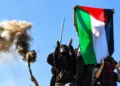
Rioter in France.
“In the name of Allah, we will kill them all!”
Still think these are “protests” about dirty classrooms? pic.twitter.com/q08MqWPRG7
— Kosher (@koshercockney) October 5, 2026
The political network surrounding France Unbowed also intersects with France’s wider pro-Palestinian mobilisation. French parliamentary proceedings have examined the participation of France Unbowed politicians in demonstrations involving Palestine Emergency, including events involving its founder Omar Alsoumi.
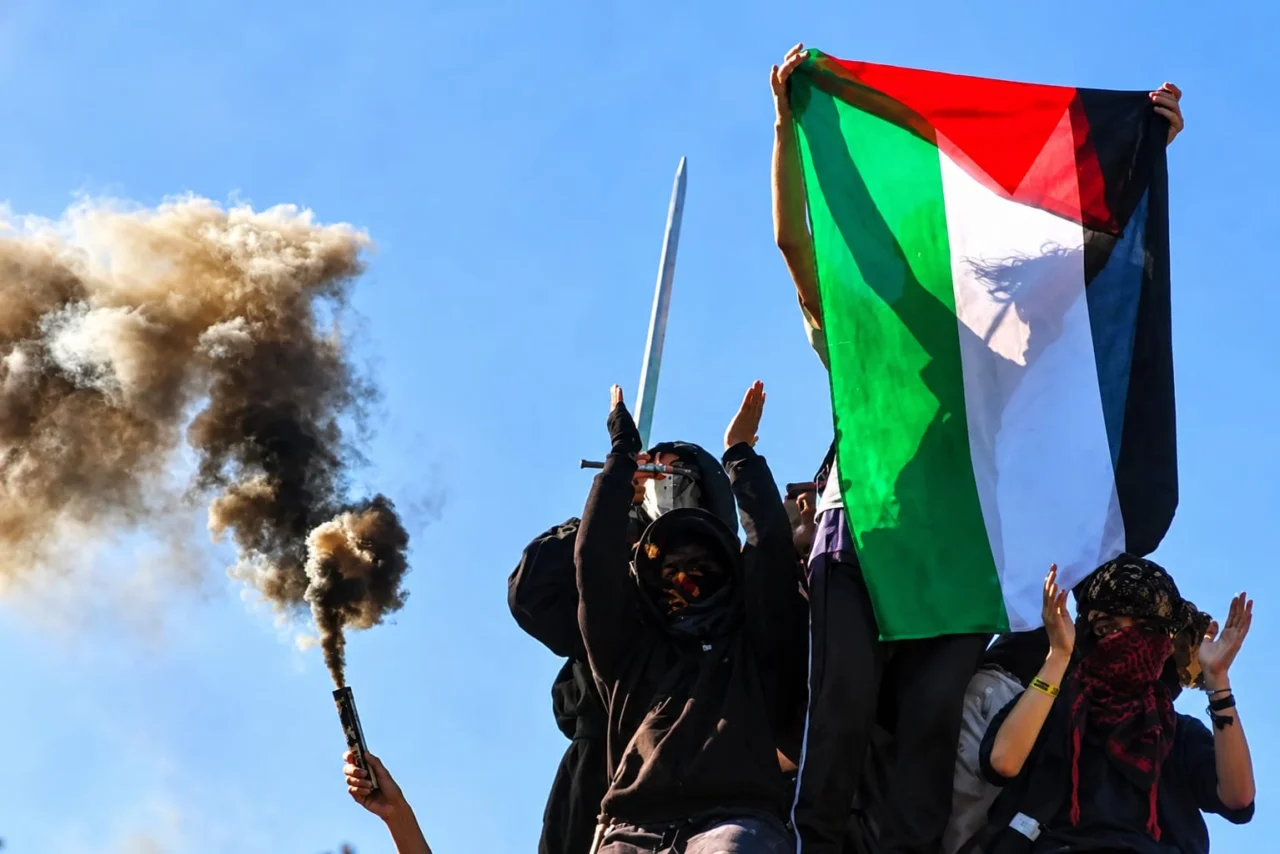
These demonstrations have frequently featured Palestinian flags, pro-Gaza slogans and Islamist-associated rhetoric. Among slogans reported at some rallies have been “Allahu Akbar” and references to “Al-Aqsa Flood”, Hamas’s name for its October 7, 2023 attack on Israel.
Parliamentary testimony has also examined the links between some organisers and Islamist networks.
The convergence has raised questions about how radical-left political activism and Islamist-linked mobilisation overlap on French streets. France Unbowed figures have presented their participation as support for Palestinians, while critics have pointed to repeated appearances alongside organisers and groups described in parliamentary proceedings as Islamist-linked.
The issue has become particularly sensitive around the third anniversary of the October 7 Hamas terror attack Israel. On October 6, French authorities banned a planned Paris demonstration by Palestine Emergency scheduled for October 7, citing public-order and security concerns.
The wider unrest continued to expand. On October 6, more than 266,000 people took part in demonstrations across France, including about 56,000 in Paris, according to the Interior Ministry. Nearly 500 people were detained that day, while authorities said more than 6,500 arrests had been made since the beginning of the protests.
The clashes have also produced serious injuries. A 15-year-old lost his hand after picking up a police grenade during confrontations in Lens, while hundreds of police officers and other participants have been injured during the unrest. More than two dozen schools have suffered vandalism or damage.
Trump Links France Unrest to Islam
The French crisis has now attracted international attention. On October 6, US President Donald Trump directly linked the unrest to mass migration and Islam, writing that the situation was “not about schools” but about “Islam wanting to take over” France.
His intervention came as France confronted a movement that had begun with complaints about classrooms and teachers but had expanded into political mobilisation, street clashes, pro-Palestinian demonstrations and heightened scrutiny of connections between the radical left and Islamist networks.
🚨 TRUMP WAS RIGHT. AGAIN.
France is falling apart in real time. Riot police. Tear gas. Flags in the street.
“This isn’t about schools. This is about Islam wanting to take over a once great Country.”
He called it. Out of control mass migration.
Vote Democrat and this is… pic.twitter.com/LtYOzK6rIt
— TRUMP TV Report (@TRUMP_TV_News) October 6, 2026
The result is a rapidly changing French protest landscape in which France Unbowed, pro-Palestinian organisations, Islamist-linked activists and radical-left groups increasingly appear within overlapping political and street-mobilisation networks, while violent incidents have pushed the government to treat parts of the movement as urban disorder rather than a conventional education protest.