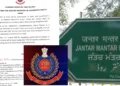
Bharat’s youth, who fall under the 35-year age bracket, totals over 800 million. Only a few thousand of these youngsters joined the Cockroach Janata Party (CJP) led Jantar Mantar protests on the NEET paper leak last month.
Genuine students, irrespective of their ideological moorings, who sought educational reforms and corrective measures against paper leaks may not be treated as ‘anti-national’. And, they have the right to protest, take to the streets in a peaceful formation or even get loud.
Protests are one way to build consensus on core education issues in a large, diverse democracy like Bharat that’s on the path to constant reform. In a democratic polity like Bharat’s, protests are perfectly fine.
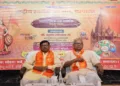
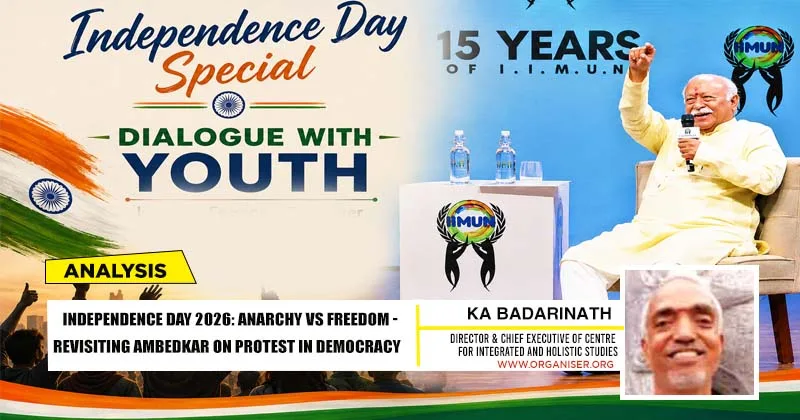
Even this instrument of protest has to be used with wisdom and responsibility in forging consensus on reforming the education system that may have fallen short of students’ expectations and the aspirations of youth. This seems to be the tone and tenor with which Sarsanghchalak, Dr Mohan Bhagwat, articulated Rashtriya Swayamsevak Sangh’s position on recent protests in New Delhi, while interacting with a number of youngsters at Nita Mukesh Ambani Cultural Centre (NMACC) in Mumbai during the 15th anniversary of IIMUN. The 49-day protest was, however, not entirely peaceful as envisioned by Bharat’s Constitutional visionary Dr Bhimrao Ramji Ambedkar in several of his writings. RSS Sarsanghchalak made a specific reference to Dr Ambedkar’s line on peaceful protests in his public interaction with youth. Dr Ambedkar held peaceful protests on several occasions, unlike violence, hooliganism and stone pelting witnessed in recent Jantar Mantar protests infiltrated by rowdy sheeters, drug peddlers, rapists and criminals. Dr Ambedkar had led thousands of people in 1927 against caste-based discrimination in accessing drinking water from wells. This protest is easily seen as one of the most unique and popular as Mahad Satyagraha.
Key Highlights of the dialuge
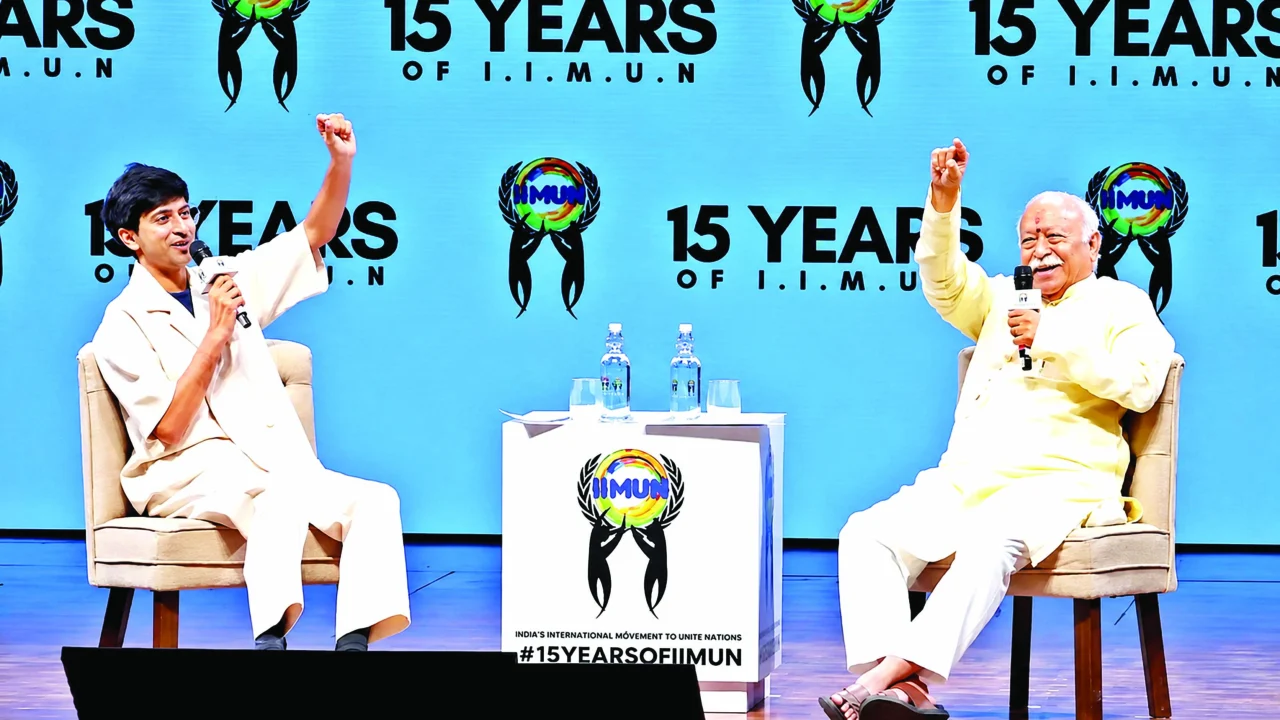
Youth
- If Gen-Z is protesting, it does not mean that they are anti-national
- The younger generation is a part of our own society and nation; we need to understand them by considering them as our own
- A relationship of belongingness is essential for meaningful dialogue
- Only when dialogue takes place with a sense of belonging can we truly understand each other’s perspectives
- Today’s Gen-Z and Gen-Alpha are more honest than our generation
Education
- Education is not a commercial enterprise; rather, it is an essential necessity of life
- Education should be accessible to all, and access to it must be ensured for every individual
- Education is not merely the responsibility of the government; it is a collective responsibility of the entire society
- The purpose of education should not be limited to earning money or running schools
- Those who provide education must also receive proper training
- There has been a long-standing demand to spend 6% of GDP on education, and I support it
- Our organisations also run schools on a large scale. We are running several thousand schools
Social Media
- If one million people make a wrong decision because of something I post on social media, I too bear responsibility for it
- We should share positive, useful and socially beneficial content on social media
- We should trust only information obtained from authentic and reliable sources on social media
- Gen-Z must also develop the discernment to distinguish between what is right and what is wrong
- The older generation also has a responsibility to guide the younger generation and help them understand the difference between right and wrong
Role Models, National Outlook and Global Relations
- Gen-Z should not follow violent role models
- In the event of a conflict between two countries, citizens should stand with their government
- India’s policy is not to defeat any country, but to establish harmony through dialogue
- A permanent solution to any conflict is possible only through dialogue and peaceful efforts
- Not all Pakistanis are enemies of India; we need to understand the difference between people and circumstances
- During times of conflict, we should support the decisions taken by the government
- Humanity comes first — “Humanity is One”
LGBT and Marriage
- Members of the LGBT community are also a part of our society, and society should provide them with a place and acceptance
- In Indian society, the purpose of marriage is not merely for two individuals to live together
- Marriage is also considered a means of having good offspring and building a strong society
- If the fundamental nature of the institution of marriage is altered, it may have social side effects
- From this perspective, same-sex marriage should not be considered marriage
Role of Women
- The roles of women and men in society are equal as well as complementary to each other
- The Rashtra Sevika Samiti was formed at the time of the formation of the Rashtriya Swayamsevak Sangh
- The perception that women have no place in the Sangh is incorrect
- Women participate in the Akhil Bharatiya Pratinidhi Sabha and have a role in the decision-making process
Employment
- Employment does not mean only having a job
- Entrepreneurship and skills are also important dimensions of employment
- To reduce unemployment, it is necessary to give equal dignity and respect to all kinds of work
- A sense of dignity of labour should be developed in society
Reservation
- Reservation has become necessary because of social factors
- As long as social discrimination exists, the need for reservation will continue
- Babasaheb Dr. B. R. Ambedkar expressed his views on this subject
- There should be no politics over the issue of reservation
- If all measures are implemented honestly and effectively, the need for reservation may eventually come to an end in the future
Sustainable Development and Environment
- India is playing an important role in advancing the United Nations Sustainable Development Goals
- Development is possible without causing harm to the environment
- Environmental sensitivity should begin with our own homes and our daily lives
Leadership
- The first quality of leadership is learning to lead oneself
- True leadership begins from within — “You have to lead within”
- A leader should possess the five qualities mentioned in the scriptures
- The purpose of leadership is not merely to create followers, but to create new leaders — “Leadership is to create leaders”
The Kalaram Mandir entry Satyagraha in 1930 was yet another peaceful movement held under the leadership of Dr BR Ambedkar, seeking an end to untouchability for low-caste Hindus. Ambedkar sought equal rights to temple entry in Nashik as an issue of ‘fundamental human dignity’. In a speech on November 25, 1949, Dr Ambedkar had argued stringently against unconstitutional methods and disruptions, terming them as ‘grammar of anarchy’.
In fact, Dr Ambedkar wanted communities, citizens groups and stakeholders to take recourse to constitutional means like Parliament and elections for seeking redress to their issues. When Dr Bhagwat referred to Ambedkar’s line on peaceful protests, not many would have gauged the context and its significance. RSS Sarsanghchalak’s message is crystal clear. There’s no place for violence, unlike what happened during the CJP protests.
The RSS Sarsanghchalak highlighted a culture of reasoned debate in Bharat in the context of protests held by students. Well, did the protestors trigger a reasonable debate on their issues? It’s a big question. The second big rider pointed out by Dr Mohan Bhagwat was that protests should not lead to divisions in society or bring about divisiveness. But did the Jantar Mantar protests pass this test? Well no. Only some genuinely concerned students and their families were there seeking changes in the education system.
Anti-Social Elements Hijacked Protest
But then, anti-social elements took control of narratives as well as the dais at Jantar Mantar. Stone pelting was resorted to by anti-social elements akin to what we had witnessed in the Kashmir Valley-terrorist-backed street incidents. Students’ issues took a back seat. Instead, protests got politicised with several opposition parties jumping in, lending an anti-Modi twist to the protests. Left extremists who joined the protests claiming to be heirs of Dr Ambedkar were in fact seeking relevance as their guerrilla war waged against democratic institutions got wiped out. In fact, the RSS Sarsanghchalak brought the conversation back on issues that mean a lot to students and youth. Dr Mohan Bhagwat pushed for setting aside six per cent of GDP for education, making it affordable and accessible to all. RSS has also argued against commercialisation of educational institutions as avenues for profiteering at the cost of students and youth. At the same time, the RSS Sarsanghchalak has pinpointed the ‘collective responsibility’ of entire Indian society for taking education to all and not leaving it in the exclusive domain of the Government.
So, bringing meaningful debate on education, engaging students and youth as big stakeholders may be the way forward.