Bhubaneswar: The sacred coastal town of Puri in Odisha witnessed an extraordinary surge of devotion and spiritual fervour as lakhs of devotees gathered to witness the grand Suna Besha (Golden Attire) of Mahaprabhu Jagannath, Mahaprabhu Balabhadra, and Devi Subhadra. The annual ritual, held with immense religious significance during the Rath Yatra festival, transformed the holy city into a sea of faith, drawing more than 1.2 million pilgrims from across Bharat and abroad.
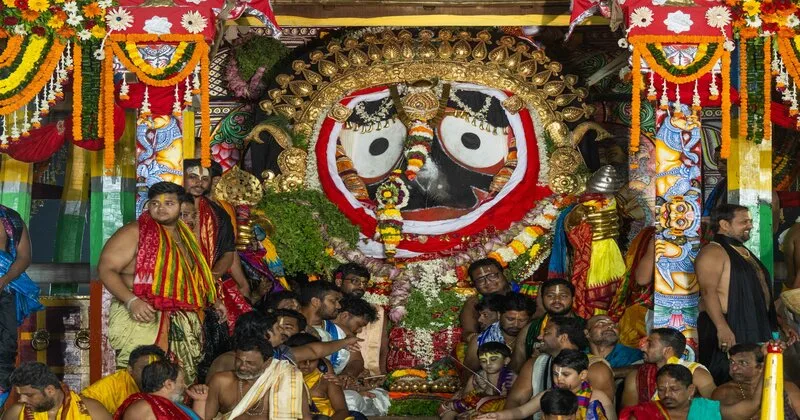
Adorned with resplendent gold ornaments, the divine trinity appeared in a majestic and regal form on their chariots stationed near the Singhadwar, the Lion’s Gate of the historic 12th-century Shree Jagannath Temple. The dazzling sight left devotees mesmerised, many of whom described the experience as spiritually uplifting and deeply fulfilling.
A grand spiritual gathering on Asadha Shukla Ekadashi
The Suna Besha ritual is observed on the auspicious Asadha Shukla Ekadashi Tithi, a day after the Bahuda Yatra, which marks the return journey of the deities from the Shree Gundicha Temple to the main temple. According to tradition, the Gundicha Temple is considered the birthplace of Mahaprabhu Jagannath, making the return journey and subsequent rituals highly significant.
— Shree Jagannatha Temple, Puri (@JagannathaDhaam) July 25, 2026
Unlike most temple rituals that take place within the sanctum, Suna Besha during Rath Yatra is unique as it is performed outside, allowing devotees from all walks of life to witness the deities in their grand golden attire. This accessibility adds to the importance of the occasion, especially for those who are otherwise not permitted entry inside the temple.
Bada Danda turns into a sea of devotion
The Bada Danda, or Grand Road of Puri, became the epicentre of devotion as it filled with an ocean of devotees chanting “Jai Jagannath.” From early morning until late at night, the stretch between the Jagannath Temple and the Gundicha Temple remained packed with pilgrims eager to catch a glimpse of the divine spectacle.
Despite the massive turnout, authorities ensured smooth crowd movement through well-planned arrangements. Devotees were guided along designated entry and exit routes, with one side of the road leading towards the Singhadwar for darshan and the other facilitating the exit. The disciplined flow of pilgrims highlighted the seamless coordination between temple authorities and security personnel.
Deities adorned with 208 kilograms of gold
One of the most striking aspects of Suna Besha is the elaborate decoration of the deities with an estimated 208 kilograms of gold ornaments, reflecting centuries-old craftsmanship rooted in Odisha’s cultural heritage.
ଆଜି ଆଷାଢ଼ ଶୁକ୍ଳ ଏକାଦଶୀ ତିଥିରେ ସିଂହଦ୍ଵାର ସମ୍ମୁଖରେ ରଥାରୂଢ଼ ଶ୍ରୀବିଗ୍ରହଙ୍କ ପବିତ୍ର ସୁନାବେଶ ଅନୁଷ୍ଠିତ ହେଉଅଛି।
ଜୟ ଶ୍ରୀଜଗନ୍ନାଥ ମହାପ୍ରଭୁ। 🙏🏻#Sunabesha #Rathayatra2026 #JaiJagannatha #RathaJatra2026 #RathaYatra #ShreeJagannathaDhaam #Puri pic.twitter.com/srNrNEYVTY
— Shree Jagannatha Temple, Puri (@JagannathaDhaam) July 25, 2026
Mahaprabhu Jagannath, seated on his chariot, was adorned with a golden Chakra in his right hand and a silver conch in his left. Mahaprabhu Balabhadra carried a golden plough and mace, symbolising strength and protection, while Devi Subhadra was decorated with intricately designed traditional gold ornaments.
The adornments included golden crowns (Sri Mukuta), hands (Sri Hasta), feet (Sri Payara), head ornaments (Sri Chulapati), earrings (Kundala), and multiple garlands such as Harida Mala, Kadamba Mala, Baghankhi Mala, and Sebati Mala. These ornaments, crafted in traditional Utkal style, enhanced the divine aura of the deities, making the spectacle visually breathtaking.
A tradition rooted in history
The origins of Suna Besha trace back to 1460 CE, during the reign of King Kapilendra Deb of the Gajapati dynasty. Historical accounts suggest that after victorious campaigns in southern India, the king returned with immense wealth, including gold and precious ornaments, which he donated to the Jagannath Temple.
ରଥାରୂଢ଼ ଶ୍ରୀଜୀଉମାନଙ୍କର ବଡ଼ ତଢ଼ାଉ ବେଶ ବା ସୁନାବେଶ ସମ୍ପୂର୍ଣ୍ଣ ହୋଇଅଛି।
ଜୟ ଶ୍ରୀଜଗନ୍ନାଥ ମହାପ୍ରଭୁ। 🙏🏻#Sunabesha #Rathayatra2026 #JaiJagannatha #RathaJatra2026 #RathaYatra #ShreeJagannathaDhaam #Puri pic.twitter.com/ggOJ6wS8m0
— Shree Jagannatha Temple, Puri (@JagannathaDhaam) July 25, 2026
Over time, these offerings were transformed into the intricate ornaments used in the Suna Besha ritual. The tradition has since been preserved and continues to be an integral part of the temple’s ceremonial practices, symbolising devotion, prosperity, and royal grandeur.
Five occasions of Suna Besha in a year
Although Suna Besha is most widely celebrated during Rath Yatra, the deities are adorned in golden attire on five occasions throughout the year, including Dussehra, Kartik Purnima, and Dola Purnima. However, the Rath Yatra Suna Besha holds unparalleled importance as it is the only time when the deities are decorated in gold outside the temple, enabling lakhs of devotees to witness the ritual.
This rare opportunity is also believed to carry immense spiritual benefits. Devotees hold the faith that witnessing Suna Besha grants liberation from sins accumulated over several lifetimes, further amplifying the significance of the event.
Rituals conducted with precision and devotion
The day’s rituals followed the temple’s traditional schedule, known as the Niti Nirghanta. Proceedings began early in the morning with the Mangala Aarti performed on the chariots, followed by a series of rituals including Mailam, Tadap Lagi, Abakash and Vesha.
— Shree Jagannatha Temple, Puri (@JagannathaDhaam) July 25, 2026
The Sakala Dhupa, or morning offering, was conducted around midday, followed by Maha Snana, Sarvanga Puja, and Madhyahna Dhupa. The deities were then dressed in traditional Sari-Khandua attire before the commencement of the Suna Besha in the evening.
The decoration process began around 5:10 pm, when the gold ornaments were brought from the temple treasury, known as the Ratna Bhandar, under tight security. The ornaments were handed over by the Bhandara Mekap servitor to designated servitors such as Puspalakas and Daitapatis, who carried out the adornment rituals with precision and reverence. By approximately 6:35 pm, the deities were fully adorned, marking the completion of the Suna Besha ritual.
Elaborate security measures ensure smooth conduct
Given the massive influx of devotees, authorities implemented extensive security and crowd management measures to ensure the safety of pilgrims. More than 200 platoons of police personnel were deployed across key areas, particularly along the Bada Danda and near the Singhadwar.
Barricades were set up from Market Chhak to regulate the movement of devotees, while nearby lanes around the temple were sealed to prevent overcrowding. With parking areas reaching capacity early in the day, vehicles were diverted towards Talabania to ease congestion.
Security personnel continuously guided devotees, urging them to maintain discipline and follow designated routes for darshan. The coordinated efforts of the administration ensured that the event concluded without major disruptions.
A profound spiritual experience for devotees
Despite the heat and dense crowds, the spirit of devotion remained unwavering among the pilgrims. Many devotees waited patiently for hours, chanting hymns and expressing their faith, to witness the divine golden form of Mahaprabhu Jagannath.
For many, the experience was more than just a ritual; it was a moment of deep spiritual connection. Devotees reported a sense of peace and fulfilment after the darshan, believing that the Mahaprabhu’s blessings would bring relief from hardships and guide them in life.
The atmosphere along the Bada Danda remained vibrant well into the night, with devotional songs, chants, and prayers continuing as devotees soaked in the spiritual energy of the occasion.
Adharapana ritual to follow
Following the conclusion of Suna Besha, the Hari Shayan ritual was performed late at night, marking the end of the day’s ceremonies. The next significant ritual in the Rath Yatra sequence is the Adharapana Niti, scheduled for the following day.
This ritual involves offering a sacred drink to the deities and is considered an important part of the festival’s concluding ceremonies. It further reinforces the intricate sequence of traditions that define the Rath Yatra.
A testament to India’s spiritual and cultural legacy
The Suna Besha of Mahaprabhu Jagannath stands as a powerful symbol of India’s enduring spiritual and cultural heritage. The grandeur of the ritual, combined with the unwavering faith of millions, highlights the timeless relevance of traditions that have been preserved for centuries.
As the golden-clad deities illuminated the night sky of Puri, the event once again showcased the profound connection between the divine and devotees. The festival not only reinforces religious beliefs but also brings together people from diverse backgrounds in a shared celebration of faith, devotion, and cultural unity.
The spectacle of Suna Besha continues to captivate hearts and inspire devotion, reaffirming its place as one of the most significant and cherished events in Bharat’s religious calendar.