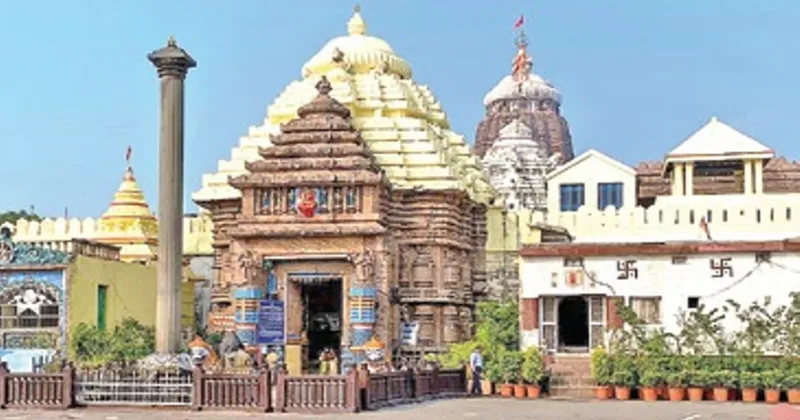
BHUBANESWAR: The Shri Jagannath Temple Administration (SJTA) in Puri is working on a dedicated assistance mechanism for elderly and divyang devotees to facilitate smoother, safer and more dignified darshan of the Chaturdha Vigraha at the centuries-old shrine. At the same time, in a significant development concerning the protection of the mandir’s properties, the Odisha Board of Revenue has directed that around 1.5 acres of valuable land near Sri Gundicha Mandir be recorded in the name of Mahaprabhu Jagannath, restoring its original status as Amrit Manohi property.
The two developments assume significance as the mandir administration continues to focus on improving facilities for devotees while strengthening the protection of properties belonging to the Shree Jagannath Mandir.
Dedicated assistance for elderly and divyang devotees
The SJTA has initiated steps to create a dedicated system under which elderly and divyang devotees will receive assistance during their visit to the mandir. The proposed facility is aimed at reducing the difficulties faced by devotees with limited mobility while navigating the temple premises and reaching the designated areas for darshan.
As part of the infrastructure required for the initiative, a ramp and railing connecting the North Gate Gumut of the 12th-century mandir to the Kurma Bedha have already been constructed. The facility is intended to make movement easier for elderly devotees and persons with disabilities who may find it difficult to negotiate the temple premises without assistance.
The mandir administration is also planning to deploy specially trained volunteers inside the mandir. These volunteers will assist eligible devotees in moving towards the Natamandap and Jagamohan and help them during their movement for darshan.
The proposed system will combine physical infrastructure with human assistance and technology-based registration. The SJTA is preparing an online facility as well as a mobile application through which eligible elderly and divyang devotees will be able to seek assistance before visiting the mandir.
Initially, the facility is proposed to cater to 50 elderly and divyang devotees every day. The daily limit has been fixed keeping in view the logistical requirements involved in providing dedicated assistance inside the temple and ensuring that the volunteers can effectively support each beneficiary.
To operationalise the facility, the Chief Administrator of the SJTA has written to the Puri Collector, who also serves as chairman of the District Red Cross Society, seeking trained volunteers for the proposed service.
The volunteers are expected to play an important role in assisting devotees from the designated access point and helping them navigate the temple premises. The system is intended to provide structured assistance rather than leaving elderly or disabled visitors to depend entirely on family members or accompanying persons.
Focus on accessible and dignified darshan
The initiative assumes significance given the large number of devotees visiting the Shri Jagannath Mandir throughout the year. The movement of pilgrims becomes particularly challenging during major festivals, religious occasions and periods of heavy footfall.
For elderly devotees and persons with disabilities, navigating crowded areas and moving through the mandir premises can pose additional challenges. The proposed arrangement seeks to address these difficulties through a combination of dedicated infrastructure, trained volunteers and advance registration.
The administration has reiterated that facilitating smooth and hassle-free darshan of the Chaturdha Vigraha—Mahaprabhu Jagannath, Mahaprabhu Balabhadra, Devi Subhadra and Mahaprabhu Sudarshan—remains one of its priorities.
The online facility and mobile application are expected to help the administration manage requests in advance and organise volunteer assistance in a more systematic manner. The system is likely to be fine-tuned before the facility is expanded beyond the initial limit of 50 beneficiaries per day.
The initiative is also in line with the broader emphasis on improving accessibility at major religious and heritage destinations so that senior citizens and persons with disabilities can participate in pilgrimage activities with greater ease and dignity.
Major development in protection of Mahaprabhu Jagannath’s property
In a separate but significant development concerning the protection of temple properties, the Odisha Board of Revenue has directed that approximately 1.5 acres of valuable land near Shri Gundicha Mandir in Puri be recorded in the name of Mahaprabhu Jagannath, restoring its original status as Amrit Manohi property.
The land, located at Mouza Talabania near Shri Gundicha Mandir, holds particular significance because the old settlement records showed Mahaprabhu Jagannath as its recorded owner under the Amrit Manohi status.
According to the records examined in the matter, the property had been recorded in the name of Mahaprabhu Jagannath in the 1889 settlement records. However, in 2002, the record was changed in favour of a private individual. Subsequently, the property was transferred to another person through a registered sale deed.
The change in the land classification and the subsequent claim of private ownership eventually came before the Odisha Board of Revenue.
Board examines old and current records
The Board took up the matter suo motu under the powers vested in it under Section 32 of the Odisha Survey and Settlement Act, 1958. It examined the old settlement records, current records, sale deeds, the origin of the property and the statutory provisions relating to the properties of the Shree Jagannath Mandir.
A key legal issue considered by the Board was the applicability of Section 16(2) of the Shri Jagannath Temple Act, 1955. Under the provision, prior approval of the State Government is required before immovable property under the possession of the Temple Committee can be sold or otherwise transferred.
During the proceedings, evidence establishing the required prior approval of the State Government was not produced, according to the case records.
The Board observed that if the legality of the original transfer is not established, a subsequent sale deed cannot by itself cure the legal defect associated with the original transfer.
The Board also considered whether consent or a no-objection certificate from the Mandir Managing Committee could substitute the mandatory prior approval of the State Government. The legal position examined in the case indicated that such consent could not serve as a substitute for the statutory requirement of prior government approval.
Land to be recorded in Mahaprabhu Jagannath’s name
Following its examination of the records and legal provisions, the Board directed the concerned settlement authorities to reconcile the current and not-final records with the original settlement records.
The property has been directed to be recorded as “Shri Jagannath Mahaprabhu Bije, Puri, Marfat Temple Managing Committee, Amrit Manohi Status.” The order restores the original status reflected in the historical records, despite the subsequent change in the revenue record and the execution of a registered sale deed.
Board of Revenue member Satyabrata Sahu has directed the Chief Administrator of the Shree Jagannath Mandir to take necessary steps to bring the approximately 1.5 acres of land into the account of Mahaprabhu Jagannath.
Government Advocate Ambika Prasad Mishra represented Mahaprabhu Jagannath in the proceedings and presented the legal position concerning the protection of the temple property.
Significance for mandir property protection
The proceedings are significant from the perspective of maintaining the integrity of records relating to the properties of Mahaprabhu Jagannath. The case has highlighted the importance of examining the original settlement records and the statutory requirements governing the transfer of mandir properties before recognising subsequent private claims.
The Board’s decision also underscores the legal principle that a subsequent mutation, revenue entry or sale deed cannot, by itself, establish valid ownership where the original transfer does not meet the applicable statutory requirements.
Together, the two developments reflect separate aspects of the administration of the Shri Jagannath Mandir—improving accessibility and assistance for devotees while also ensuring that properties historically recorded in the name of Mahaprabhu Jagannath remain subject to the legal safeguards applicable to temple assets.