The Saints have made significant contributions to humanity and our nation during both challenging and prosperous times. They are a primary force in protecting Hindus, Hindu culture and our great nation. Despite more than 200 invasions—marked by exploitation, mass violence and the destruction of cultural and religious landmarks—Bharat remains resilient, preserving its cultural roots.
A key factor in this cultural resilience is our saints. However, there are forces seeking to undermine Bharat, aiming to divide Hindus by caste and misinterpret the teachings of saints to mislead them into believing that those who threaten Hindu Dharma are virtuous, which could lead to the repeated destruction of our culture and nation, pushing it back into oppression.
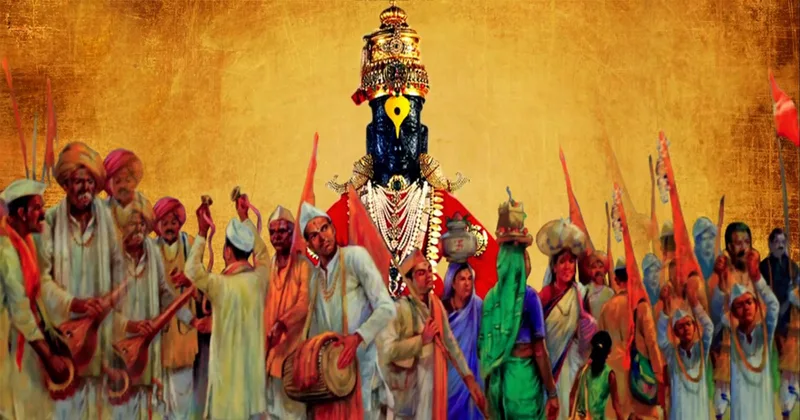
The “Pandharpur Vari,” a longstanding tradition celebrated with devotion by Hindus from various castes, exemplifies our cultural unity and spirit. This grand procession of millions of devotees lasts several days and is unique around the world.
Why saints started this divine procession (Pandharpur Vari)?
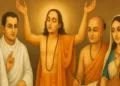
The tradition of the Alandi to Pandharpur Wari was initiated by Saint Dnyaneshwar in the 13th century and has continued for over 800 years. Its main purpose is to guide the masses in devotion while also playing a crucial role in protecting Dharma and the nation. The Wari significantly strengthened the Bhakti movement during the medieval period, helping to resist ongoing attacks against Hindu Dharma and culture.
The Wari embodies a Hindu tradition. Saints began the Bhakti movement to safeguard Hindu Dharma from Islamic invaders and to unite Hindu society by overcoming internal caste divisions. It is a vital expression of this movement. Devotees wear garlands of Tulsi, observe Ekadashi fasts, and participate in the Pandharpur Wari during Ashadhi and Kartiki Ekadashi, singing hymns and praises of deities like Ram, Krishna and Hari. This underscores that Wari is very much a part of Hindu culture.
The Wari illustrates that devotion to God is accessible to all individuals. Saints understood that Dharmic devotion serves as a foundation for Hindu societal unity. They came from diverse castes and did not identify by caste, representing the entire Hindu community. Saint Chokha Mela captures this unity through his rhythmic verses (Abhanga).
ऊस डोंगा परी रस नोहे डोंगा ।
काय भुललासी वरलिया रंगा ॥
Of course, no matter what a person’s appearance is, the devotion in their heart is more valuable and worthy of respect. Similarly, Saint Tukaram says
विष्णुमय जग वैष्णवांचा धर्म ।
भेदाभेद भ्रम अमंगळ ॥
The essence of the Wari tradition is captured in this Abhanga. The Warkari belief emphasizes the significance of fostering unity rather than promoting division among people. Devotees honor this age-old tradition by participating in Wari with deep devotion, experiencing joy as they chant the names of Ram, Krishna, and Vitthala while adhering to Wari’s customs. This event showcases the unity, harmony, and cultural richness of Hindu society, enhancing collective devotion to God and reinforcing social and national integrity. The Wari of Pandhari uplifts the spirit of the Hindu community.
While Wari is a personal spiritual journey for each devotee (Warkari), the mass gathering of devotees strengthens its social and cultural impact. Spirituality embodies social unity, service, and brotherhood, forming the bedrock of Bharat’s way of life. However, during the Wari period, there are concerns about certain individuals attempting to distort Wari’s meaning and separate it from Hindu Dharma.
These efforts have included misleading attempts to redefine the history and foundational figures of the Warkari sect. Some anti-Hindu factions have tried to portray Wari as a secular practice, questioning its decorum and original values. A few years ago, there were also attempts to change “Gyanoba Tukaram” slogan to “Namdev Tukaram”. But the Warkari sect thwarted these attempts. From time to time, people from certain circles make controversial statements about Wari to stop the Vari permanently.
Recently, there have been efforts to conflate the Bhakti movement with a rebellion against Brahmanism, asserting that Vaishnavism stands apart from Hindu Dharma. Some groups, previously critical of Hindu customs, have attempted to incite discord within Wari, raising questions about the integrity of Wari’s teachings.
Instances of individuals providing food and water to devotees have been sensationalized by the media as symbols of Hindu-Muslim unity, while underlying motives remain suspect; they do not condemn attacks on Hindu gatherings. A few years ago, Hindu haters who used to make fun of Hindu festivals entered Wari and tried to raise a new fake slogan like Sheikh Mohammad Vitthal. Looking at all this, the question arises whether some elements are deliberately trying to distort the original meaning and nature of Wari.
Such misrepresentations seem to stem from the leftist and extremist agenda, which has historically sought to divide Hindu society. As Wari fosters unity, attempts to reinforce caste divisions are failing and the influence of Hindutva is growing, prompting opposition from leftists and extremist elements.
However, Hindus recognize Wari’s profound roots within Hindu tradition. The words of Saint Chokhamela Maharaj and the teachings of Shri Saint Tukaram Maharaj articulate profound connections to Vishnu and the four Vedas.
Despite efforts to undermine the Wari’s significance as part of Hindu Dharma, the Bhakti movement has long served to explain and spread the principles of Hindu scriptures. The Warkari sect is a sect of Vaishnavites among the many worship sects in Hindu Dharma. The holy books considered to be the three origin books of this sect are -‘Dnyaneshwari’ (commentary on ‘Bhagavad Gita’), ‘Tukaram Gatha’ (commentary on the four Vedas) and ‘Ekanathi Bhagavat’ (Shrimad Bhagavat Ekadash Skandha).
These three great scriptures of Hindu Dharma have been said by even the great sages, Nowhere has the name of the books of other religions been mentioned. Ram Navami, Krishna Janmashtami, Mahashivratri, Narasimha Jayanti, Vaman Jayanti are the five-day festival; Ekadashi, Somwar (Monday) are the continuous fasts, which Dharma follows should not be mentioned separately.
Therefore, the Varkari sect is Hindu-based, this is as clear as the sun. The teachings of Wari unequivocally represent Hindu ideology, and dismissing this as madness only perpetuates the agenda of those seeking to sow division among Hindus. The Varkari sect is firmly established as a Vaishnavite group within Hindu Dharma, anchored by foundational texts like the ‘Dnyaneshwari’, ‘Tukaram Gatha’ and ‘Ekanathi Bhagavat.’
Critics who assert that Wari aligns with Hindutva ideologies implicitly claim that it is not integral to Hindu tradition or societal unity, attempting to fragment the intellectual cohesion of the Warkari sect. Nonetheless, Wari exemplifies a robust facet of the Hindu devotional tradition, uniting diverse societal segments through equitable principles and a Dharma-centric awakening.
In recent years, certain left-wing entities have tried to label the saints’ critiques of society as rebellion against established traditions. Select verses from their sacred texts have been taken out of context to depict a rift between the saintly tradition and Hindu Dharma. However, a comprehensive examination of their literature reveals that their struggle was aimed not against Sanatan Dharma itself, but at the social evils and inequalities of their time, with the goal of reforming the faith and uplifting society through devotion to Vitthala.