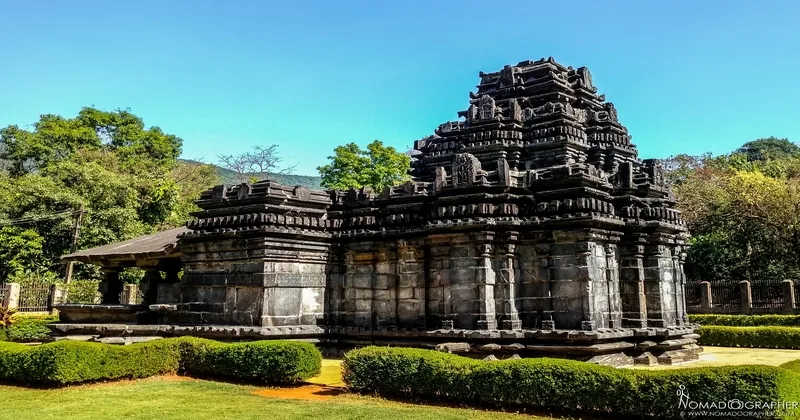
Tambdi Mahadeva Mandir: Goa's nearly 900-year-old Shiva shrine
August 16, 2026
  • Read Ecopy
  • Circulation
  • Advertise
  • Careers
  • About Us
  • Contact Us
Android AppiPhone AppArattai
Organiser
  • ‌
  • Bharat
    • Assam
    • Bihar
    • Chhattisgarh
    • Jharkhand
    • Maharashtra
    • View All States
  • World
    • Asia
    • Europe
    • North America
    • South America
    • Africa
    • Australia
  • Editorial
  • International
  • Opinion
  • RSS @ 100
  • More
    • Op Sindoor
    • Analysis
    • Sports
    • Defence
    • Politics
    • Business
    • Economy
    • Culture
    • Special Report
    • Sci & Tech
    • Entertainment
    • G20
    • Azadi Ka Amrit Mahotsav
    • Vocal4Local
    • Web Stories
    • Education
    • Employment
    • Books
    • Interviews
    • Travel
    • Law
    • Health
    • Obituary
  • Subscribe
    • Subscribe Print Edition
    • Subscribe Ecopy
    • Read Ecopy
  • ‌
  • Bharat
    • Assam
    • Bihar
    • Chhattisgarh
    • Jharkhand
    • Maharashtra
    • View All States
  • World
    • Asia
    • Europe
    • North America
    • South America
    • Africa
    • Australia
  • Editorial
  • International
  • Opinion
  • RSS @ 100
  • More
    • Op Sindoor
    • Analysis
    • Sports
    • Defence
    • Politics
    • Business
    • Economy
    • Culture
    • Special Report
    • Sci & Tech
    • Entertainment
    • G20
    • Azadi Ka Amrit Mahotsav
    • Vocal4Local
    • Web Stories
    • Education
    • Employment
    • Books
    • Interviews
    • Travel
    • Law
    • Health
    • Obituary
  • Subscribe
    • Subscribe Print Edition
    • Subscribe Ecopy
    • Read Ecopy
Organiser
  • Home
  • Bharat
  • World
  • Operation Sindoor
  • Editorial
  • Analysis
  • Opinion
  • Culture
  • Defence
  • International Edition
  • RSS @ 100
  • Magazine
  • Read Ecopy
Home Bharat

Tambdi Mahadeva Mandir: Exploring Goa’s nearly 900-year-old Shiva shrine hidden in the Western Ghats

Hidden amidst the forests of Goa, the nearly 900-year-old Tambdi Mahadeva Mandir is Goa's oldest surviving Hindu shrine and a stunning example of Kadamba-era architecture. Nestled within the Bhagwan Mahavir Wildlife Sanctuary, this ancient Shiva temple has stood the test of time, preserving a rich legacy of faith, history and craftsmanship

WEBDESKWEBDESK
Jul 26, 2026, 10:30 pm IST
inBharat, Culture, Goa
Follow on Google News
Tambdi Mahadeva Mandir

Tambdi Mahadeva Mandir

Facebook
Twitter
WhatsAppTelegramEmail

South Goa: Nestled deep inside the lush forests of Goa’s Bhagwan Mahavir Wildlife Sanctuary, the Tambdi Mahadeva Mandir stands as the state’s oldest surviving Hindu Mandir. Built over 900 years ago, this remarkable monument has withstood invasions, changing dynasties and the test of time, preserving a rare example of Kadamba-era architecture in Goa.

Located around 60 km from Panaji in South Goa, the Mandir sits on the banks of a mountain stream within the Bhagwan Mahavir Wildlife Sanctuary. Surrounded by thick evergreen forests and the foothills of the Western Ghats, the shrine offers visitors a rare combination of spirituality, history and natural beauty. Dedicated to Bhagwan Shiva, Tambdi Mahadeva is the only surviving Mandir in Goa built in the distinctive Kadamba architectural style.

Historical Background

The Mandir is believed to have been constructed in the 12th century, during the reign of the Kadamba dynasty, which ruled Goa between the 10th and 14th centuries. Historians believe the Mandir may have originally stood elsewhere and was later relocated to its present remote location to protect it from destruction during periods of political upheaval. Others suggest that its isolated forest setting itself helped shield it from invasions that destroyed many other Mandirs across Goa.

Unlike numerous Mandirs that were demolished or converted during Portuguese rule, Tambdi Mahadeva survived largely because of its secluded location in dense forests far from coastal settlements. Today, it remains one of the finest surviving monuments of pre-Portuguese Goa.
Unique Architecture

The Tambdi Mahadeva Mandir is celebrated for its exquisite Kadamba style of architecture, displaying remarkable craftsmanship despite its modest size.

Some of its notable architectural features include:
-Constructed entirely from black basalt stone, which was transported from the Deccan plateau since basalt is not naturally available in Goa.
-Built without the use of modern cement, with stones interlocked through precise engineering.
-Features an intricately carved mandapa (assembly hall) and garbhagriha (sanctum sanctorum).
-Supported by beautifully sculpted pillars decorated with floral motifs, miniature figures and geometric patterns.
-The entrance is adorned with finely carved images of Shaivite deities.
-A beautifully carved Nandi, Bhagwan Shiva’s sacred bull, faces the sanctum.
-The Mandir’s pyramidal roof, stepped design and elegant proportions reflect the advanced Mandir-building traditions of medieval peninsular India.

At the heart of the Mandir lies a Shiva Linga, which continues to be worshipped by devotees throughout the year. Unlike many archaeological monuments that function solely as heritage sites, Tambdi Mahadeva remains an active place of worship. Daily rituals continue, maintaining an unbroken spiritual tradition spanning centuries. The Mandir exudes an atmosphere of serenity, enhanced by the sound of flowing streams and birdsong from the surrounding forest.

Also Read: From Pegasus to NEET: How Parliament became the Opposition’s protest battleground since 2021

Engineering Excellence

One of the Mandirs most fascinating aspects is its construction. Despite standing in a region receiving some of India’s heaviest monsoon rainfall, the structure has remained remarkably intact for over eight centuries.
The carefully cut basalt blocks fit together with extraordinary precision, allowing the monument to withstand: Heavy rainfall, Humidity and Natural weathering. The craftsmanship reflects the engineering expertise of medieval Indian Mandir builders.

Tambdi Mahadeva remains an important pilgrimage centre for Shaivite devotees. The Mandir witnesses large gatherings during:
-Mahashivaratri
-Shravan month
-Kartik festivals
-Mondays dedicated to Bhagwan Shiva
Devotees from Goa, Karnataka and Maharashtra regularly visit the shrine.

The Archaeological Survey of India (ASI) has designated Tambdi Mahadeva as a protected monument. In recent years, the Mandir has also gained international attention after being included in India’s Tentative List for UNESCO World Heritage status as part of the Sacred Ensembles of the Hoysalas and related Mandir traditions, highlighting its exceptional historical and architectural value.

The Archaeological Survey of India periodically undertakes conservation work to preserve the Mandir’s stone carvings and structural integrity. Given its location within a protected forest, environmental conservation and heritage preservation go hand in hand. Authorities regulate construction activities nearby to maintain the site’s ecological and archaeological significance.

Tambdi Mahadeva is far more than an ancient shrine. It represents a living link to Goa’s pre-Portuguese history, showcasing the region’s indigenous cultural and architectural traditions. As one of the few surviving monuments from the Kadamba era, it offers invaluable insights into medieval temple architecture, engineering and religious life in western India.

For historians, architects, pilgrims and nature enthusiasts alike, the Mandir stands as a testament to India’s enduring civilisational heritage. Hidden within the forests of the Western Ghats, Tambdi Mahadeva continues to inspire awe, not only for its artistic excellence but also for its extraordinary survival through centuries of political change and natural challenges.


 

Topics: Goa HeritageKadamba DynastyLord Shiva TempleAncient Indian TemplesBhagwan Mahavir Wildlife SanctuaryIndian Architecturewestern ghatsTambdi Mahadeva Temple
Share
Tweet
SendShareSend
✮ Subscribe Organiser YouTube Channel. ✮
✮ Join Organiser's WhatsApp channel for Nationalist views beyond the news. ✮
Previous News

Pandharpur Wari: Building Hindu unity amid false narratives from extremists & leftist groups

Next News

Rashtra Sevika Samiti reviews organisational expansion; urged Union & State Govts to implement Uniform Civil Code

Related News

Kodilingam Mandir in Tamil Nadu

Kodilingam Mandir: The hidden Shiva shrine with thousands of sacred lingams near Suruli Falls

President Murmu Releases Stamp Honouring Rani Chennabhairadevi

President Murmu unveils the postage stamp of Chennabhairadevi: A tribute to India’s ‘Forgotten Queen’

NGT intervention in Wayanad landslides; issues notice to Kerala, Tamil Nadu

Load More

Latest News

Great Calcutta Killings 1946

Great Calcutta Killings in August 1946: Urban pogrom and the teleology of partition in colonial Bengal and India

Independence Day 2026: World leaders wish India, hail its global rise & growth story; Signals deeper strategic ties

Kerala: Halal Fayida Islamic Banking Cooperative Society depositors stranded as crores remain unaccounted for

Abusive language used during recent protest in Delhi cannot be the language of Bharatiya youth. It is time to introspect yourself where are we making mistakes in guiding our future generation

80th Independence Day: Youth and Nation – Change begins with responsibility

The Tiranga embodies India’s freedom, unity and values, inspiring us to turn patriotism into responsible action

From Tiranga in Every Home to Tiranga in Every Heart: Turning national pride into everyday patriotism

Atul Limaye, Sah Sarkaryavah, RSS, while addressing at an Akhil Bharatiya Vidyarthi Parishad (ABVP), the student wing of the RSS, event held in Chhatrapati Sambhajinagar in Maharashtra, on August 2

Independence Day 2026: Youth and Nation – The Anarchic alternative

Keralam: CM Satheeshan omits Vande Mataram on Independence Day at govt offices; BJP events render full version

Decolonisation saw nations across Africa and Southeast Asia reclaim their cultures, languages and identities after independence (This image is generated by AI)

From Colonial Rule to Cultural Revival: How African and Southeast Asian nations shed their colonial legacies

Rashtriya Swayamsevak Sangh (RSS) Sarsanghchalak Dr Mohan Bhagwat went viral by adopting the Gen Z slang phrase "clock it" and making the corresponding hand gesture during a youth conference in Mumbai on August 6

Independence Day 2026: Anarchy vs Freedom – Revisiting Ambedkar on protest in democracy

The Pakistan-Saudi Arabia-Türkiye defence pact faces an early test amid rising regional tensions and security challenges

Pakistan-Saudi Arabia-Turkiye Defence Pact: A shaky beginning and growing questions over its strategic credibility

Load More
  • Privacy
  • Terms
  • Cookie Policy
  • Refund and Cancellation
  • Delivery and Shipping

© Bharat Prakashan (Delhi) Limited.
Tech-enabled by Ananthapuri Technologies

  • Home
  • Search Organiser
  • Bharat
    • Assam
    • Bihar
    • Chhattisgarh
    • Jharkhand
    • Maharashtra
    • View All States
  • World
    • Asia
    • Africa
    • North America
    • South America
    • Europe
    • Australia
  • Editorial
  • Operation Sindoor
  • Opinion
  • Analysis
  • Defence
  • Culture
  • Sports
  • Business
  • RSS @ 100
  • Entertainment
  • More ..
    • Sci & Tech
    • Vocal4Local
    • Special Report
    • Education
    • Employment
    • Books
    • Interviews
    • Travel
    • Health
    • Politics
    • Law
    • Economy
    • Obituary
  • Subscribe Magazine
  • Read Ecopy
  • Advertise
  • Circulation
  • Careers
  • About Us
  • Contact Us
  • Policies & Terms
    • Privacy Policy
    • Cookie Policy
    • Refund and Cancellation
    • Terms of Use

© Bharat Prakashan (Delhi) Limited.
Tech-enabled by Ananthapuri Technologies