GURUGRAM: Sonam Wangchuk late midnight on Thursday ended his hunger strike of more than 15 days after getting assurances from Union Health Minister J.P. Nadda and Union Minister of State for Personnel, Public Grievances and Pensions Dr. Jitendra Singh. The fast had been launched to press for greater transparency in the National Eligibility-cum-Entrance Test (NEET) examination process and to demand robust safeguards against question paper leaks and examination-related irregularities.
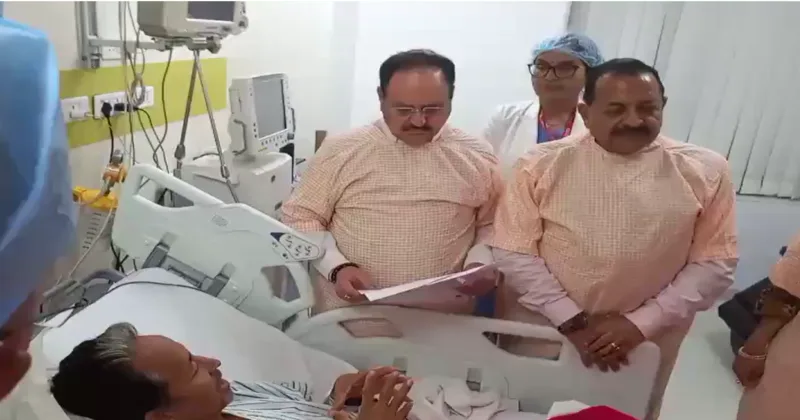
Wangchuk concluded his fast in the presence of the two Union ministers at Medanta hospital after the Centre assured that students’ concerns regarding the integrity of national entrance examinations would be addressed through continued consultations and institutional reforms.
The hunger strike drew attention from students, parents, education activists and civil society groups, who expressed concern over repeated allegations of paper leaks and irregularities in competitive examinations. Supporters of the campaign argued that restoring public confidence in the examination system was essential to protecting the interests of millions of aspirants who compete for limited medical seats every year.
During the discussions, Wangchuk reiterated the need for a transparent, accountable and technology-driven examination framework that minimizes the possibility of malpractice. His key demands included stronger mechanisms to prevent paper leaks, greater accountability of examination authorities, faster investigation into cases of irregularities and enhanced transparency in the conduct and evaluation of national-level entrance tests.
The Centre, according to those present at the meeting, acknowledged the importance of maintaining the credibility of competitive examinations and assured that the government remains committed to strengthening the examination ecosystem. While no formal agreement was announced immediately, the meeting marked a positive step towards dialogue between the government and stakeholders advocating examination reforms.
The protest comes against the backdrop of widespread concerns over the integrity of entrance examinations in recent years. Allegations of paper leaks, impersonation and other irregularities in several recruitment and entrance examinations have triggered protests across different parts of the country. The controversy surrounding the 2024 NEET-UG examination, in particular, intensified public debate over examination security, prompting judicial scrutiny and leading the government to introduce measures aimed at strengthening the functioning of the National Testing Agency (NTA).
Since then, the Centre has announced several initiatives to improve the examination process, including tighter security protocols, enhanced digital monitoring, stricter legal provisions against examination malpractice and institutional reforms intended to ensure greater accountability. However, education activists have continued to call for sustained vigilance and greater transparency to rebuild public trust.