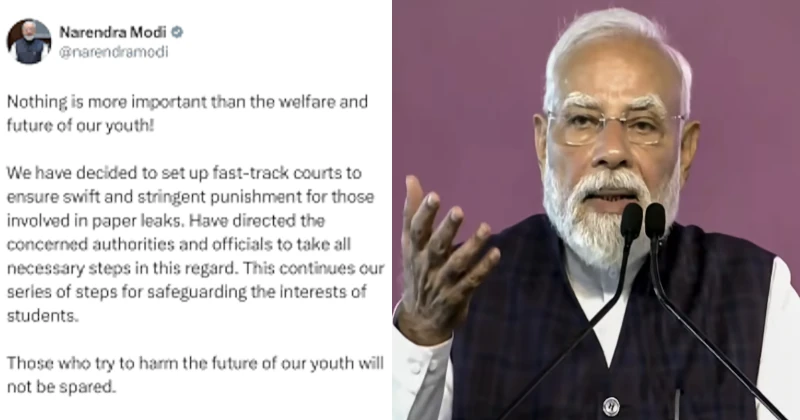
NEW DELHI: Amid escalating protests over the alleged NEET paper leak, Prime Minister Narendra Modi on Thursday announced the establishment of fast-track courts to ensure swift and stringent punishment for those involved in examination paper leaks, asserting that anyone attempting to jeopardise the future of India’s youth would face severe consequences.
In a post on X, the Prime Minister reaffirmed the Centre’s commitment to protecting students and strengthening the integrity of the country’s examination system.
“Nothing is more important than the welfare and future of our youth! We have decided to set up fast-track courts to ensure swift and stringent punishment for those involved in paper leaks. Have directed the concerned authorities and officials to take all necessary steps in this regard. This continues our series of steps for safeguarding the interests of students. Those who try to harm the future of our youth will not be spared,” PM Modi said.
Nothing is more important than the welfare and future of our youth!
We have decided to set up fast-track courts to ensure swift and stringent punishment for those involved in paper leaks. Have directed the concerned authorities and officials to take all necessary steps in this…
— Narendra Modi (@narendramodi) July 23, 2026
The announcement comes as opposition parties and activist groups have intensified their agitation over the NEET paper leak issue, with protests being organised in Delhi and several other cities. Protesters have also announced a “Chalo Sansad” march, pressing the Centre over alleged irregularities in the examination process.
Activists leading the protest have laid down three key demands for ending their agitation. Speaking to the media, organisation spokesperson Sourav Das said the first demand is the resignation of Union Education Minister Dharmendra Pradhan.
The protesters have also sought financial compensation of Rs 1 crore for the families of students who allegedly died by suicide in connection with the NEET paper leak controversy. Additionally, they have demanded the withdrawal of all FIRs registered against peaceful protesters and a government assurance that no similar cases would be filed against demonstrators in the future.
Das described Pradhan’s resignation as “non-negotiable” and declared that the protests would continue until the demand is fulfilled.
Meanwhile, Union Health Minister J P Nadda appealed against politicising the issue, describing paper leaks as a serious national concern that requires comprehensive discussion and systemic reforms rather than political confrontation.
As protests continue, activist Sourav Das claimed he had spoken to education reformer Sonam Wangchuk, who has reportedly continued his hunger strike even after being hospitalised. According to Das, Wangchuk emphasised that the agitation should remain peaceful and urged protesters to maintain discipline.
Das also alleged that anti-social elements could attempt to infiltrate demonstrations to discredit the movement and urged participants to remain vigilant. The protests in the national capital turned violent on July 22, with Delhi Police reporting that more than 118 police personnel sustained injuries during clashes with protesters.
According to police, those injured included senior officers ranging from the Special Commissioner and Joint Commissioner to Deputy Commissioners, Assistant Commissioners, and several women personnel. Around 60 protesters were also reported injured during the confrontation.
The Centre has maintained that it is committed to safeguarding students’ interests through stringent legal action, institutional reforms, and enhanced transparency in the examination process.