“We shall work in the interest of the nation and demand the full value of our labour.”
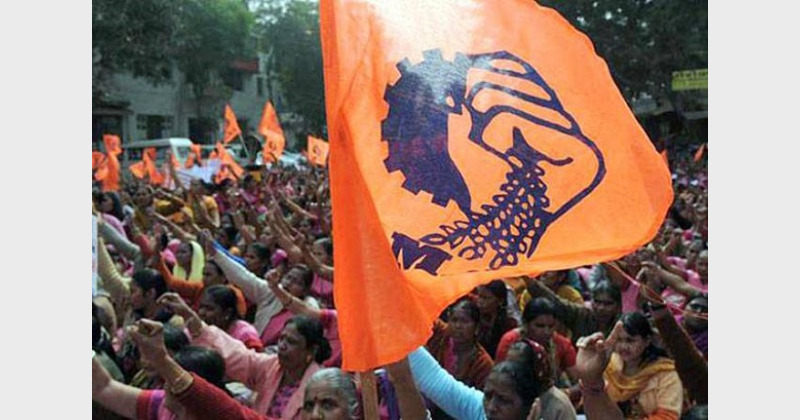
July 23 holds special significance in the history of India’s labour movement. On this day in 1955, the Bharatiya Mazdoor Sangh (BMS) was founded. It was a period when independent India was embarking on a new journey of nation-building, and the labour sector too needed an organisation that could protect the rights of workers while making national interest, social harmony and economic self-reliance the foundations of its philosophy.
The Bharatiya Mazdoor Sangh was founded under the leadership of Dattopant Thengadi, a visionary nationalist thinker and exceptional organiser. He sought to give India’s labour movement an ideological direction in which workers would not be seen merely as a component of the production system, but as active participants in nation-building and an essential part of national life.
The fundamental vision of the Bharatiya Mazdoor Sangh can be expressed in one sentence: The interests of workers and the interests of the nation are not contradictory; rather, they complement each other. This idea gives the Bharatiya Mazdoor Sangh its distinctive identity.
Dattopant Thengadi: A Thinker Who Gave a Nationalist Vision to the Labour Movement
Dattopant Thengadi was not merely an organiser. He was a profound thinker, an observer of economic systems and a visionary who sought to develop a model of nation-building rooted in the Indian way of life.
He believed that India’s problems could not be solved simply by imitating Western economic ideologies. India needed to develop its own model of development, taking into account its social structure, cultural traditions, economic needs and national circumstances.
Thengadi sought to view the labour movement not through the lens of class conflict, but through the principles of coordination and cooperation. In his vision, workers and employers were not permanent adversaries. Both were important components of the nation’s production system. His thinking focused on ensuring industrial development, dignity for workers, increased production, employment generation and a stronger national economy.
In his vision, a worker was not merely someone who received wages. A worker was a nation-builder, contributing labour, time and talent to the progress of the country.
“We Shall Work in the Interest of the Nation”: The Nationalist Call of the BMS
The well-known slogan associated with the Bharatiya Mazdoor Sangh—
«“We shall work in the interest of the nation and demand the full value of our labour.”»
—contains within it a broad economic and social philosophy.
It emphasises two important principles.
First—a worker deserves fair and just compensation for his or her labour. Second—a worker’s demand for rights must not be separated from the broader national interest. This philosophy demonstrates that workers’ rights and national responsibility are not contradictory. Workers must receive fair wages, safe working conditions, social security and respect for their labour. At the same time, responsibility toward production, quality, discipline and the national economy is equally important. This balance is one of the important foundations of the Bharatiya Mazdoor Sangh’s philosophy.
Workers Are Not Merely Labour Power; They Are National Power
In the vision of the Bharatiya Mazdoor Sangh, it is not enough to view workers merely as “labour” or “workforce.”
Workers represent the labour power of the nation, and labour is an essential component of the nation’s productive strength.
Farmers produce food in the fields.
Workers manufacture goods in factories.
Construction workers build roads, bridges and buildings.
Transport workers keep economic activity moving.
Employees in ports and railways operate critical parts of the nation’s economic infrastructure. Workers in banking, insurance, energy, mining, communication and the services sector provide momentum to the modern Indian economy. Therefore, respecting workers is not merely a matter of individual rights. It is also a question of national economic development and social dignity.
The Core Philosophy of the Bharatiya Mazdoor Sangh: Nationalism and Dignity of Labour
The central idea of the Bharatiya Mazdoor Sangh is nationalism. But here, nationalism is not merely a political slogan. It represents a broad sense of responsibility toward the nation, sensitivity toward society and respect for labour.
-Its major principles include:
-National interest as the highest priority
-Respect for the labour of workers
-Fair and just wages
-Workers’ welfare
-Social security
-Swadeshi and local production
-Industrial peace
-Cooperation between workers and management
-Social harmony
-National unity
-Growth in production and productivity
From this perspective, the Bharatiya Mazdoor Sangh does not see the labour movement merely as a means of making demands and organising protests. It regards it as an important part of the process of nation-building.
From Class Conflict to Class Coordination
One of the significant aspects of the Bharatiya Mazdoor Sangh’s philosophy is class coordination instead of class conflict.
Dattopant Thengadi believed that the country’s economy could not be strengthened by keeping workers and employers in a permanent state of confrontation.
-Workers need justice.
-Industries need stability.
-Entrepreneurs need opportunities for growth.
-The nation needs production.
-Consumers need quality goods and services.
-A healthy economic system must establish a balance among all these requirements.
Therefore, from the perspective of the Bharatiya Mazdoor Sangh, the goal of the labour movement is not merely to oppose, but to build a system in which workers receive dignity, industries grow, and the economic strength of the nation increases together.
Dattopant Thengadi’s Message to Workers and Activists: Nation Before Organisation
Dattopant Thengadi’s organisational philosophy was remarkably broad. He did not see workers and activists merely as people who organise movements. For him, an activist was a carrier of ideas, the foundation of an organisation, and an instrument of social transformation.
The essence of his thought was that an activist must first make himself or herself responsible toward the nation and society.
An activist must rise above personal interests and understand the larger purpose of the organisation.
One should not merely aspire for positions, but should be willing to accept responsibility.
One must struggle when necessary, but the ultimate purpose of that struggle should be the welfare of society and the nation.
In Thengadi’s organisational philosophy, the development of committed workers and activists was of paramount importance. He believed that a strong organisation is not built merely through numbers. Its real strength comes from dedicated, disciplined, thoughtful and principled workers.
Even today, this idea provides important guidance to the workers of the Bharatiya Mazdoor Sangh:
An organisation is not merely a platform to fight for rights; it is also a means to fulfil responsibilities.
Nationalism Means Labour, Production and Self-Reliance
If nationalism is understood only as an emotion, it remains incomplete.
True nationalism is that which makes the country economically strong.
It increases production.
It creates employment.
It encourages local industries.
It provides workers with a dignified life.
It reduces economic inequality.
And it makes India self-reliant.
That is why nationalism and economic self-reliance are deeply connected in the philosophy of the Bharatiya Mazdoor Sangh.
Today, as India advances toward Atmanirbhar Bharat, local production, Vocal for Local, startups, manufacturing and skill development, the role of workers has become even more important.
The dream of making India a developed nation cannot be achieved through government programmes alone. It will require the collective strength of millions of workers, farmers, entrepreneurs, scientists, technicians and young people.
A Changing Economy and the Growing Relevance of the BMS
The world of labour is changing rapidly. On one hand, there are traditional industries; on the other, the digital economy is expanding rapidly. Automation, robotics, artificial intelligence and emerging technologies have transformed the nature of employment.
The gig economy, platform workers, delivery workers, app-based services and other forms of informal employment are growing.
In such circumstances, workers face new questions:
Will they receive adequate social security?
Will employment stability be ensured?
How will they develop new skills in a rapidly changing labour market?
Will workers receive appropriate rights and protection in the digital age?
These questions make organisations such as the Bharatiya Mazdoor Sangh increasingly relevant. Today, the labour movement cannot remain limited to wages and bonuses. It must also address skill development, social security, healthcare, pensions, dignity of employment, digital labour rights and protection of workers during technological transformation.
The Unorganised Workforce: A Major Challenge
One of the major challenges facing India’s labour sector is the large number of workers in the unorganised and informal economy.
Construction workers, domestic workers, employees in small shops, transport workers, street vendors, agricultural labourers and many new categories of platform workers continue to face vulnerabilities in terms of social security.
The relevance of the Bharatiya Mazdoor Sangh increases in this context because the responsibility of the labour movement cannot remain confined only to workers in the organised sector. Extending social security and dignity of labour to the last worker in society must also be an important responsibility of the labour movement.
Women Workers and the New Labour Consciousness
Women’s participation in the labour force is steadily increasing. Women are playing important roles in industry, education, healthcare, services, agriculture, self-employment and the digital economy. Therefore, issues such as the safety of women workers, equal opportunities, dignified working environments, maternity benefits and social security must receive priority in the labour movement. For the Bharatiya Mazdoor Sangh, this is also an important opportunity to connect the changing role of women workers with broader labour policy and organisational discussions.
Young Workers and the Future Economy
Today’s young worker is not simply an employee. Young people are connected with technology, digital platforms and new forms of employment.
The aspirations of the new generation of workers are also changing. They want not only employment, but dignified work, skill development, work-life balance, social security and opportunities for advancement. Therefore, connecting with the new generation of workers is both a challenge and an opportunity for the Bharatiya Mazdoor Sangh. The philosophy of Dattopant Thengadi can be interpreted in today’s context to convey a powerful message to young people: Labour is not merely a means of earning a livelihood; it is also a means of nation-building.
The Call of Nationalism: India First
The core of the Bharatiya Mazdoor Sangh’s nationalist vision is:
Nation First. This does not mean that workers’ rights should be ignored. Rather, it means that workers’ rights must be viewed within the broader framework of national interest.
When workers receive fair wages, their purchasing power increases.
When workers are secure, productivity improves.
When industries become stronger, employment increases.
When employment increases, the economy becomes stronger.
And when the economy becomes stronger, the nation becomes more powerful.
Thus, workers’ welfare and national interest become complementary to each other.
July 23: Not Merely a Foundation Day, but a Day of Resolve
The Foundation Day of the Bharatiya Mazdoor Sangh is not merely an occasion to remember the establishment of an organisation.
It is a day to reaffirm the idea that India’s development cannot be achieved without the hard work and dignity of its workers.
It is a day to resolve that—
Labour will be respected.
Workers will not be exploited.
Workers will receive justice.
Healthy relations between industry and labour will be strengthened.
The national economy will become stronger.
Swadeshi and self-reliance will be encouraged.
Workers will receive skills and protection in the age of new technologies.
Unorganised workers will receive social security.
And the labour movement will consider national interest an essential part of its larger responsibility.
The Legacy of Dattopant Thengadi: From Struggle to Coordination
Through the Bharatiya Mazdoor Sangh, Dattopant Thengadi established a philosophy of labour that conveyed a fundamental message: India’s worker is not merely someone who struggles for personal rights.
The worker is a builder of the nation.
Production is in the worker’s hands.
The economic strength of India is reflected in the worker’s labour.
The progress of the nation is sustained by the worker’s hard work.
Therefore, respecting workers is, in essence, respecting the nation.
The journey of the Bharatiya Mazdoor Sangh reminds us that India’s labour movement must remain rooted in its civilizational values, inspired by national interest and dynamic enough to respond to the challenges of changing times.
Today, as the world faces economic uncertainties, technological transformation, changing employment patterns and global competition, Indian workers too face new challenges. These challenges can be addressed only by creating a balance between struggle and cooperation, rights and responsibilities, production and welfare, development and social justice.
Final Message: From Labour to Prosperity, From Prosperity to Self-Reliance
The Foundation Day of the Bharatiya Mazdoor Sangh on July 23 reminds us that a nation is not built merely by its geographical boundaries.
A nation is built in the fields.
It is built in factories.
It is built through roads and bridges.
It is built on railway tracks.
It is built in ports and mines.
It is built in offices and institutions.
And above all—
It is built through the sweat and hard work of millions of workers. Therefore, the dignity of workers is inseparably connected with the dignity of India. The thought of Dattopant Thengadi continues to convey that the ultimate goal of the labour movement is not merely to secure rights, but to build an India where labour receives dignity, workers receive justice, industries receive opportunities for growth, and the nation achieves prosperity.
On the Foundation Day of the Bharatiya Mazdoor Sangh, the call of nationalist labour consciousness should be—
“We shall work in the interest of the nation,
and demand the full value of our labour.”
Along with this, there should be a broader national resolve—
Labour shall be respected,
labour shall receive its rightful value,
industries shall grow,
employment shall expand,
India shall become self-reliant,
and the national interest shall remain paramount.
This is the enduring relevance of the Bharatiya Mazdoor Sangh’s philosophy.
This is a fitting tribute to the intellectual legacy of Dattopant Thengadi.
And this is the nationalist message of July 23—
“From labour comes prosperity,
from prosperity comes self-reliance,
and from self-reliance comes a strong nation.”