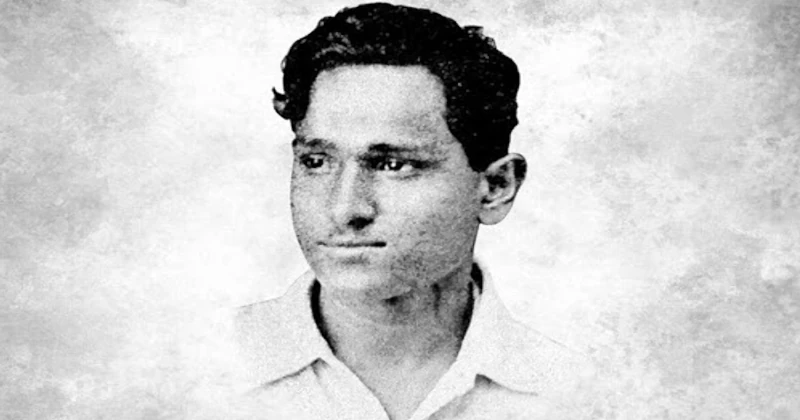
July 20 marks the death anniversary of one of India’s most remarkable yet often overlooked revolutionaries, Batukeshwar Dutt, whose sacrifices for the nation’s freedom were immense but whose post-Independence life reflected the tragic neglect faced by many freedom fighters.
There are chapters in India’s history that compel deep reflection not only on the sacrifices made during the freedom struggle but also on the treatment meted out to several revolutionaries after Independence. Batukeshwar Dutt’s life stands as one such poignant example. Despite enduring brutal British torture and sacrificing his youth for the country, he had to struggle for a livelihood after India became free. To support his family, he worked as a tourist guide and later as an agent for a cigarette company. In one of the most unfortunate episodes of his life, the District Collector of Patna reportedly demanded documentary proof that he was indeed a freedom fighter.
Batukeshwar Dutt was born on November 18, 1910, in the Bardhaman district of Bengal. Patriotism and love for Indian culture were deeply ingrained in him from childhood, values he inherited from his family. Besides being known as Batukeshwar Dutt, he was affectionately called Mohan and Battu during his early years. His father, Bihari Dutt, was engaged in social service, while his mother, Kamini Devi, was a homemaker rooted in traditional values.
When Batukeshwar was still very young, the family moved to Kanpur, where he spent most of his childhood. During his high school years, he came into contact with revolutionaries Surendranath Pandey and Vijay Kumar Sinha, who inspired him to join the revolutionary movement. His decision was shaped both by his family’s nationalist values and by a deeply disturbing childhood incident.
The incident occurred on Kanpur’s Mall Road, where he witnessed a British soldier mercilessly beating an innocent Indian child merely for walking on a road reserved exclusively for Europeans. The brutality left a lasting impression on the young Batukeshwar Dutt and strengthened his resolve to dedicate himself to the struggle against British rule.
At the time, Kanpur had emerged as a major centre of revolutionary activities, with the newspaper Pratap serving as an important contact point for freedom fighters. Through Suresh Chandra Bhattacharya, the editor of Pratap, Batukeshwar Dutt joined the Hindustan Republican Association (HRA) and soon developed a close association with the legendary revolutionary Bhagat Singh. In 1924, he also met Chandrashekhar Azad, further strengthening his involvement in the revolutionary movement.
Following the arrests made after the Kakori Conspiracy Case, revolutionaries dispersed from Kanpur to different parts of the country. Batukeshwar Dutt first moved to Bihar and later to Calcutta. In 1927, the Hindustan Republican Association was reorganised and renamed the Hindustan Socialist Republican Association (HSRA).
Within the organisation, Batukeshwar Dutt received specialised training in bomb-making and soon became one of its most skilled experts. Many of the bombs used by revolutionaries during that period were either manufactured by him or by young revolutionaries trained under his guidance.
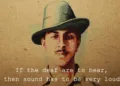
Batukeshwar Dutt became a household name after the historic Central Legislative Assembly Bomb Case of 1929, in which he and Bhagat Singh threw non-lethal bombs inside the Assembly to protest against repressive British laws and to “make the deaf hear.” Both revolutionaries courted arrest immediately after the incident.
While Bhagat Singh was sentenced to death, Batukeshwar Dutt was awarded life imprisonment. He was first transported to the dreaded Cellular Jail (Kala Pani) in the Andaman Islands before being shifted to Hazaribagh, Delhi, and Bankipur jails. During his incarceration, he endured severe torture that permanently damaged his health.
In 1938, he was released from prison on the condition that he would abstain from political activities. Although he signed the undertaking required for his release, he soon joined Mahatma Gandhi’s non-violent movement. During the Quit India Movement of 1942, he was arrested once again.
While most political prisoners were released after the movement subsided, Batukeshwar Dutt continued to remain behind bars and was finally released only in 1945.
After India attained Independence, Batukeshwar Dutt married and settled in Patna. However, unlike many had hoped, freedom did not bring him financial security. He struggled to earn a livelihood, working first as a tourist guide and later as an agent for a cigarette company. Adding to his hardships, the District Collector of Patna reportedly demanded that he furnish proof of his credentials as a freedom fighter—a painful reminder of the official neglect faced by several revolutionaries in independent India.
Recognition came late. It was only in 1958 that Batukeshwar Dutt received formal recognition and was nominated to the Bihar Legislative Council. By then, however, his health had deteriorated considerably due to years of imprisonment and torture.
He was later shifted from Bihar to Delhi for medical treatment, but his condition continued to worsen. Batukeshwar Dutt passed away on July 20, 1965, bringing to an end the life of a revolutionary whose sacrifices for India’s freedom remain etched in the nation’s history.
On his death anniversary, Batukeshwar Dutt is remembered not only for his fearless role in the freedom struggle alongside Bhagat Singh but also for the hardships he endured even after Independence a reminder that while India achieved political freedom, many of its greatest revolutionaries continued to fight battles of recognition, dignity and survival.