At the twilight of spring, under the gold-melting sun, when Punjab’s horizon-spanning mustard fields morph into a yellow ocean, and the air is filled with the collective songs of villagers ecstatic over the harvest—it is precisely then that Baisakhi arrives. Baisakhi is not merely Punjab’s harvest festival; it is the historic day on which the Sikh Guru Gobind Singh established the Khalsa Panth in 1699. Yet, the afternoon of that festive day on 13 April 1919 remains etched in the history of India as an eternal lament and a blood-soaked saga of a slaughterhouse. Protesting against the repressive Rowlatt Act and the unjust arrest of freedom-loving nationalist leaders, thousands of common people, rural farmers, and pilgrim couples returning from the fair had gathered at Amritsar’s Jallianwala Bagh. However, General Dyer tore through that festive ground with a hail of gunfire. The yellow soil of that day’s festival was painted red with the blood of thousands of unarmed people. A profound account of this historical Baisakhi cultural fair and the brutal massacre at Jallianwala Bagh is found in the celebrated book by noted historian Kama Maclean, A Revolutionary History of Interwar India: Violence, Image, Voice and Text, where she presents this bloody festival as a definitive turning point in Indian nationalism.
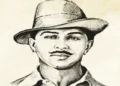
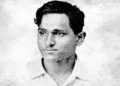
This blood-stained soil of Baisakhi was a monumental turning point in the revolutionary history of India. The day after the incident, an eleven-year-old boy arrived at the Jallianwala Bagh, having traveled on foot all the way from Lahore. His name was Bhagat Singh. Seeing the shattered toys of the fair-goers, sweet boxes, and dark stains of blood splattered all around, a wildfire ignited in the young boy’s heart. He effortlessly scooped up a handful of that blood-soaked sacred soil and filled it into a glass jar. Returning home, he held up the blood-stained jar before his sister and vowed that he would avenge every single drop of this blood and liberate this soil from British rule.
Thus, the bloody culmination of Punjab’s joyful Baisakhi festival gave birth to the most influential revolutionary in Indian history. Baisakhi was no longer just a celebration of harvest or a mere ritualistic festival for Bhagat Singh; it became an eternal flame of breaking chains, of self-sacrifice, and of anti-British struggle. The historic significance of this blood-soaked Baisakhi fair and the soil collected by Bhagat Singh in his childhood is vividly described in the very first biography of the martyr, Sardar Bhagat Singh, written in 1931 by Jitendra Nath Sanyal, which was promptly banned by the British government.
A deeply fascinating truth is that Bhagat Singh was the most outspoken and uncompromising revolutionary in the history of India’s liberation struggle. Yet, every critical juncture of his life was inextricably intertwined with the sacred calendar of Indian festivals. He did not view religious festivals through the lens of blind faith, but rather utilized them as a formidable weapon for mass awakening and solidarity against the divisive policies of British imperialism. However, the tragedy of history is that the Communist parties of India orchestrated a deeply insidious conspiracy to defame, distort, and tarnish this legacy of Bhagat Singh. Even in the days leading up to his execution as he counted his final moments in prison, the Communist mouthpieces branded him a ‘petty-bourgeois extremist’ and vilified his armed resistance as the ‘politics of revenge.’
Today, a meticulous analysis of the historical hostility, defamation, and subsequent opportunistic political appropriation by the Leftist Communists has become imperative to counteract the attempts to destroy the heroism and life philosophy of Bhagat Singh. Illuminating this aspect, political scientist Chris Moffat, in his research monograph India’s Revolutionary Inheritance: Politics and the Promise of Bhagat Singh, notes that although Bhagat Singh rejected religion at a personal level, at a social level, he transformed religious festivals into cultural weapons to combat colonial rule.
The Childhood: Hola Mohalla and the Arya Samaj
The initial seeds of Bhagat Singh’s revolutionary persona were sown within his family environment. He was born on 28 September 1907 into a patriotic Sikh family in Banga village, Lyallpur district, Punjab. The year of his birth was a turbulent time in Punjab’s agrarian movement, during which his father Kishan Singh and uncle Ajit Singh spearheaded a fierce agitation against the British government’s Canal Colonization Act. Bhagat Singh’s childhood religious and cultural milieu was shaped by an extraordinary synthesis of the reformist movement of the Arya Samaj and traditional Sikh culture. Bhagat Singh candidly acknowledged his childhood religious beliefs in his famous and timeless essay, Why I Am an Atheist.
Written in October 1930 shortly before his hanging in Lahore Central Jail, he mentions in this essay that his grandfather Arjun Singh was an orthodox Arya Samajist. Under his grandfather’s influence, Bhagat Singh was enrolled in the Dayanand Anglo-Vedic (DAV) School in Lahore, where, during his boarding school days, he would devoutly recite the Gayatri Mantra for hours alongside his morning and evening prayers. At that age, he was an earnest believer and a devout worshipper of God. This essay, Why I Am an Atheist, was posthumously published on 27 September 1931 in Lala Lajpat Rai’s nationalist English weekly, The People.
Bhagat Singh’s grandfather, Arjun Singh, was initiated into Swami Dayanand Saraswati’s Arya Samaj reform movement around 1877. Simultaneously, his family was deeply respectful of Sikh traditions. According to the history recorded in the Khalsa Chronicle, his family strictly observed the tradition of taking young Sikh boys to Anandpur Sahib during the spring Hola Mohalla festival to receive the ‘Pahul’ or Khalsa initiation. These childhood festivals introduced Bhagat Singh to the social power of Punjab’s rural culture. This childhood Arya Samajist morality and the ideal of sacrifice in the Khalsa path left an indelible mark on his mind. However, as he transitioned from adolescence to youth, he began to study the works of Karl Marx, Mikhail Bakunin, Vladimir Lenin, and Leon Trotsky deeply. Nevertheless, he never denied the core moral values of religion—such as truthfulness, service to the poor, and standing by the oppressed. He was an ardent admirer of the Punjabi poet Waris Shah’s Heer and Mirza Ghalib’s Urdu ghazals. During his days in prison, he would sing Heer aloud and keep Ghalib’s poetry books close to his chest. Thus, his atheism was not a dry opposition to religion, but rather an elevated humanitarian and cultural worldview.
Analyzing the spring Hola Mohalla and the social transformation of Sikh heritage in Punjab’s folk culture, researcher Ishwar Dayal Gaur, in his classic book Martyr as Bridegroom: A Folk Representation of Bhagat Singh, demonstrates how the heritage of Sikh bravery was deeply embedded in Bhagat Singh’s subconscious mind from his very childhood.
Jallianwala Bagh to the Tradition of Langar: Festivals as Modes of Resistance
The most horrific and epoch-making turn of festival in Bhagat Singh’s life and India’s independence movement occurred on 13 April 1919. The day was Baisakhi—Punjab’s traditional harvest festival and the holy day of the establishment of the Khalsa Panth in 1699 by Sikh Guru Gobind Singh. But the ruthless bullets of imperialistic British forces turned that day of joy into a bloody slaughterhouse. Protesting against the repressive Rowlatt Act and the unjust arrest of nationalist leaders Dr. Satyapal and Dr. Saifuddin Kitchlew, a massive assembly was organized at Amritsar’s Jallianwala Bagh, a large portion of which comprised ordinary villagers and pilgrims who had come to attend the Baisakhi fair. On the orders of General Dyer, 1,650 rounds of ammunition were fired incessantly upon the unarmed and innocent crowd, claiming the lives of over a thousand people. On the eve of this brutal massacre, describing the Ram Navami festival celebrated on 9 April 1919, historian S. Irfan Habib, in his edited volume Inquilab: Bhagat Singh on Religion and Revolution, notes that it was a historic tide of secular unity centered around a festival, where Muslims distributed sweet water (sherbet) to their Hindu brothers.
In his essay Jallianwala Bagh – Bloody Baisakhi of 1919, history professor Chaman Lal writes that the day after the massacre, the eleven-year-old Bhagat Singh walked all the way from Lahore to the blood-stained Jallianwala Bagh. He collected the blood-soaked soil in a glass bottle and brought it home, taking an oath with the martyrs’ blood as his witness to uproot British rule from Indian soil. Preserved to this day in the Khatkar Kalan Museum, that blood-drenched soil of Baisakhi remains one of the most sacred and revolutionary relics of India’s freedom struggle. Just four days before this tragedy of Jallianwala Bagh’s Baisakhi festival, on 9 April 1919, Ram Navami was celebrated in Punjab. Under the leadership of Dr. Kitchlew and Satyapal, Hindus and Muslims exhibited unprecedented solidarity in the Ram Navami procession, where Muslims distributed sherbet to Hindus. This Hindu-Muslim unity terrified the British government to such an extent that they hastily arrested the two leaders, which eventually culminated in the Jallianwala Bagh massacre on the day of Baisakhi. Bhagat Singh’s teenage mind learned from this incident that India’s traditional festivals are the greatest arenas of public unity, and it is this unity of festivals that the British feared the most.
Later, in 1923–24, when the ‘Jaito Morcha’ movement was launched under the leadership of the Akali Dal, the young Bhagat Singh played an incredibly active role. The British government had imposed Section 144, prohibiting anyone from providing food or water to the Akali Jathas. Bhagat Singh organized the youth of his village and secretly established a massive ‘Langar’ (the traditional Sikh community kitchen) to feed the Akali Satyagrahis. This was a stellar political example of transforming a spiritual tradition of hospitality into a successful logistics supply line against the inhumane laws of the British. This thrilling account of providing logistical support to the Akali Satyagrahis through a secret Langar is detailed in the famous memoir of Punjab’s contemporary revolutionary and veteran Communist leader, Sohan Singh Josh, titled My Meetings with Bhagat Singh and Other Early Revolutionaries.
The Dussehra Bomb Case and the Martyr’s Chronicle of Holi
Another highly controversial episode in Bhagat Singh’s revolutionary activities was the Lahore Dussehra Bomb Case of October 1926. A massive crowd of Hindus and Muslims had gathered at the Dussehra fair, which commemorates Ram’s victory over Ravan. A bomb explosion there claimed the lives of twelve innocent citizens and injured many others. The British police and CID took advantage of this incident and arrested Bhagat Singh in May 1927, imposing an exorbitant bail amount of sixty thousand rupees without any evidence.
In his famous book The Trial of Bhagat Singh: Politics of Justice, advocate and noted researcher A.G. Noorani demonstrates that the Lahore police had bribed a criminal named Channadin to orchestrate the bomb blast. The goal was to destroy progressive youth movements like the ‘Naujawan Bharat Sabha’ and frame Bhagat Singh for communal riots. After spending nearly five weeks in jail, Bhagat Singh was released on bail. This incident taught Bhagat Singh how British imperialism instrumentalized religious festivals in India as platforms for communal riots and political repression.
Against this communal manipulation of festivals, Bhagat Singh wielded his pen as a weapon. While working for Ganesh Shankar Vidyarthi’s nationalist newspaper Pratap in Kanpur, under the pseudonym ‘Balwant Singh’, he published a deeply emotional article on 15 March 1926 titled Holi ke Din Rakat ke Chhitke (Splashes of Blood on the Day of Holi). In this piece, he juxtaposed the joyful colors of Holi with the blood of revolutionaries, elevating it to an iconic piece of journalism. He condemned the indifference of the common masses, writing that while the countrymen were immersed in the festival of colors, the lifeless bodies of Kishan Singh Gadgaj, Santa Singh, Dilip Singh, Nand Singh, Karam Singh, and Dharma Singh—the brave Babbar Akali revolutionaries who sacrificed their lives for independence—were being lowered from the gallows in Lahore Central Jail. He extricated the festival of Holi from narrow religious confines and established it as a glowing memorial of the martyrs’ ultimate sacrifice.
The Naujawan Bharat Sabha and the Reconstruction of Festivals
The ‘Naujawan Bharat Sabha,’ founded by Bhagat Singh in March 1926, was a highly revolutionary step in the history of India’s cultural festivals. Bhagat Singh observed that mainstream political parties were attempting to sway the populace solely through religious symbols, which was inadvertently leading to the partition of the country. In response, the Naujawan Bharat Sabha began utilizing traditional fairs and festival grounds as scientific platforms for revolutionary propaganda. In various rural fairs and harvest festivals of Punjab, members of the Naujawan Bharat Sabha used ‘magic lanterns’ (slide projectors) to display images of freedom struggles worldwide and the portraits of Indian martyrs. For the illiterate rural masses, this visual exhibition was incredibly captivating. Concurrently, during festivals like Holi and Eid, the Naujawan Bharat Sabha organized community feasts where Hindu, Muslim, Sikh, and Dalit youth (stigmatized as untouchables) sat and ate together. To dispel the darkness of untouchability from society, Bhagat Singh transformed the festival of Holi into an egalitarian, socialist celebration. This unprecedented political and social effort was highly praised by the eminent historian Kuldip Nayar in his celebrated research work, The Martyr: Bhagat Singh — Experiments in Revolution.
Simultaneously, he designed a new ‘revolutionary calendar’ parallel to conventional religious festivals. The Naujawan Bharat Sabha began observing 10 May as ‘The Memorial Day of the First War of Independence.’ When the revolutionary Jatin Das embraced martyrdom on 13 September 1929 after a grueling 63-day hunger strike in Lahore Jail, his funeral procession transformed into one of the largest civic gatherings in Indian history. That mourning march, comprising several hundred thousand people, was a secular mass rally that surpassed even the crowds of Durga Puja or Muharram.
“Vande Mataram” in the Heart of the “Youth” (Yuvak), and “Inquilab Zindabad” on the Lips
The persistent efforts by Leftist historians to confine Bhagat Singh’s revolutionary ideology within a specific theoretical cage are completely refuted when one looks at the diverse documents and letters penned by the martyr himself. Particularly, Bhagat Singh’s profound respect for Bankim Chandra Chattopadhyay’s timeless anthem, Vande Mataram, and his use of this slogan in his personal life prove that he did not detach himself from the cultural and traditional roots of India’s freedom struggle. This aspect of his intellect and revolutionary consciousness has been cunningly obscured by Leftist historians.
The most irrefutable proof of this is found in an article published on 16 May 1925 in Calcutta’s famous Hindi weekly newspaper, Matwala. The weekly was an extremely influential nationalist and cultural platform, with which the great poet Suryakant Tripathi ‘Nirala’ himself was associated. In this newspaper, under the pseudonym ‘Balwant Singh’, Bhagat Singh penned an incredibly passionate and evocative call to youth titled Yuvak (Youth). An exquisite blend of Bengal’s revolutionary heritage and Punjab’s youth power was expressed in this essay. While outlining the duties of the youth and calling upon them to sacrifice their lives for the liberation of the motherland, Bhagat Singh concluded the article with a burst of revolutionary nationalist fervor. At the end of the essay, he gave a thunderous call to his countrymen, writing: “Utter – Vande Mataram!” On the historical and theoretical importance of this work, literary researcher Virendra Sisodia writes in his book, Matwala aur Hindi Navajagaran, that this composition, written under the pen name Balwant Singh, proves that Bhagat Singh’s revolutionary nationalism was deeply indebted to Bengal’s ‘Vande Mataram’ slogan and the ideals of national awakening championed by Rishi Bankim Chandra.
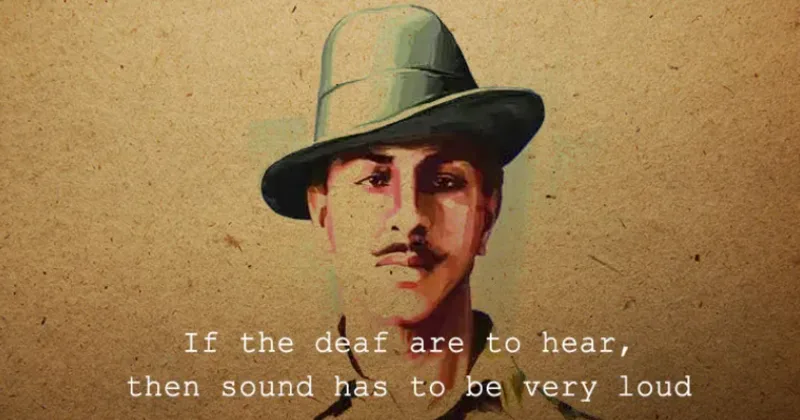
The second historical document is even more personal and emotional, highlighting the synthesis of Bhagat Singh’s family relationships and nationalist heritage. After throwing a symbolic bomb in the Central Legislative Assembly in Delhi on 8 April 1929, Bhagat Singh was arrested. The trial began. During this period, Bhagat Singh’s entry into the courtroom was a spectacle to behold—as he entered wearing a red scarf around his neck, shouting the slogan “Inquilab Zindabad.” Exactly eighteen days after the bomb incident, on 26 April 1929, he wrote an extremely important letter to his father, Sardar Kishan Singh, from Delhi Jail. The English translation of this letter is compiled in The Bhagat Singh Reader, edited by history professor Chaman Lal. Most significantly, the very first words of this letter were—”Vande Mataram.” A son paid his respects to his revolutionary father with the country’s most sacred nationalist slogan. Written from prison while facing death, this opening greeting in the letter to his father proves that for Bhagat Singh, “Vande Mataram” was not merely a political slogan, but an inseparable cultural mantra of respect and patriotism.
Ideological Disconnect and the Theoretical Attacks of the Communists
While Bhagat Singh was shaking the very foundations of India with his independent revolutionary consciousness, the newly formed Communist Party of India (CPI) maintained a strange and highly narrow-minded attitude toward him. Founded in Kanpur in 1925, this party operated entirely under the directives of Moscow’s Comintern. According to the colonial policy adopted at the Sixth Congress of the Comintern in Moscow in 1928, instructions were issued to attack Indian bourgeois nationalism and brand any form of armed revolutionary movement as ‘petty-bourgeois extremism.’
Comintern theorist Otto Kuusinen explicitly instructed that Indian Communists must unmask the bourgeois movements and armed revolutionaries of this country. Following this directive, Indian Communists launched severe attacks on Bhagat Singh and his organization, the Hindustan Socialist Republican Association (HSRA), labeling their armed resistance as ‘individual terrorism’ and a ‘psychology of revenge.’ The most glaring and indisputable historical document of this is a long editorial published on 13 November 1930 in the Communist Party’s mouthpiece, Workers’ Weekly, titled Lahore: The Cynosure of the Petty Bourgeoisie. Even as Bhagat Singh stood facing the gallows in Lahore Central Jail, this Communist mouthpiece mocked the supreme sacrifice of the revolutionaries, writing that this was not a revolution but a ‘psychology of revenge.’ According to the Communists, such armed resistance was nothing but the romanticism of petty-bourgeois youth, which was damaging the mass movement of the working class. Even in the ‘Technical Line’ document adopted at the special conference of the Communist Party of India held in Calcutta in December 1951, Bhagat Singh’s revolutionary methods were condemned again as ‘inconsistent with Marxism and harmful.’
Intellectual Humiliation and the Stigma of ‘Terro-Communism’
This onslaught by the Communists against Bhagat Singh was not confined to political theory alone; it descended into personal humiliation and defamation. One of the founders of the Indian Communist movement, Muzaffar Ahmad, standing in court during the hearings of the Kakori Conspiracy Case, severely criticized Bhagat Singh and his comrades. In his judicially recorded statement, he explicitly stated: “All revolutionaries might praise the sacrifice of terrorists, but can terrorists be called revolutionaries? I will definitely say—no, they are not revolutionaries.” Branding the nation’s most self-sacrificing revolutionaries as ‘terrorists’ in the records of a British colonial court was a supreme insult to India’s revolutionary heritage by the Left, which practically validated the repressive policies of British imperialism. The original text of Muzaffar Ahmad’s statement is detailed in the volume Communist Challenge to Imperialism from the Dock, published by National Book Agency in Kolkata, which clearly documents the intellectual hostility of the Communists toward the revolutionaries.
An even more ruthless betrayal was committed by some of Bhagat Singh’s own comrades who later joined the Communist Party. Most notable among them was Shib Varma. Shib Varma, who had worked alongside Bhagat Singh as an HSRA member, joined the Communist Party after his release from prison. To tarnish the revolutionary ideals of his former friends and prove his loyalty to the Soviet line, he coined a derogatory theoretical term: ‘Terro-Communism.’ This ugly phrase was coined to demean the supreme sacrifice of his deceased comrades, a term that Marxist historians of India have repeatedly used in their research papers to diminish the intellect and youthful ideals of Bhagat Singh.
Yet, what an extraordinary historical irony! When the British government launched the ‘Meerut Conspiracy Case’ on 20 March 1929 to suppress communist and trade union leaders, arresting 32 Leftist leaders, Bhagat Singh and Batukeshwar Dutt threw symbolic bombs in the Central Legislative Assembly on 8 April 1929 in their support and in protest against the British draconian laws—the Public Safety Bill and the Trade Disputes Bill. They stood in court and proudly stated that they had thrown these symbolic bombs to register their protest against the unjust arrest of Leftist labor leaders. In other words, Bhagat Singh risked his life to stand in solidarity with the Communists, while the Communists vilified the imprisoned Bhagat Singh as a ‘petty-bourgeois murderer’ and a ‘puppet of revenge.’ The Communists built a massive nationwide legal and promotional campaign for the accused in the Meerut case, but the Left did not organize any mass movement or even a minimal campaign to save Bhagat Singh and his comrades from the gallows, because in the eyes of the Comintern, they were theoretically ‘impure.’
Post-Independence U-Turn and Ideological Plagiarism
After India gained independence in 1947, and particularly in the early 1950s when the political foundation of the Indian Communist movement began to disintegrate, they completely altered their strategy. In December 1950, on the secret instructions of Soviet dictator Joseph Stalin, the Comintern directed Indian Communists to recognize India’s independence and integrate themselves with the country’s native revolutionary heritage to claim a share of it. Following Stalin’s directive, the Communist Party of India executed an unprecedented and shameless U-turn to exploit the glorious image of Bhagat Singh for their own interests.
Those who had ignored Bhagat Singh during his lifetime as a ‘terrorist’ and ‘romanticist’ now scrambled to claim him as their ‘theoretical ancestor.’ The chief architect of this ideological hijacking was Ajoy Ghosh, Bhagat Singh’s former comrade and later the General Secretary of the Communist Party of India. In his 1945 memoir, Bhagat Singh and His Comrades, Ajoy Ghosh had written that calling Bhagat Singh a Marxist would be a gross historical exaggeration. However, shortly after becoming the party’s General Secretary in 1953, he commissioned Communist writer G.M. Telang (writing under the pseudonym Gopal Thakur) to write a book titled Bhagat Singh: The Man and His Ideas, published by the People’s Publishing House. In this book, Bhagat Singh’s life and ideals were completely turned upside down and reconstructed to fit Soviet and Marxist molds. A comparative reading of Ajoy Ghosh’s 1945 memoir, Bhagat Singh and His Comrades, and the 1953 propaganda booklet written by G.M. Telang and published by People’s Publishing House, clearly reveals the cunning nature of this Communist U-turn.
Subsequently, through a series of three books by Soviet scholar Mitrokhin—Everest Among Men (1969), Lenin in India (1981), and Lenin and Indian Freedom Fighters (1988)—the process of layering Marxism over Bhagat Singh at an international level was completed. Shib Varma, who had mocked his deceased friends as ‘Terro-Communists’ after Bhagat Singh’s hanging, also published Selected Writings of Shaheed Bhagat Singh in 1986, claiming that Bhagat Singh had fully embraced the ideology of the Communist Party just moments before his death.
Even the mouthpiece of India’s extremist Communist party, CPI(ML)’s Liberation, went so far as to write in its October 2006 issue that “only revolutionary Communists have the right to commemorate the legacy of Bhagat Singh.” The very party whose political ancestors remained silent spectators during Bhagat Singh’s hanging is now issuing decrees to keep all other political parties in India away from Bhagat Singh’s legacy.
The Textbook Controversy and the Conspiracy of JNU Historians
This ugly attack and humiliation of Bhagat Singh by the Communists did not remain confined to political statements; it was systematically introduced into the Indian education system and university history research. The Leftist historians’ syndicate of Jawaharlal Nehru University (JNU) and Delhi University initiated a horrific intellectual conspiracy to erase the true patriotic ideals of Bhagat Singh from the minds of the younger generation of Indians.
The central pillar of this conspiracy was the history book India’s Struggle for Independence, jointly authored by Bipan Chandra, Mridula Mukherjee, Aditya Mukherjee, K.N. Panikkar, and Sucheta Mahajan, published in 1988. Used as a reference book in Delhi University’s curriculum, the twentieth chapter of this book repeatedly refers to brave revolutionaries like Bhagat Singh, Chandrashekhar Azad, and Surya Sen (Masterda) as “revolutionary terrorists.” Even the looting of the Chittagong Armoury and the assassination of police officer Saunders by Bhagat Singh, Shivaram Rajguru, and Sukhdev to avenge Lala Lajpat Rai’s death were labeled as “acts of terrorism” in this book. A close analysis of every line of the twentieth chapter of India’s Struggle for Independence, jointly written by Bipan Chandra and other self-proclaimed progressive Leftist historians, reveals clear evidence of the malicious attitude of Marxist historians toward the brave revolutionaries of India.
In 2016, the family members of Bhagat Singh expressed immense anger against this derogatory theoretical naming. Bhagat Singh’s nephew, Abhay Singh Sandhu, wrote a strong protest letter to the Delhi University authorities and the then Ministry of Human Resource Development, stating: “Even the British who hanged Bhagat Singh referred to him as a ‘true revolutionary’ in their judgment and never used the word ‘terrorist.’ Yet, the Marxist academicians of independent India are poisoning the minds of the younger generation by labeling the country’s great revolutionaries as terrorists.” In the Rajya Sabha, JDU MP K.C. Tyagi and Subramanian Swamy also expressed deep anger over this issue. In the face of intense agitation, Delhi University was finally forced to ban this book.
The hypocrisy of the Communists becomes glaringly obvious when, on one hand, Marxist historians have no qualms about insulting Bhagat Singh as a ‘terrorist,’ yet, on the other hand, they place Joseph Stalin—the executioner of millions in the Soviet Union—on a highly revered pedestal of worship despite their severe opposition to paintings or idol worship. Furthermore, the consecutive incidents of Bhagat Singh being referred to as a ‘terrorist’ in the history examination paper of Vidyasagar University in West Bengal in July 2015 and in the speeches of political science professors at Jammu University prove how deeply this toxic seed sown by Leftist historians has taken root in India’s education sector. In a booklet published by the Lok Sabha Secretariat in December 2005, Bhagat Singh was also branded as a “terrorist who destroyed public property,” a characterization against which the then Prime Minister Manmohan Singh also expressed deep anger.
The Fair of Eternal Memory
The chapter of Bhagat Singh’s life and his intersection with India’s religious-cultural festivals has transformed into an eternal truth today. The atheist revolutionary who reconstructed external religious rituals into social and revolutionary frameworks has been elevated by history today as a new deity of national integration. After hanging them on 23 March 1931, the British police secretly cremated the lifeless bodies of Bhagat Singh, Rajguru, and Sukhdev on the banks of the Sutlej River in Hussainiwala, Firozpur. Today, every year on 23 March, the ‘Shaheedi Mela’ (Martyrs’ Fair) held at that cremation ground in the presence of hundreds of thousands of people surpasses the grandeur and splendor of any celebrated religious festival in India. This is an extraordinary historical irony—the man who declared himself an atheist has had his memorial turned into a place of pilgrimage by the people of India.
On the other hand, the Communist parties that had abandoned, slandered, and after his death tried to force him into a Marxist mold through deceitful means, have today become highly marginalized forces in Indian politics. The popularity and moral heights that Bhagat Singh achieved in his 23 years of life could not be touched by the Communists even after a century of effort.
Even Netaji Subhash Chandra Bose, in his classic 1935 book The Indian Struggle, wrote about the backdrop of the Karachi Congress, stating that Bhagat Singh’s soaring popularity at that time had reached such a peak that it stood equal to that of Mahatma Gandhi. This ultimate truth proves that Bhagat Singh is not the property of any narrow political party; he is not a prisoner within any Leftist theoretical walls. He is the heroic son of Bharat Maa, in whose heart was “Vande Mataram” and on whose lips was “Inquilab Zindabad.”