The history of India’s freedom struggle is not merely the history of famous leaders, major cities and well-known battles. It is also the story of countless known and unknown heroes who sacrificed everything for their motherland, self-respect, freedom and dignity.
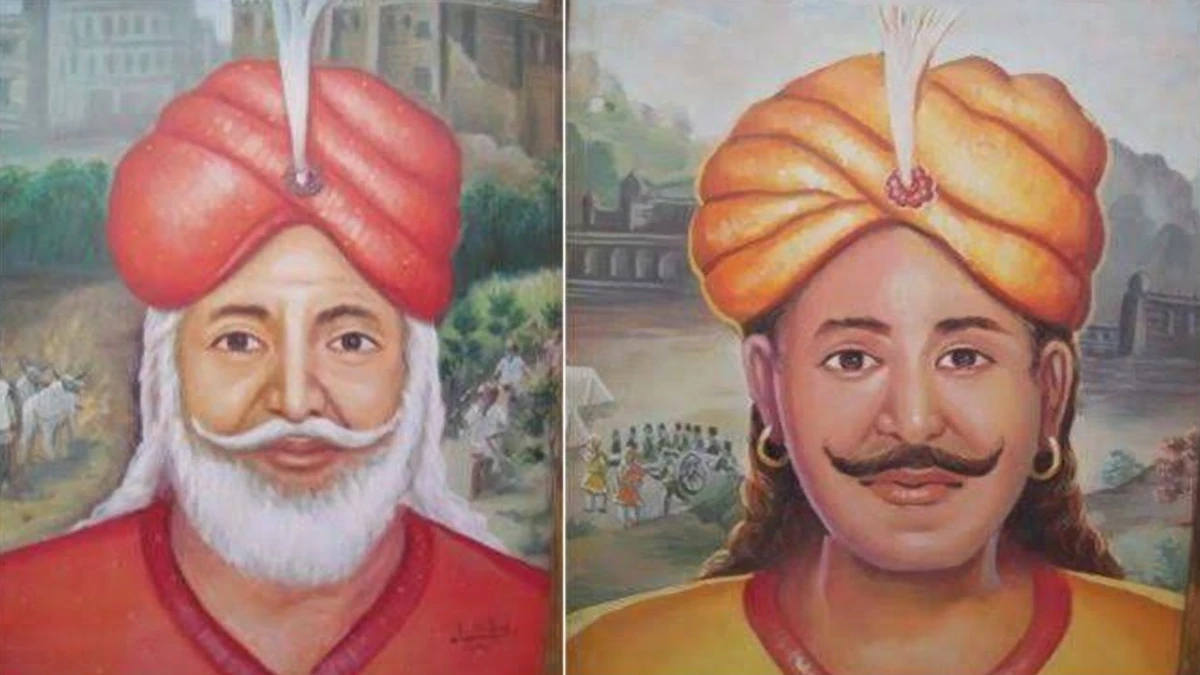
Jabalpur holds a particularly inspiring chapter of this history the immortal sacrifice of Raja Shankar Shah and his son Kunwar Raghunath Shah.
On September 18, 1857, the British colonial authorities executed the father and son by tying them to the mouths of cannons. Their sacrifice became one of the most powerful symbols of resistance to British rule in the Jabalpur region and in the wider Gondwana tradition.
Their story reminds us that freedom was not achieved through political negotiations alone. It was also built through the courage, suffering and sacrifices of thousands of Indians who refused to accept foreign domination.
A poem that became a voice of resistance
Raja Shankar Shah was not only a ruler and warrior; he was also a poet. His poetry expressed the people’s anger and resistance to British rule.
According to government accounts, the British authorities regarded one of his poems as inflammatory and rebellious. His poetry became one reason for the severe action taken against him and his son.
The traditionally cited version of the poem includes powerful invocations against British forces and appeals to Goddess Kali and Goddess Chandi to destroy the enemy.
One commonly cited passage is:
“Moond mukh dandino ko, chuglon ko chabai khai,
Khoond daar dushtan ko, shatru sangharika.
Maar angrez rez par, dei maat Chandi,
Bache nahi bairi, bal-bachche sanharika…”
The exact wording of the poem varies across historical accounts. What remains significant is its historical context: it represented the spirit of resistance against colonial rule during the uprising of 1857.
For the British authorities, such poetry was not merely literature. It was a way to awaken resistance and mobilise people against foreign rule. For the people, however, it became a voice of courage.
When the cannon could not silence their spirit
On September 14, 1857, British authorities arrested Raja Shankar Shah and Kunwar Raghunath Shah. Historical accounts say they found material connected with resistance against British rule during the search of their residence.
Four days later, on September 18, they were sentenced to death. The method chosen by the British was deliberately brutal: the father and son were tied to the mouths of cannons and executed.
The purpose was not merely to punish two individuals. It was also intended to frighten others who might resist British authority. But history produced the opposite result. The cannon destroyed their bodies, but it could not destroy their memory. Their sacrifice continued to inspire generations.
The long tradition of Janjati Resistance
The sacrifice of Shankar Shah and Raghunath Shah should not be viewed as an isolated incident of 1857.
The Janjati and indigenous communities of India have a long history of resistance in defence of their territories, dignity, cultural identity and self-rule.
The legacy of Rani Durgavati and Veer Narayan is one of the most important examples from the Gondwana region. Rani Durgavati fought against the Mughal forces in 1564 and sacrificed her life rather than surrender her kingdom and honour.
Centuries later, during the colonial period, numerous Janjati heroes continued this tradition of resistance. Among them were Tantia Bhil, Birsa Munda, Sidhu, Kanhu, Chand and Bhairav, along with many other known and lesser-known heroes.
Their struggles show that India’s freedom movement cannot be fully understood without recognising th contribution of Janjati communities. The sacrifices of Janjati rulers and warriors form an important part of India’s larger national history.
Jabalpur still remembers its Heroes
The memory of Shankar Shah and Raghunath Shah lives on in Jabalpur. Their sacrifice lives on through public programmes, commemorative events, cultural traditions, and social organisations. Generation after generation continues to pay tribute to the father and son who chose sacrifice over submission.
This continuity of memory is significant.
History is not merely something preserved in books, museums and archives. When a society remembers its heroes and passes their stories to its children, history becomes a living tradition.
That is why September 18 remains important for Jabalpur and for the wider region.
What their sacrifice means for the new generation
The significance of September 18 should not be limited to ceremonies, garlands and formal tributes.
The younger generation needs to understand why these heroes sacrificed their lives.
Their story teaches us that the motherland is not merely a geographical territory. It represents our shared civilisation, culture, traditions, memories, language, identity and collective existence.
At the same time, we should understand their sacrifice in the historical context of 1857. The resistance of that period was directed against colonial domination and the loss of political and social autonomy.
For today’s generation, patriotism does not necessarily mean facing a battlefield or a cannon. Today’s challenges are different. Today, serving the motherland means:
- fulfilling one’s responsibilities honestly;
- acquiring knowledge and promoting education;
- preserving India’s cultural heritage;
- protecting the environment;
- strengthening social harmony;
- respecting constitutional values;
- promoting national unity;
- and contributing to the economic and social development of the country.
This can become the most meaningful tribute to those who sacrificed their lives for freedom.
A message beyond caste and division
The story of Shankar Shah and Raghunath Shah also provides an opportunity to reflect on social unity. Their sacrifice should not be confined to one community or one social group. It should be remembered as part of India’s broader freedom struggle.
The lesson for the younger generation is that narrow divisions of caste, region and social identity should not become barriers to national unity.
A strong nation is built when people recognise both their diversity and their shared responsibility towards the country. The message is therefore not one of hatred or violence. It is a message of unity, responsibility, dignity, self-respect and commitment to the nation.
The relevance of September 18
The question before us today is simple, Are we learning from the sacrifices of those who came before us?
Shankar Shah and Raghunath Shah lived when the British had superior military power. Yet they refused to surrender their dignity and commitment to their land.
Today, independent India gives us opportunities that earlier generations could only dream of—education, democracy, technology, freedom of expression and constitutional rights.
Therefore, our responsibility is also greater. We must use these freedoms responsibly to build a stronger, more educated, more united and more prosperous India. The meaning of sacrifice changes with time. For them, sacrifice meant facing the colonial power and ultimately giving their lives.
For us, sacrifice can mean putting national and social responsibility above selfish interests.
A salute to the immortal Father and Son
On September 18, 1857, when the cannon thundered in Jabalpur, the British authorities may have believed that they had silenced two voices forever. History proved otherwise. Shankar Shah’s poetry survived. The courage of Raghunath Shah survived. Their memory survived.
And their story continues to reach new generations.
Therefore, September 18 is not merely a Day of Sacrifice. It is a day of remembrance, self-respect, national responsibility and unity. As we bow before Raja Shankar Shah and Kunwar Raghunath Shah, we should remember their sacrifice not as the property of any single community, but as a proud chapter of India’s larger struggle against colonial rule.
Salute to the immortal father.
Salute to the immortal son.
Salute to the motherland for which they sacrificed everything.
Shat-Shat Naman
Raja Shankar Shah — Immortal Martyr.
Kunwar Raghunath Shah — Immortal Martyr.Their sacrifice should continue to remind us:
Individuals come and go.
Generations change.
But the responsibility to protect the dignity, unity and freedom of the motherland must never end.