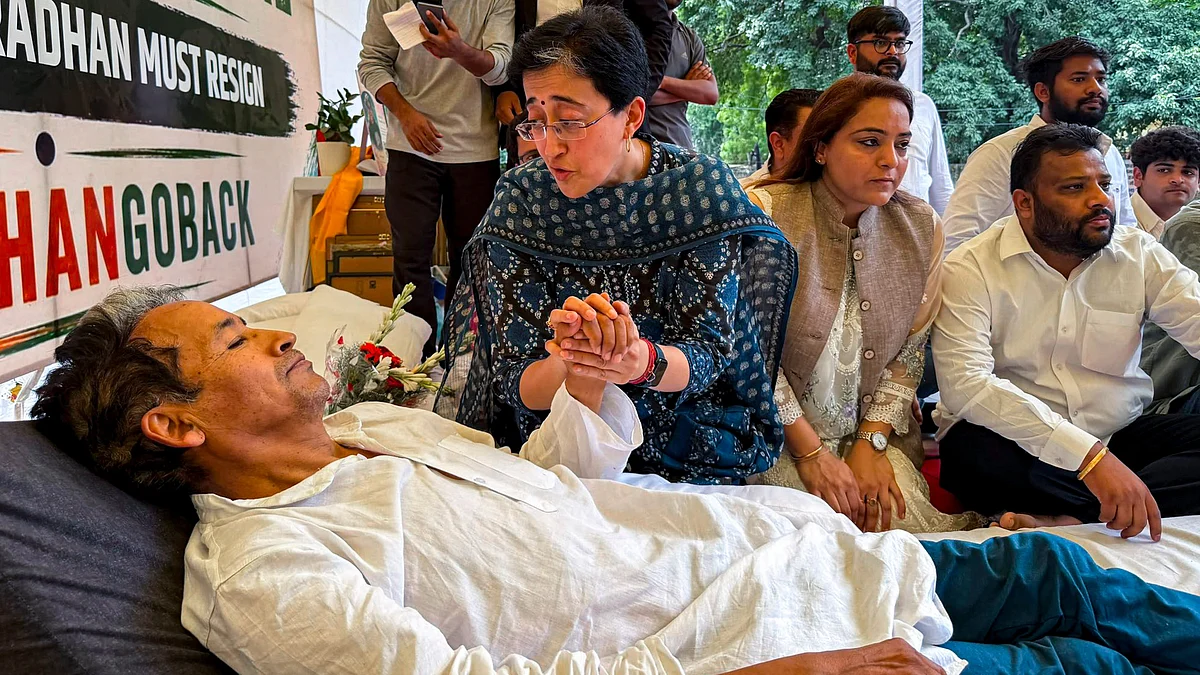
Sonam Wangchuk’s announcement that he is prepared to end his hunger strike under certain conditions on the opening day of Parliament’s Monsoon Session has triggered political debate over the timing and strategy of the protest.
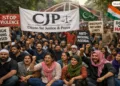
The activist, who has been on an indefinite fast since June 28 over alleged irregularities in national entrance examinations, said he would end his fast if the Centre accepts responsibility for failures in the education system, if he and leaders of the Cockroach Janta Party (CJP) are allowed to present their demands before Members of Parliament, or if MPs visit him at Safdarjung Hospital and assure him that the issue will be raised in Parliament.
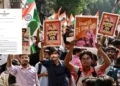
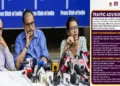
The coincidence of these conditions with the very first day of the Monsoon Session has prompted many to ask whether the agitation was always intended to culminate in a march towards Parliament. Delhi Police had already imposed restrictions under Section 163 of the BNSS, stepped up security across central Delhi and stated that no permission had been sought or granted for the proposed “Chalo Sansad” march.
The sequence of events has raised several questions. If the principal objective was to seek accountability over alleged examination paper leaks and education reforms, why was the decisive phase of the protest aligned with the opening of Parliament?
Was this simply an attempt to maximise public attention for the issue, or did the organisers anticipate that the protest would become a major political flashpoint on the first day of the session?
Another question being debated is whether institutional avenues had been adequately exhausted before escalating the agitation. Wangchuk has previously interacted with senior government functionaries, including the Union Education Minister, on education-related issues.
If he enjoys such access, it is a question of whether further engagement through established channels remains possible before announcing a Parliament march. Supporters, however, may contend that previous interactions did not produce the outcomes they sought, prompting a more visible campaign.
The presence of leaders and supporters from multiple political parties at what has been projected as a student-centric movement has also become a subject of discussion. Was their participation merely an expression of solidarity with students demanding accountability, or did it indicate that the protest had acquired a broader political dimension?
Political backing is common in public agitations, but it also inevitably raises questions about whether a movement remains non-partisan or becomes intertwined with wider political objectives.
The demand for the resignation of Union Education Minister Dharmendra Pradhan has further added a political edge to the campaign. While the organisers have maintained that the protest is centred on education reforms and accountability, many argue that calls for a minister’s resignation naturally move the agitation beyond administrative reform into the realm of political contestation.
The timing of Wangchuk’s latest message has also drawn attention. Rather than announcing an unconditional end to his fast or outlining a roadmap for dialogue after the commencement of Parliament, the conditions are directly linked to parliamentary engagement on the opening day itself. This has prompted many to ask whether the strategy was designed to ensure that the issue dominated the political discourse as legislators assembled for the Monsoon Session.
Supporters of Wangchuk are likely to argue that Parliament is the appropriate forum to seek accountability on issues affecting students across the country and that raising the matter when MPs are in session is both logical and democratic. Many, however, question whether the convergence of the fast, the proposed march and the opening day of Parliament was intended primarily to generate maximum political visibility.
As Parliament begins its Monsoon Session, these competing interpretations are likely to remain at the centre of the debate. Whether the protest is ultimately viewed as a determined campaign for education reform or as a politically timed mobilisation will depend on evidence, public perception and the responses of both the government and the organisers. At present, the motivations behind the strategy remain a matter of political debate rather than established fact.