MUMBAI: Mumbai Police had clearly denied permission for the Cockroach Janata Party (CJP) protest at Shivaji Park on Gandhi Jayanti, i.e. October 2. Yet, the ‘cockroaches’ ignored the law and proceeded to call for participation. And probably are now wondering how they failed to attract their target crowd of GenZ and what went wrong in the toolkit formula.
Yeh Toh Reverse UNO Ho Gaya 😂😂
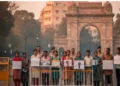
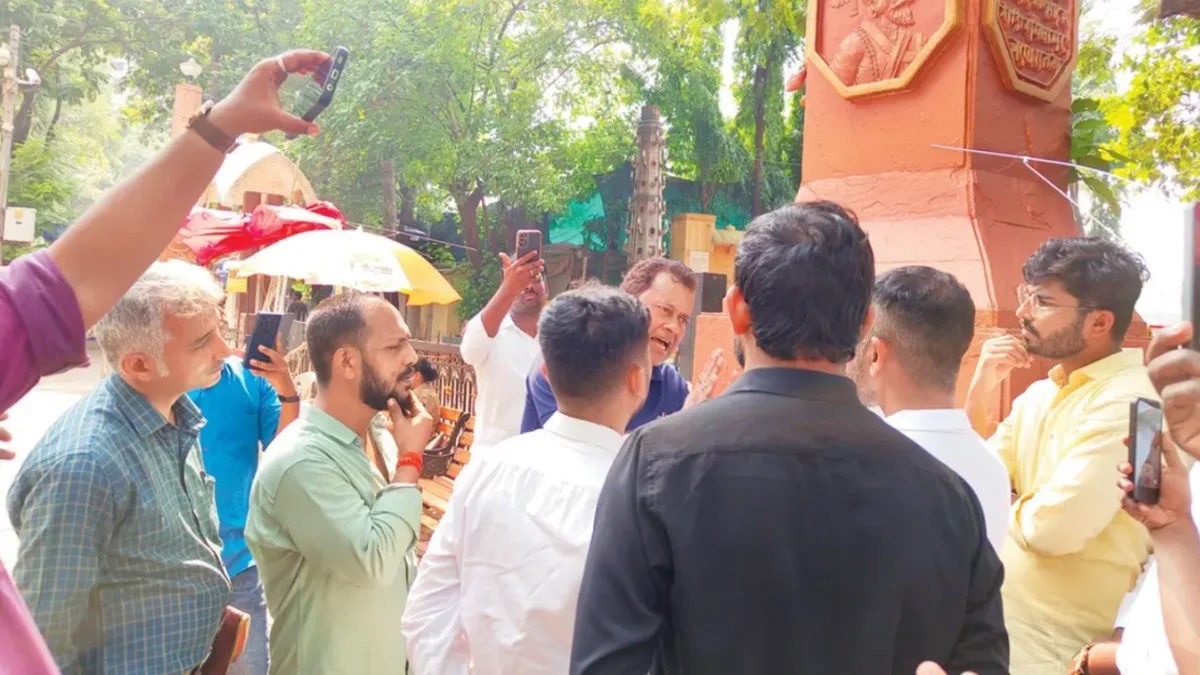
Rashtrawadi Members of "Gen next Mumbai" holds a protest AGAINST the Cockroach Janata Party in Mumbai.
And if crowd is the criteria, they're much more than 🪳s outside Shivaji Park.
Dipke, it's done, Bro. pic.twitter.com/bqHnmTAK2j
— BhikuMhatre (@MumbaichaDon) October 2, 2026
The Shivaji Park police station cited a 2013 Bombay High Court order in PIL 116/2009 that restricts non-sporting activities at the ground, a 2016 Maharashtra government directive requiring BMC clearance, the area’s status as a silence zone in a residential locality, and risks of noise pollution plus severe traffic congestion that could hinder access to nearby hospitals.
Gen-Z 🪳: "Modi Sarkar Vote-Chor hai"
Reporter: "Tumhara naam voter list mein hai?”
Gen-Z 🪳: “Haan, Hai”
Reporter: “Toh kaise chor?” 😭
Even reporter couldn’t stop his laugh 😂 pic.twitter.com/1jpwRV3zs0
— BhikuMhatre (@MumbaichaDon) October 2, 2026
Organisers had not obtained the mandatory Brihanmumbai Municipal Corporation permission either. Civic officials confirmed no application had even been filed in time. CJP founder Abhijeet Dipke announced a “Jail Bharo Andolan” anyway and proceeded with the gathering near the park.
Residents voice strong opposition
Shivaji Park locals had already expressed anger in the days leading up to the event. Residents and members of local Advanced Locality Management groups objected to repeated political demonstrations turning their neighbourhood into a disruption zone.
Our on-ground reporters were at the CJP protest in Mumbai today. Hear what they actually saw, from the crowd size to how the day played out.
Share..! pic.twitter.com/VRCUT2eDhl
— Touch Grass (@_itouchgrass__) October 2, 2026
Javed Akhtar’s tweet on Shivaji Park residents
On 2 October 2026, lyricist and writer Javed Akhtar (@Javedakhtarjadu) posted:
“I am so happy that some residences of Shivaji park are getting sensitive about the noise pollution and asking the authorities to cancel the protest of CJP today at Shivaji park. I am hundred percent sure that they will raise the same objection with the same intensity if not more when ever there is any jalsa of any political party of Maharashtra is planned at Shivaji park.”
The post was widely seen for its true nature: a sarcastic dig at local residents who had objected to the unauthorised CJP gathering on grounds of noise, traffic and disruption in a residential silence zone.
Resident Rebuttal
Locals and observers pushed back strongly. One common line of reply, echoed in comments under the tweet and in local reporting, was that residents have every right to decide what disturbs their daily life in their own neighbourhood, and outsiders lecturing them is unwelcome.
A representative tone from replies included: “Let them decide what they want. Don’t be a dictator Akhtar sahab!!” and similar comments stressing that Shivaji Park is a residential area with schools, hospitals and daily walkers, not a free-for-all venue.
Residents had earlier confronted CJP members and submitted memoranda citing High Court restrictions, noise limits in the silence zone, and past inconvenience (traffic jams, blocked school exits, emergency vehicle issues).
Local voices like Sunil Bhagwat and others told reporters that frequent protests inconvenience ordinary people who use the park for walks and daily life.
Shabana Azmi and foreign funding links
Several netizens pointed out that Shabana Azmi (Javed Akhtar’s wife), who addressed the CJP stage, has long been associated as chairperson/co-chair of ActionAid India (ActionAid Association).
Social media and reports have highlighted that the organisation has received substantial foreign contributions over the years under FCRA, with cumulative claims exceeding ₹1,000 crore in some public discussions.
ActionAid is an international network with UK roots (ActionAid International has significant UK presence and funding channels), and critics have repeatedly called for greater scrutiny of its foreign inflows and utilisation.
Celebrities and leaders present, yet limited stir
Despite the presence of Shabana Azmi, Vishal Dadlani, Naseeruddin Shah, CJP leaders Abhijeet Dipke, Ashutosh Ranka and Saurav Das, and reported support or presence linked to Uddhav Thackeray’s Shiv Sena (UBT), the gathering failed to generate organic mass numbers or sustained energy beyond organised sections and media/creators.
On-ground accounts continued to describe a limited crowd (around 2,000 at many points), large media presence, and attendees with little grasp of the core issues, while the Gen Next Mumbai counter-protest remained visible and vocal.
The combination of denied permission, resident anger and thin genuine turnout kept the event from becoming the large-scale mobilisation that had been projected.
Residents of Shivaji Park were upset with the traffic jams, noise, restricted movement for senior citizens, and potential blockage of emergency vehicles. A heated argument reportedly broke out between residents and CJP members beforehand, with locals insisting protests belong at designated sites like Azad Maidan rather than residential grounds.
Sparse genuine participation and on-ground reality
Independent on-ground accounts and video reports from the day painted a picture far removed from the “massive” claims circulating in sections of the media.
Aunty National cool banne chali thi, bhai ne saara bukhar utar diya. 🔥🤣 pic.twitter.com/zCHH2TVyeT
— Nikhil Bhamare बागलाणकर (Modi Ka Parivaar) (@The_NikhilB) October 2, 2026
Crowd estimates from neutral observers and local accounts hovered around 2,000 at peak, with a substantial portion consisting of content creators, media personnel and organised supporters.
"Abhijeet Dipke Go Back" 🔥
MASSIVE DEMONSTRATION in Mumbai by 'Gen Next Mumbai' AGAINST the Cockroach Janata Party and its founder.
=> Leftist media will NEVER show you this. They only exist to shield AAP & provide 24/7 airtime to its B-team. pic.twitter.com/hkapJ8Dj1v
— Megh Updates 🚨™ (@MeghUpdates) October 2, 2026
Many ordinary attendees appeared unfamiliar with the core issues. Several could not name Chief Election Commissioner Gyanesh Kumar, with some referring to him as a minister, and others admitted they were unaffected by the alleged Special Intensive Revision (SIR) name deletions that formed the protest’s central plank.
Videos circulating on X captured telling exchanges. In one, a young protester chanting “Modi Sarkar Vote-Chor hai” confirmed his own name remained on the voter list, leaving the reporter laughing.
#FlopShow pic.twitter.com/BLsTGjGPGG
— Ranjit Shetty©🚩 (@RanjitShetty) October 2, 2026
Other clips showed limited understanding of the demands among rank-and-file participants.
Gen Next Mumbai delivers a clear rebuttal
While CJP attempted to occupy the spotlight, members of Gen Next Mumbai organised a visible and energetic counter-demonstration against the outfit and its founder. Slogans of “Abhijeet Dipke Go Back” rang out as the group accused CJP of misleading youth and functioning as a B-team for certain political interests.
Participants stressed they had gathered to uphold the Constitution, gathering near symbols of national and constitutional respect, and declared that the conduct of the Cockroach Janata Party would not be tolerated. Visuals from the counter-protest showed a determined local presence that many observers noted matched or exceeded the energy of the main gathering in certain stretches.
A predictable pattern of hype
The event followed the familiar script of saturation coverage from sympathetic outlets, celebrity cameos and digital amplification.
Yet the combination of denied permission, resident resentment over avoidable disturbance, thin organic turnout and a sharp local pushback exposed the limits of the narrative.
For many Mumbaikars living around Shivaji Park, the day simply brought inconvenience without delivering the broad public mobilisation that had been promised.
The episode underscores a recurring question: when permission is refused on clear legal and civic grounds, and local residents object to the disruption, does proceeding anyway strengthen democratic protest or merely impose costs on ordinary citizens who never asked for the spectacle?