The Madhya Pradesh Cabinet on July 19, approved the draft Uniform Civil Code (UCC) Bill, clearing the way for its introduction in the Monsoon Session of the state Assembly beginning Monday. The proposed legislation seeks to establish a common civil framework for matters related to marriage, divorce, maintenance, inheritance and live-in relationships across all communities, while exempting Scheduled Tribes covered under Articles 342 and 366(25) of the Constitution.
The draft law introduces significant reforms to personal laws by prohibiting practices such as triple talaq, polygamy and nikah halala. It also mandates compulsory registration of marriages and divorces irrespective of religion and prescribes a uniform legal framework for civil matters.
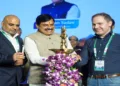
Chief Minister Mohan Yadav announced the Cabinet’s decision after a special meeting held in Jagdishpur, formerly known as Islam Nagar, near Bhopal. Describing the move as a “historic step”, Yadav said the proposed law would ensure equality, justice and secularism by bringing all citizens under a common legal framework. He clarified that the legislation would not apply to Scheduled Tribes and communities whose traditional rights are protected under Part XXI of the Constitution.
The proposed UCC also introduces legal provisions governing live-in relationships. Couples intending to live together will be required to submit a “Statement of Live-in Relationship” to the Registrar within one month of beginning the relationship. Both partners must be at least 18 years of age, must not already be married, should not fall within prohibited degrees of relationship and must enter the relationship voluntarily.
Failure to register a live-in relationship within the stipulated period may attract imprisonment of up to three months or a fine of Rs 10,000. Furnishing false information may lead to three months’ imprisonment and a fine of Rs 25,000, while failing to submit the required statement despite receiving notice from the Registrar could invite imprisonment of up to six months along with a fine of Rs 25,000.
The draft Bill also grants legal recognition to children born through marriage, adoption, surrogacy, assisted reproductive technology (ART) and live-in relationships. Such children will enjoy equal legal status and inheritance rights. In custody disputes, courts will be required to treat the welfare and best interests of the child as the foremost consideration.
Women in live-in relationships have also been provided legal safeguards. If a male partner abandons the relationship, the woman can approach a competent court seeking maintenance under the proposed law.
A key provision of the Bill mandates monogamy across all communities, allowing only one living spouse at any given time. It also declares marriages based on invalid consent or those falling within prohibited relationships as void, unless specifically permitted under recognised customs.
Registration of marriages and divorces will be carried out through the MP e-Nagarpalika Portal in urban areas, while rural registrations will be handled through the Sub-Divisional Magistrate (SDM), municipal bodies or gram panchayats.
The proposed legislation criminalises practices such as nikah halala. According to the draft, compelling, promoting or forcing a divorced woman to undergo humiliating or degrading conditions, including nikah halala, before remarrying her former husband will constitute a punishable criminal offence.
Chief Minister Yadav said the draft was prepared by the Justice Ranjana Desai Committee, which submitted its report to the state government last week after extensive consultations. He stated that the committee examined provisions contained in the Uniform Civil Codes enacted in Uttarakhand (2024), Gujarat (2026) and Assam (2026) while preparing the Madhya Pradesh draft.
The Chief Minister said the primary objective of the proposed law is to ensure equality before law, strengthen women’s rights and remove long-standing discrimination arising from different personal laws governing marriage, divorce and inheritance. He added that the legislation would also preserve religious customs, ceremonies and traditional practices so long as they remain consistent with public morality and public policy.
Referring to public consultations conducted during the drafting process, Yadav said nearly 80 per cent of Muslim women and around 40 per cent of Muslim men who appeared before the committee supported the proposed legislation. He also stated that the minimum marriageable age under the proposed law would be 21 years for men and 18 years for women.
The draft further provides equal inheritance rights to sons and daughters irrespective of marital status, while widows and widowers will enjoy equal rights in matters relating to succession. The legislation also seeks to create a uniform legal framework for maintenance, succession and family-related civil matters across communities.
With the Cabinet’s approval, the Madhya Pradesh Uniform Civil Code Bill, 2026, is now set to be tabled in the state Assembly during the Monsoon Session.