याते सिन्धो रजसि रेचनादिवो मयि देवो महिमा प्र ब्रवीति।
अदभ्यः प्र स्यन्दमाना वि चक्रमुर्महीमवेव धुनिरस्य पूरणः॥
Rig Veda (10.75.3)
(From earth, the roaring sound ascends to heaven; she speeds with power, displaying her own economic and spiritual majesty.
Like continuous bursts of rain emptied from a cloud, the Sindhu rushes onward, bellowing like a mighty bull)
Complexity theory suggests that when a system accumulates too many independent variables, its feedback loops lose regulatory capacity. Beyond a critical threshold, a multivariate system ceases to adapt and may experience systemic failure. In geopolitical contexts, analysts often mistakenly add more variables to models, analysing shifting alliances, global market fluctuations and regional conflicts. However, when a geopolitical landscape becomes overcrowded with interlocking variables, it loses predictability and becomes fragile, making it susceptible to disruptions that can simplify the entire system.
There is perhaps no greater contemporary manifestation of this systemic phenomenon than the question of Pakistan-Occupied Jammu and Kashmir (PoJK) and Gilgit-Baltistan (GB). For decades, the political fate of these regions has been viewed through an incredibly complex, multivariate matrix. If one attempts to forecast whether these territories will revert to Indian sovereignty within the next five years, the analytical model immediately becomes congested with an overwhelming number of volatile factors. It requires an evaluation of the United States and its shifting posture toward South Asia, the strategic recalibration of Iran, global oil and natural gas availability and the competitive race for rare earth minerals found in the high-altitude terrains of Central and South Asia.
The internal challenges facing Pakistan are significant, marked by the ongoing alienation of Balochistan, the instability in Afghanistan under the Taliban, rising Pashtun nationalism and severe security issues in Khyber Pakhtunkhwa. Pakistan’s narrow geographic structure, confined between a hostile west and a powerful east, limits its flexibility. To navigate these constraints, Islamabad has often compromised its sovereignty, shifting from being an American ally to a client state of China through the China-Pakistan Economic Corridor.
From a macro-geopolitical perspective, GB and PoJK occupy an incredibly vital space within Nicholas Spykman’s classic Rimland Theory. Spykman argued that the key to global dominance lay not in the vast, landlocked Heartland of Eurasia, but in its maritime fringes and peripheral coastal zones—the Rimland. GB sits precisely at the high-altitude pivot where the Eurasian Heartland meets the South Asian Rimland, serving as the sole overland conduit connecting China to the Arabian Sea. If Spykman’s theory holds true, this is an area of paramount global importance, a geographical choke point where the strategic ambitions of Washington, Beijing, Moscow and New Delhi directly collide. When a regional situation becomes this dense, multivariate, and heavy with geopolitical baggage, conventional wisdom suggests the stalemate will persist because of the immense external forces holding it in place.
Yet, complexity theory tells us that this is precisely when the system is most vulnerable to a radical, reductive collapse. Amidst this dizzying array of macro-politics, one simple, brutal and unyielding ecological and geographical fact emerges: the existential reality of the Indus River system and the terrifying truth that Pakistan is rapidly becoming a water-starved nation. Every single variable in Pakistan’s future—its economic survival, its agricultural viability, its social cohesion and its military capacity—depends entirely on securing the waters of the Indus. In this stark light, the geopolitical theatre of PoJK and GB ceases to be merely a question of map lines, historic treaties or ethnic identity. It reveals itself as a raw, desperate struggle over the plumbing of an entire subcontinent. Indeed, even 200 million people in India depend on the Indus for their daily life and welfare — not a small number.
The observed systemic passivity is primarily attributed to two factors: a prolonged deficit in military and economic capability during the mid-to-late twentieth century and a lingering colonial legacy among our strategic elite. For decades, New Delhi’s diplomats prioritized international validation and adherence to a sanitized, rules-based order over pragmatic national interests, leading to diminished influence in foreign capitals. In contrast, Pakistan’s foreign policy has adeptly leveraged its geostrategic position to project an illusion of parity with India. Furthermore, our decision-making often lacks coherent, long-term vision, rendering its leaders susceptible to the subtle influences of the US Deep State, which seeks to maintain a delicate balance of power in South Asia by restraining India.
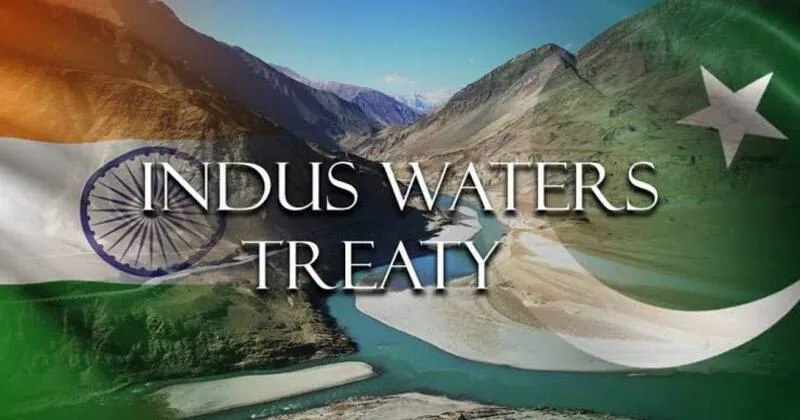
Despite this long history of strategic missteps and structural timidity, there is one critical area where New Delhi has recently broken from its passive traditions and executed a deeply potent strategic manoeuvre: the decision to hold the Indus Waters Treaty (IWT) in abeyance by demanding formal modifications to the 1960 pact. Signed during an era of profound Indian idealism, the IWT was exceptionally generous to Pakistan, allocating nearly eighty per cent of the entire Indus system’s water to the lower riparian state. By formally challenging the treaty’s provisions and reviewing its terms under the shadow of modern ecological realities, India has struck the single most sensitive nerve in the Pakistani psyche.
The psychological and political reaction within Pakistan has been nothing short of panic. For decades, the ruling elites in Islamabad constructed a national narrative rooted in a pan-Islamic identity, artificially decoupling themselves from the geography of the subcontinent and imagining their lineage as children of Arabs, Persians and Turks. Yet, faced with the terrifying prospect of losing their primary water source, they are experiencing a sudden, desperate civilizational crisis. They are suddenly discarding these manufactured West Asian identities and frantically “rediscovering” themselves as the historical children of the Indus Valley Civilisation. This frantic cultural pivot is driven entirely by fear.
The situation in the Indus basin is concerning due to decades of environmental degradation and mismanagement by Pakistan, leading to increased silting of river systems. This silting poses a severe geopolitical threat by reducing the water-holding capacity of major dams such as Tarbela and Mangla. As rivers lose depth, the region faces a dangerous cycle of devastating flash floods followed by prolonged droughts.
Because India is the upper riparian state with respect to the Chenab, the Jhelum and the main stem of the Indus, New Delhi holds absolute structural control over the flow of these lifelines before they ever cross the Line of Control. The elite in Islamabad are intensely aware that India possesses the legal and engineering capacity to utilise its full, unexploited allocations under the treaty for run-of-the-river hydroelectric projects, storage facilities and agricultural irrigation.
They recognise that if India strictly, completely and unsentimentally enforces its rights as an upper riparian state, it can fundamentally alter the timing and volume of water entering their agricultural heartland. For a country whose entire existential fabric is stitched to the irrigation canals of Punjab and Sindh, the prospect of India maximising its upper riparian leverage represents the literal end of their nation-state.
To worsen Islamabad’s situation, China, its primary strategic ally, has a limited ability to change this crucial geographical reality. While Beijing can build dams on the upper Indus and Satluj in Tibet, most of the water and key tributaries of the Indus basin come from Indian-administered Jammu, Kashmir and Ladakh, as well as Gilgit-Baltistan. Beijing cannot alter geographic and hydrological laws. Furthermore, the Kabul River from Afghanistan contributes twenty per cent of the Indus’s total water volume. With a hostile Taliban regime in Kabul lacking water-sharing agreements with Islamabad and pursuing its own irrigation projects, Pakistan faces a dual-front hydro-political threat. That Afghanistan is not exactly unfriendly with respect to India does not help Pakistan in the least.
This brings the entire case study back to the core principle of complex systems. The hyper-complex, multivariate geopolitical system that has sustained the status quo of PoJK and GB for nearly eighty years—a system propped up by American diplomatic manoeuvres, Chinese financial lifelines, nuclear deterrence, and complex multilateral groupings—is fundamentally dependent on a stable baseline of human survival within Pakistan. If that baseline is removed due to a total, water-driven systemic collapse, the hyper-complex system will instantly revert to a simple, primitive system.
When a society runs out of water, the complex variables of geopolitics evaporate. The United States cannot ship enough water across the Atlantic to sustain fifty million farmers in the Indus basin; China cannot build an infrastructure pipeline capable of replacing the annual flow of the Chenab or the Jhelum. Nuclear weapons become entirely useless when the primary threat to the state is the internal, chaotic unravelling of its own thirst-stricken population. If India maintains its firm structural grip on the upper-riparian geography and strictly and completely navigates the legal boundaries of the Indus Waters Treaty to its logical conclusion, it will no longer need to execute a complex military invasion to reclaim PoJK and GB.
The sheer weight of ecological collapse and hydro-political bankruptcy will shatter the artificial structures of the Pakistani state from within. The hyper-complex, multivariate matrix that has kept these territories separated from India will dissolve, leaving behind the raw, unadorned reality of geography. In the final estimation, the long-standing problem of Pakistan-occupied Jammu & Kashmir(PoJK) and Gilgit Baltistan may very well solve itself for India, not through the grand, sophisticated strategies of Western political scientists, but through the primal, unforgiving power of the great river system that gave the subcontinent its name—a system that is now poised to drastically simplify the geopolitics of South Asia.